Cartridge Heater
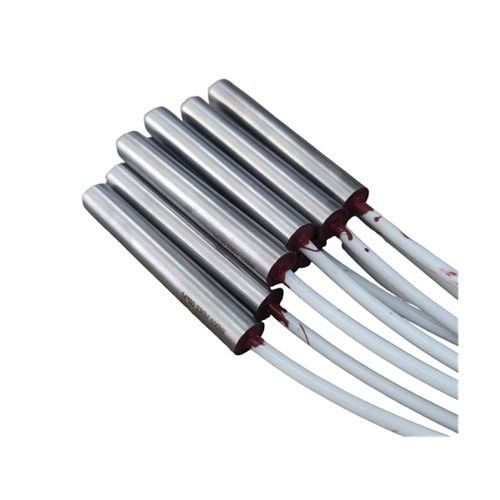
A cartridge heater is a compact metal rod that slides into a drilled hole in a metal part and heats it from the inside. Nickel-chrome wire is wound on a ceramic core, packed with magnesium oxide and sealed in a stainless sheath. It carries far more power per square centimetre than any other element, which is why moulds, dies and platens use it.
- Max working temperature
- up to 600 °C
- Max watt density
- up to 50 W/cm²
- Diameter
- 6.5 to 20 mm
- Delivery
- In stock, same day
- Voltage
- 12, 24, 220 V
- Custom builds
- To drawing or sample
Ask for a Price or Technical Advice
Call us or send a WhatsApp message for a price, full specifications, or a custom build.
Technical Specifications
The figures below are the usual ranges for this type of element. Builds outside them are possible.
| Property | Value |
|---|---|
| Construction | Nickel-chrome wire on a ceramic core, magnesium oxide packed, sheath swaged down onto it |
| Sheath material | Stainless steel |
| Max working temperature | up to 600 °C |
| Sheath diameter | 6.5, 8, 10, 12.5, 16, 20 mm |
| Heated length | 30 to 700 mm |
| Standard watt density | 8 to 25 W/cm² |
| High density build | up to 50 W/cm² |
| Recommended bore clearance | 0.05 to 0.10 on diameter mm |
| Working voltage | 12, 24 or 220 V |
| Termination | Fibreglass lead wires, stainless braid, right-angle exit, ceramic beads |
| Built-in sensor | Optional type J or K thermocouple |
| Power tolerance | +5 to -10 % |
Sizes and Specifications We Supply
| Property | What we supply |
|---|---|
| Diameter | 6.5 to 20 mm |
| Length | 30 to 700 mm |
| Maximum power per element | 3,000 W |
| Voltage | 12, 24, 220 V |
| Sheath material | Stainless steel |
| Maximum working temperature | 600 °C |
| Termination | Press-fit into the hole in the part |
| Delivery | In stock, same day |
| Minimum order | 1 piece |
The size ordered most often is 10 mm diameter.
Where It Is Used
- Plastic injection moulds
- Packaging and sealing machinery
- Laboratory equipment
- Food and pharmaceutical machinery
- Dies, platens and hot stamping tools
- Hot runner systems and manifolds
Choosing, Fitting and Looking After It
The fit in the bore is the whole story
A cartridge heater has no medium to dump its heat into. It has one path out: the metal touching it. If that contact is poor, the heat has nowhere to go, the sheath climbs and the wire inside fails. Nearly every cartridge heater that dies early died of a bad hole, not a bad element.
Aim for 0.05 to 0.10 mm of clearance on the diameter — enough to slide in, no more. A bore drilled and left rough, or drilled 0.5 mm oversize “to be safe”, is the classic mistake. It feels safer at fitting time and halves the life of the heater. Ream the hole, blow the swarf out, and keep it clean.
Watt density has to match the metal, not the wire
A 50 W/cm² heater is not better than a 20 W/cm² one; it is a different tool. High density only works where the surrounding metal pulls heat away quickly — a solid steel die, a large aluminium platen. In a small block, in a part with cooling channels close by, or in anything that spends time switched on with the machine idle, high density will cook itself.
If you are unsure, ask for the lower density and a longer heater. The part reaches the same temperature; it just takes a little longer to get there.
Getting a seized heater out
Cartridges seize. Oxide grows in the gap between sheath and bore, and after a year the heater is welded in place by rust. Two things prevent it: a thin coat of anti-seize compound on fitting, and pulling every heater out once during a planned service rather than waiting until one fails. A heater that will not move usually has to be drilled out, and the hole is then oversize for good.
Never pull a cartridge by its leads. There is a crimp inside the seal, and it will come apart in your hand.
Where the lead exits
The lead is the weakest part of the assembly. It leaves the heater at the cold end and immediately meets whatever is around the tool — a moving platen, a hot surface, a sharp edge of the mould. Say at the time of order whether the leads should come straight out or turn a right angle at the head, and whether they need a stainless braid over them. Retro-fitting a braid or bending a lead hard at the seal is how leads break.
Bake the moisture out before the first run
Magnesium oxide draws water out of the air. A heater that has sat in a store room through a humid summer can read a low insulation resistance and trip an RCD the moment it is switched on. This does not mean it is faulty. Run it at a low voltage, or in an oven at around 150 °C for an hour or two, then measure again. The reading usually comes back.
A thermocouple reads where it sits, not where it matters
A cartridge with a built-in thermocouple reports its own sheath temperature, which runs well above the temperature of the part. If what you need to control is the mould surface, the sensor belongs in the mould, in its own hole, not inside the heater. The built-in sensor is a safety limit, not a process sensor.
Price
Price
900,000 – 3,000,000 Toman
Prices checked — confirm the figure before ordering, as it moves with the exchange rate and with the specification.
What Sets the Price
- Diameter and length
- Power and voltage needed
- Sheath material (stainless steel, brass and so on)
- Termination type and lead or thread length
- Whether a thermocouple is built in
- Order quantity
How It Compares
The cartridge heater against the two elements it is most often swapped for.
| Feature | Cartridge | Tubular | Band |
|---|---|---|---|
| Where it sits | Inside a bore in a metal part | In the medium or the air | Around a cylindrical body |
| Watt density | Up to 50 W/cm² | 1 to 12 W/cm² | 3 to 8 W/cm² |
| Heat path | Metal to metal, by contact | Into a fluid or air | Through the wall of a barrel |
| What kills it | A loose or dirty bore | The wrong sheath for the medium | A gap between clamp and barrel |
Common Questions
What size cartridge heater do I need?
Measure the bore — its diameter and its depth — before anything else. The heater diameter is set by the hole, the heated length should fill the depth of the hole without sticking out, and only then is the wattage worked out from how hot the part has to get and how fast.
What is the difference between a cartridge heater and a tubular heater?
They are built the same way inside. A cartridge is short, thick-walled and made to sit in a metal bore, so it runs at very high watt density. A tubular is long, thin and made to sit in water, oil or air. Put a cartridge in open air and it burns out in minutes.
What does "high density" mean on a cartridge heater?
It means the wire is wound tighter and the internal build is denser, so the same rod puts out roughly twice the power — up to about 50 watts per square centimetre. It only works where the metal around it pulls that heat away fast, which means a tight, clean bore.
Can a cartridge heater be made for a low voltage?
Yes. 12 and 24 volt builds are common on machines where an operator can touch the tooling, and on hot runner systems fed from a controller. Voltage has to be stated with the order, because it changes the resistance wire itself, not just the wiring.
Why did my heater burn out at one end?
Almost always because part of it was outside the metal. The section sitting in air has nowhere to send its heat, so it climbs until the wire fails there. Heated length must stay inside the bore, and a shorter heated length with cold ends is the fix.
Can you build one from my old heater?
Yes. An old cartridge, a drawing, or a photograph with the diameter, the overall length, the wattage and the voltage on it is enough. The lead type and its exit direction matter too — say whether the leads come straight out or at a right angle.
Related Products
Tubular Heater
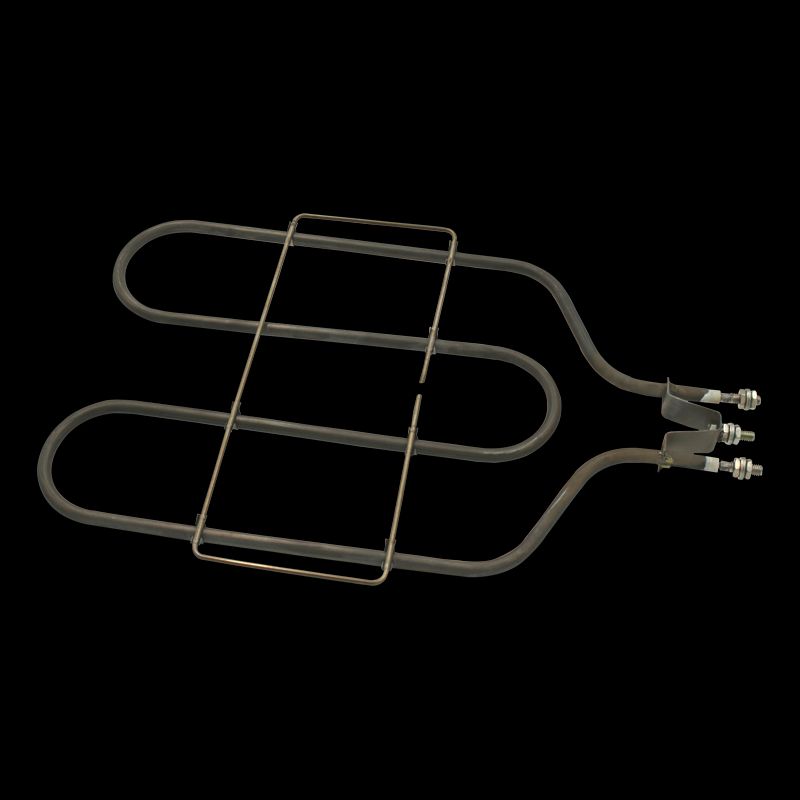
A tubular heater is a metal tube with a resistance wire running down the middle, the gap packed tight with magnesium oxide powder. It is the most widely used industrial heating element, working in water, oil, air and against metal surfaces up to a sheath temperature of around 750 °C.
Band Heater
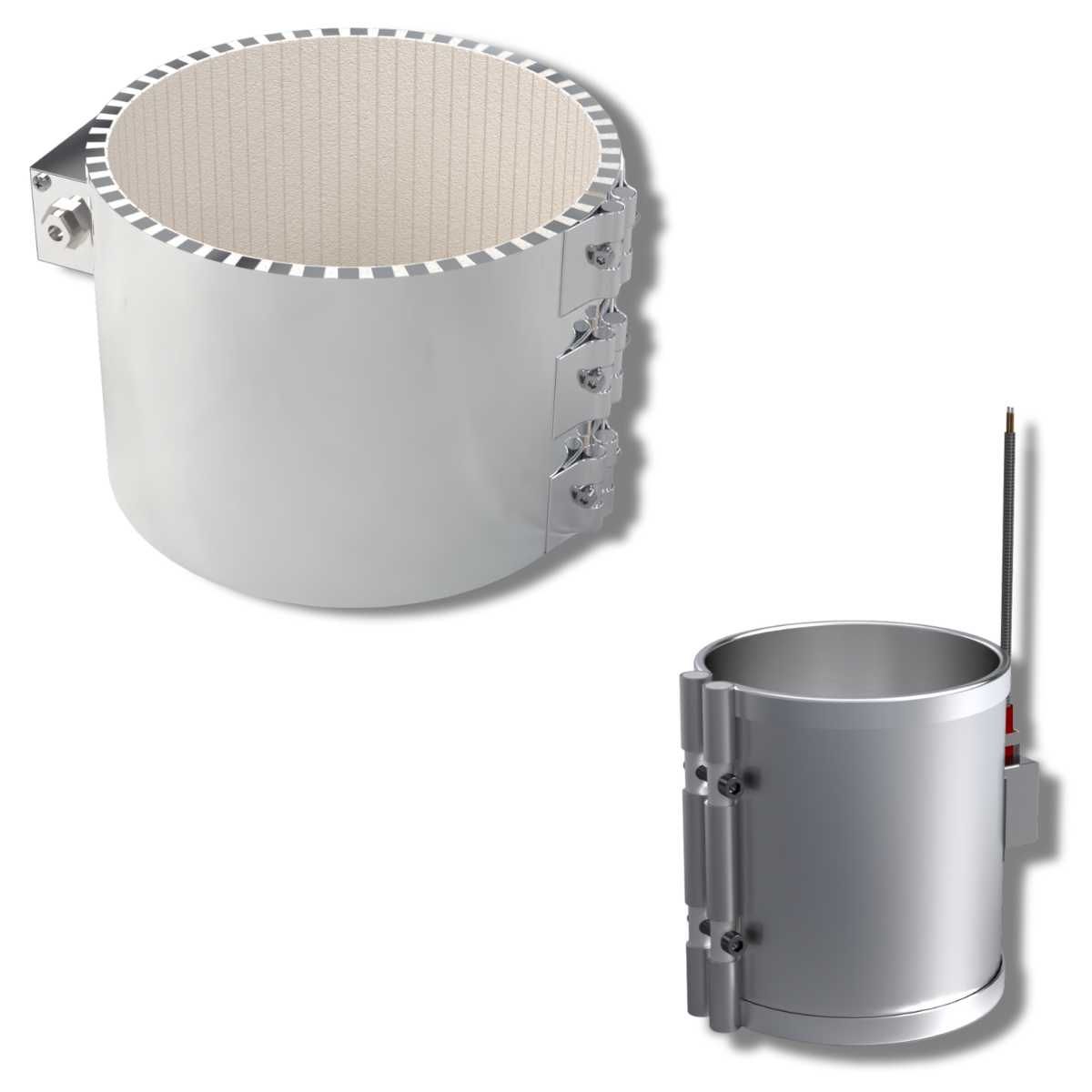
A band heater is a ring-shaped element that clamps around a cylinder and heats it through its wall. Resistance wire sits on mica or inside a ceramic body, wrapped in a stainless steel band that is pulled tight by a clamp. It is the element that heats injection barrels, extruder zones, nozzles and pipes.
Ask for a Price or Technical Advice
Call us or send a WhatsApp message for a price, full specifications, or a custom build.
Last updated: