Straight Tubular Heater
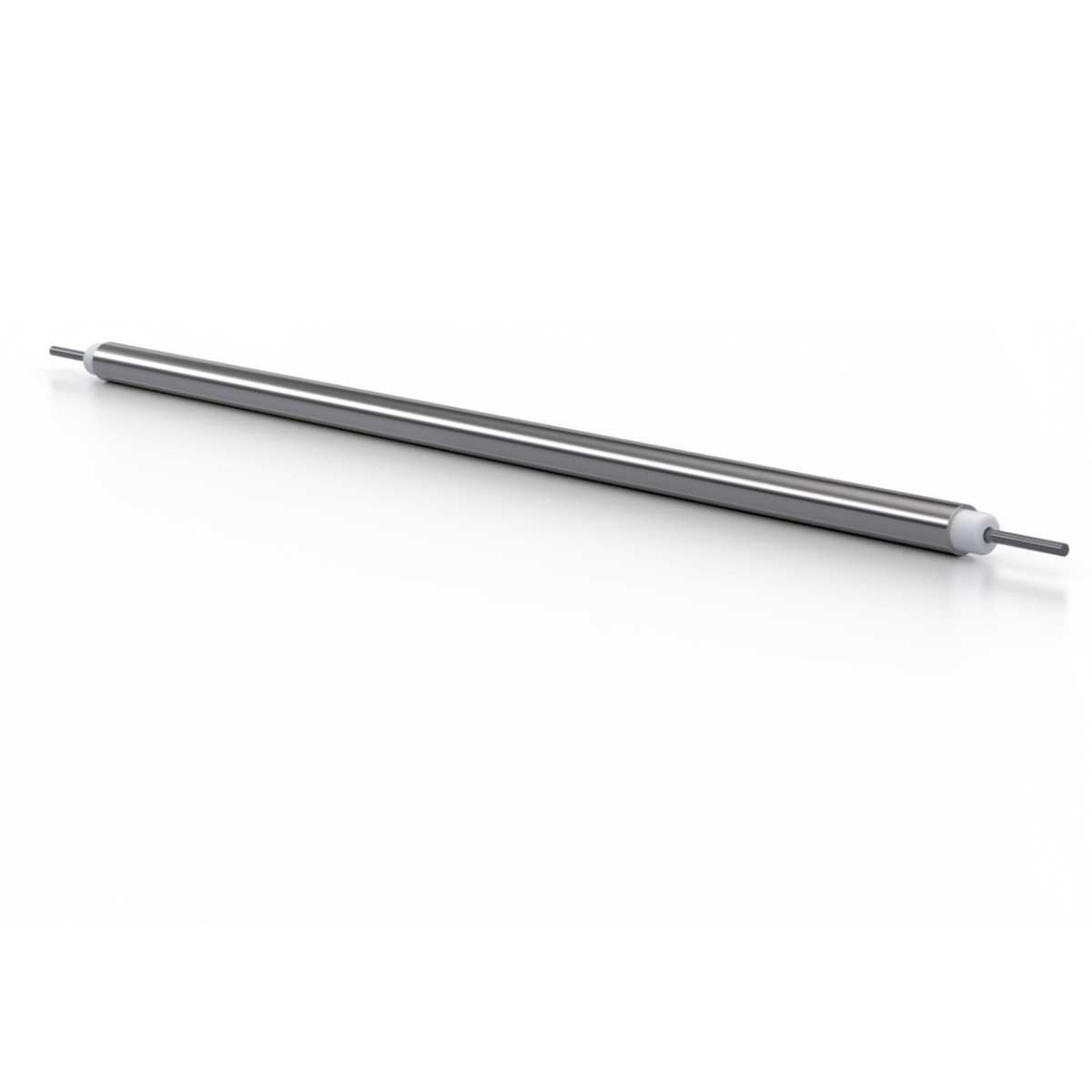
A straight tubular heater is the simplest form of tubular element: one straight rod with no bends and a terminal at each end. It is made for places that already have a straight bore, pipe or channel, where the element can sit in without changing direction.
- Delivery
- In stock, same day
- Diameter
- 6 to 10 mm
- Buildable length
- 300 to 6000 mm
- Max working temperature
- up to 600 °C
- Voltage
- 12, 24, 220 V
- Custom builds
- Any length and wattage
Ask for a Price or Technical Advice
Call us or send a WhatsApp message for a price, full specifications, or a custom build.
Technical Specifications
The figures below are the usual ranges for this type of element. Builds outside them are possible.
| Property | Value |
|---|---|
| Final shape | A straight rod with a terminal at each end |
| Sheath material | Stainless steel |
| Sheath diameter | 6, 8, 10 mm |
| Length range | 300 to 6000 mm |
| Max working temperature | up to 600 °C |
| Cold end length | 25 to 50 at each end mm |
| Working voltage | 12, 24 or 220 single phase V |
| Length tolerance | around ±2 % |
| Termination | Threaded stud, silicone lead wire, ceramic bead |
Sizes and Specifications We Supply
| Property | What we supply |
|---|---|
| Diameter | 6 to 10 mm |
| Length | 300 mm to 6 m |
| Maximum power per element | 5,000 W |
| Voltage | 12, 24, 220 V |
| Sheath material | Stainless steel |
| Maximum working temperature | 600 °C |
| Termination | Nut or threaded boss |
| Delivery | In stock, same day |
| Minimum order | 1 piece |
The size ordered most often is 8 mm diameter, 2 m long.
Where It Is Used
- Tank and drum heating
- Air and duct heating
- Industrial furnaces and ovens
- Laboratory equipment
- Die and machine bed pre-heating
Choosing, Fitting and Looking After It
Where straight works
Anywhere there is already a straight path: a deep bore in a metal block, a pipe that needs to run hot, a tank with a straight side entry, or a duct the element crosses. In these cases the straight element is both cheaper and easier to replace — you simply pull it out.
Measure the space you have, not the space on the drawing
The most common problem when ordering a straight element is that the overall length does not fit the space. Remember that you also need clear room behind it, about as long as the element itself, so that one day you can withdraw it. If that room is not there, you either pick a shorter element with a higher wattage — which pushes up the watt density — or go formed.
Order the cold end to suit your wall thickness
If the element passes through a tank wall, the cold end needs to be at least as long as the wall plus its insulation. A short cold end means the hot zone stays inside the wall, and it will burn the wall and the sealing gasket.
In air and in liquid, these are two different elements
One straight element at a given wattage stays cool in water and runs hot in air. Put the element you ordered for a water tank into an air duct and its sheath temperature multiplies. Tell us the medium before you order; the safe watt density is chosen from that.
Fitting horizontally and vertically
Fitted horizontally in a liquid, do not sit the element near the bottom or sediment settles on it — a few centimetres clear of the floor is the best place. Fitted vertically, the terminal end should be uppermost so steam and drips cannot reach it.
Looking after it
Every few months, measure the element’s resistance and compare it against the original figure. A clear rise means the wire inside is thinning and a failure is coming. It takes a few minutes and it saves an unplanned line stop.
Price
Price
5,500 – 12,000 Toman
Priced per centimetre of length, not per element.
Prices checked — confirm the figure before ordering, as it moves with the exchange rate and with the specification.
What Sets the Price
- Diameter and length
- Power and voltage needed
- Sheath material (stainless steel, brass and so on)
- Termination type and lead or thread length
- Whether a thermocouple is built in
- Order quantity
How It Compares
When straight is the right answer, and when to go formed instead.
| Feature | Straight | Formed |
|---|---|---|
| Fitting | Needs a straight path | Fits awkward spaces |
| Heated length in tight space | Limited by the path | More, because it folds |
| Build cost | Lower | Higher, for the bending step |
| Replacement | Simple, pull it straight out | May mean removing parts |
Common Questions
What lengths can a straight tubular heater be made in?
In practice from about 100 mm to about 3000 mm. You set the exact length, and a non-standard length costs no extra because every element is built individually anyway.
Why do the two ends stay cool?
Those sections are the cold ends and carry no resistance wire. They are kept cool on purpose so the terminal and the tank wall do not get hot. The cold end length can be ordered to match your wall thickness.
Can I bend a straight element myself?
No. Bending it after manufacture shifts the magnesium oxide powder inside and creates a hot spot. If you need a bent shape, the element has to be formed during manufacture.
How is this different from an immersion heater?
A straight tubular heater is just the rod. An immersion heater is that rod mounted on a thread or a flange so it can be sealed into a tank wall. If your tank needs a seal, choose an immersion heater.
Related Products
Tubular Heater
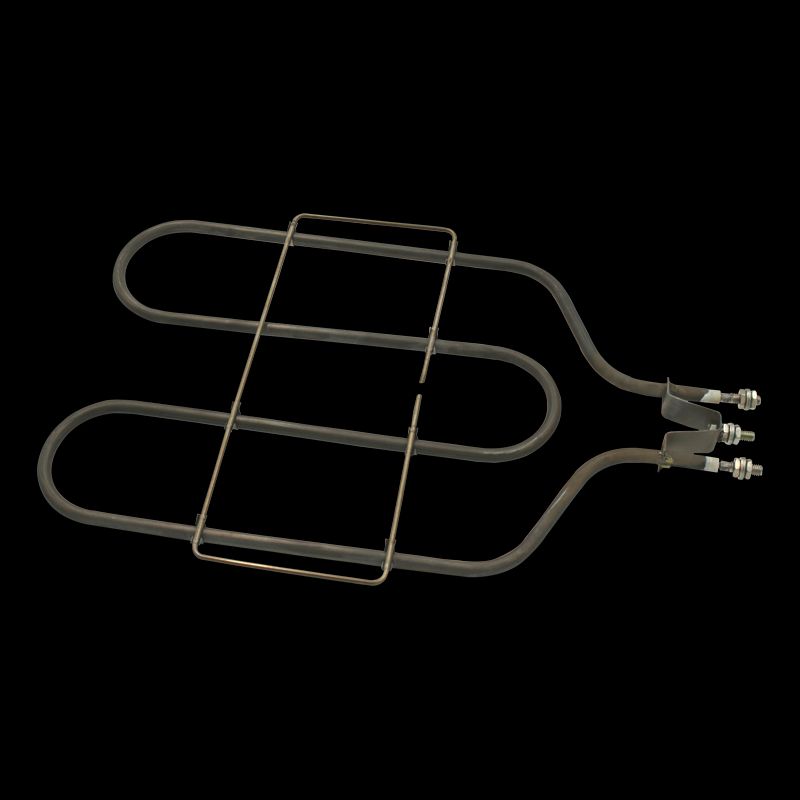
A tubular heater is a metal tube with a resistance wire running down the middle, the gap packed tight with magnesium oxide powder. It is the most widely used industrial heating element, working in water, oil, air and against metal surfaces up to a sheath temperature of around 750 °C.
Formed Tubular Heater
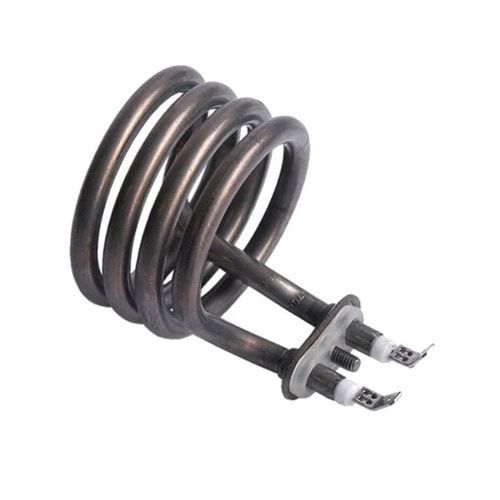
A formed tubular heater is a tubular element bent into shape after it is made: a U, a ring, a spiral, or whatever the drawing calls for. Bending lets you fit a long heated length into a small space, or match the element to the shape of the part it heats.
Finned Tubular Heater
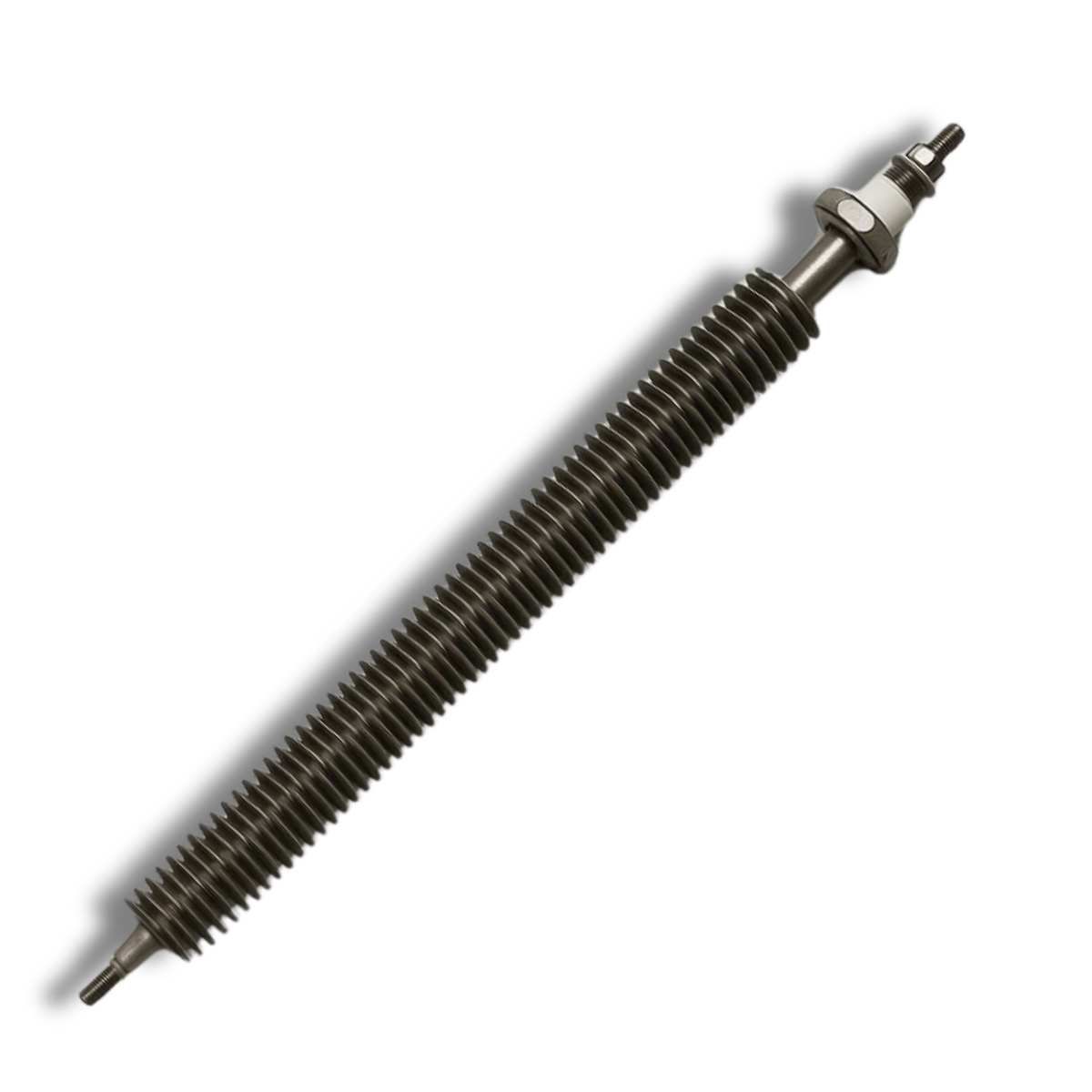
A finned tubular heater is a tubular element with thin metal fins wound and welded around the sheath. The fins multiply the surface touching the air by three to five times, so the same wattage transfers at a much lower sheath temperature. It is the standard choice for heating air and ducts.
Ask for a Price or Technical Advice
Call us or send a WhatsApp message for a price, full specifications, or a custom build.
Last updated: