Finned Tubular Heater
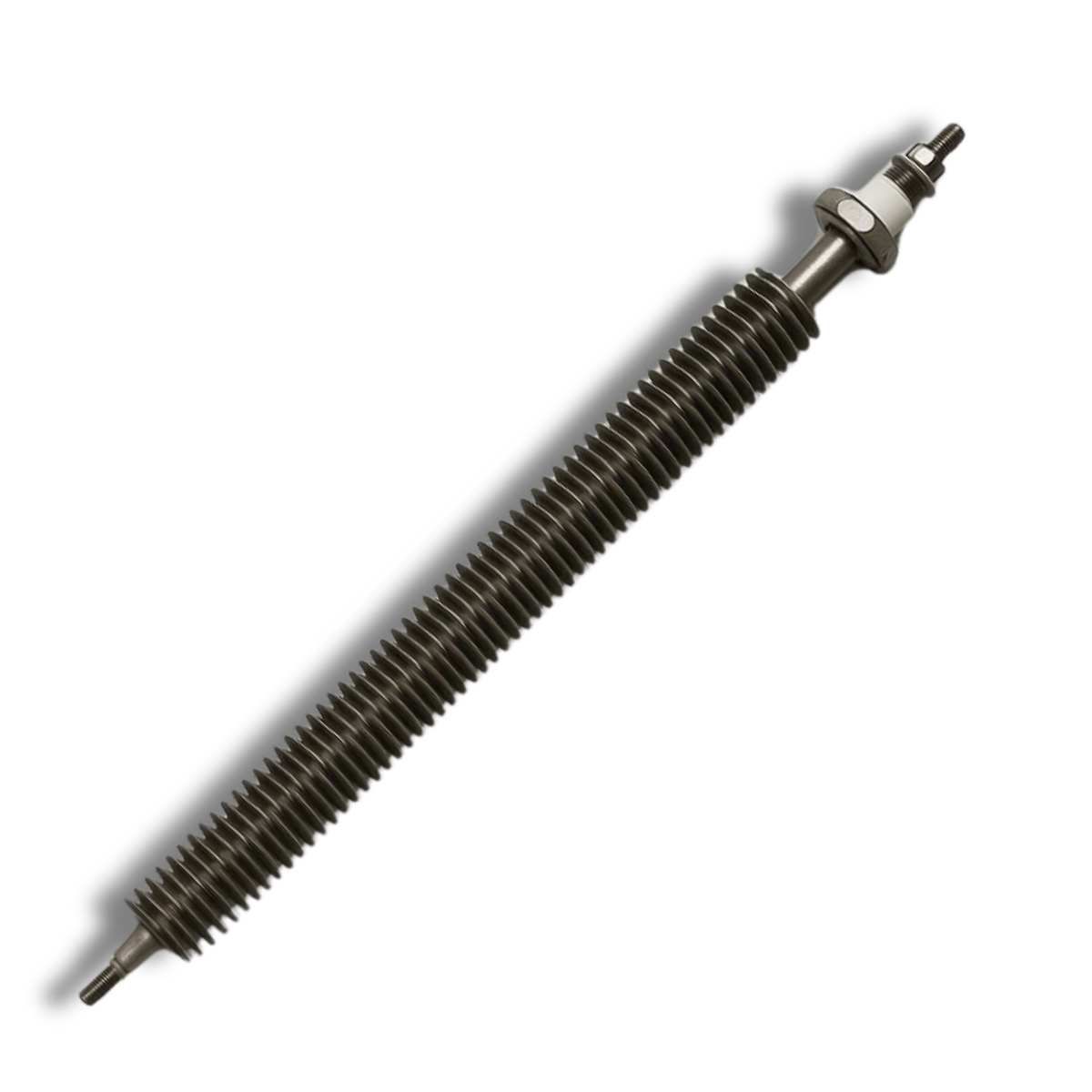
A finned tubular heater is a tubular element with thin metal fins wound and welded around the sheath. The fins multiply the surface touching the air by three to five times, so the same wattage transfers at a much lower sheath temperature. It is the standard choice for heating air and ducts.
- Surface area gain
- 3 to 5 times
- Main use
- Air and duct heating
- Fin material
- Galvanised steel
- Max working temperature
- up to 100 °C
- Watt density on fin
- 1.5 to 3 W/cm²
- Airflow needed
- Yes, essential
Ask for a Price or Technical Advice
Call us or send a WhatsApp message for a price, full specifications, or a custom build.
Technical Specifications
The figures below are the usual ranges for this type of element. Builds outside them are possible.
| Property | Value |
|---|---|
| Construction | Tubular element with spiral fins welded onto the sheath |
| Fin material | Galvanised steel |
| Fin pitch | 3 to 6 mm |
| Diameter over fins | 28 to 45 mm |
| Sheath diameter | 8, 10, 11, 12.7 mm |
| Max working temperature | up to 100 °C |
| Safe watt density on fin surface | 1.5 to 3 W/cm² |
| Minimum air velocity | about 2 m/s |
| Working voltage | 220 single phase V |
Sizes and Specifications We Supply
| Property | What we supply |
|---|---|
| Length | 150 to 1,500 mm |
| Maximum power per element | 2,000 W |
| Voltage | 220 V |
| Sheath material | Stainless steel tube, galvanised fins |
| Maximum working temperature | 100 °C |
| Termination | Threaded |
| Delivery | 2 working days |
| Minimum order | 1 piece |
Where It Is Used
- Air and duct heating
- Industrial furnaces and ovens
- Packaging machinery
- Food and pharmaceutical production
- Industrial dryers and air handling units
Choosing, Fitting and Looking After It
Fins are for air, not for liquid
The distinction is simple but it gets missed often. Air is a poor conductor and carries the element’s heat away slowly; fins make up for that. In a liquid, though, fins are just somewhere for deposits to settle. The few millimetres between fins fill with limescale within months in hard water, and then the fins stop helping and start acting like a blanket around the element.
Never run a finned element without airflow
This is the important safety point for this product. A finned element is designed for moving air. If the fan fails or the filter blocks completely, still air cannot carry the heat away and the sheath temperature climbs fast. There are two common protections: a differential pressure switch across the airflow, and a high-limit thermostat mounted on the duct wall. Whichever you choose, it must cut power to the element directly, not merely raise an alarm.
Laying them out in a duct
Set the elements across the airflow and leave space between rows so air can pass through the fins. Where several rows sit behind one another, stagger them so the air is forced between the fins rather than slipping past them. The corners of a duct are usually the slowest-moving air; do not put an element there.
Match the fin pitch to how clean the air is
A tight pitch gives more surface but clogs sooner. In industrial dryers and dusty environments, choose an open pitch and thicker fins even if it means a longer element. In an air handling unit with a decent filter, a 3 to 4 mm pitch gives the best result.
Cleaning
Blow the fins out with compressed air, working against the normal airflow direction. Do not use a stiff wire brush — the fins are thin and bending them closes off the air path. Where a film of grease has settled, which is common in food production, wash with a mild alkaline solution and dry it completely before switching on.
Signs that a failure is coming
If the outlet air temperature has dropped but the power draw is unchanged, the fins are probably clogged. If the duct wall is hotter than usual, airflow has fallen. Both are early warnings, and dealing with them costs less than replacing the element.
Price
Price
1,500,000 – 8,000,000 Toman
Prices checked — confirm the figure before ordering, as it moves with the exchange rate and with the specification.
What Sets the Price
- Diameter and length
- Power and voltage needed
- Sheath material (stainless steel, brass and so on)
- Termination type and lead or thread length
- Whether a thermocouple is built in
- Order quantity
How It Compares
In air, finned and bare are two different worlds.
| Feature | Finned | Plain tubular |
|---|---|---|
| Surface touching the air | 3 to 5 times | Baseline |
| Sheath temperature at same wattage | Much lower | High |
| Suitable for liquids | No | Yes |
| Sensitivity to airflow loss | High | High |
Common Questions
Why does heating air need a finned element?
Air takes heat away far more slowly than water does. A bare element in air runs hot and burns out. The fins multiply the surface touching the air, so the same wattage leaves at a much lower sheath temperature and the element lasts several times longer.
What happens if the fan stops?
The element reaches a dangerous temperature within minutes. Always fit a protective thermostat or an airflow switch that cuts power to the element when the fan stops. That part costs less than the element itself.
What difference does fin pitch make?
A tighter pitch means more fins and more surface, but also more resistance to airflow and quicker clogging in dusty air. For clean air a 3 to 4 mm pitch works well; for industrial air, open the pitch up.
Can a finned element work in liquid?
No. Fins collect deposits in liquid and the gaps between them silt up quickly. For liquids use a plain tubular or an immersion heater.
How do I choose the fin material?
Galvanised steel is enough for ordinary air at moderate temperatures. For humid air, food environments or higher temperatures, stainless fins are the better choice.
Related Products
Tubular Heater
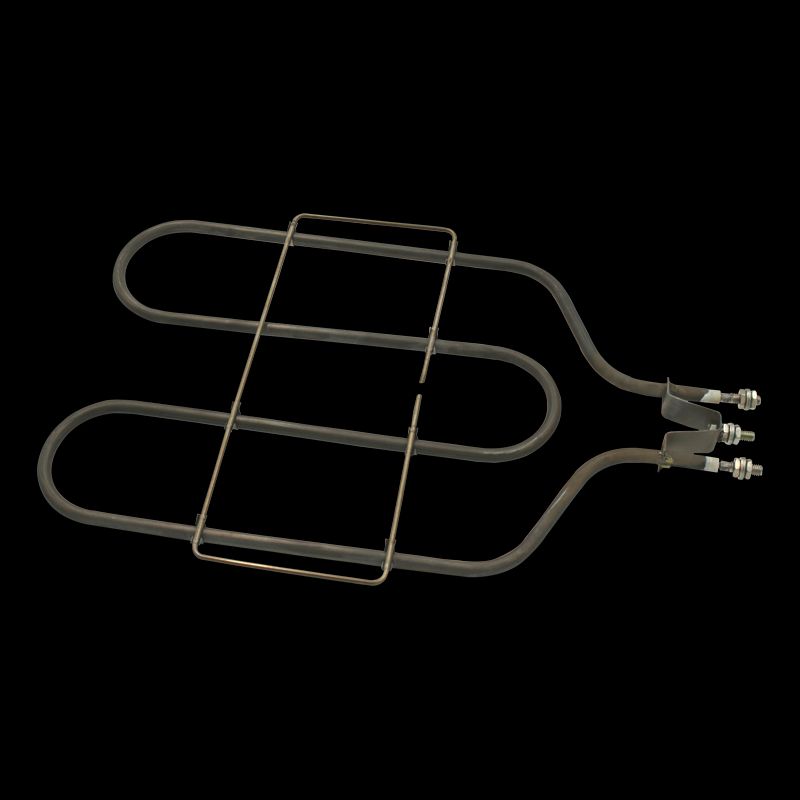
A tubular heater is a metal tube with a resistance wire running down the middle, the gap packed tight with magnesium oxide powder. It is the most widely used industrial heating element, working in water, oil, air and against metal surfaces up to a sheath temperature of around 750 °C.
Straight Tubular Heater
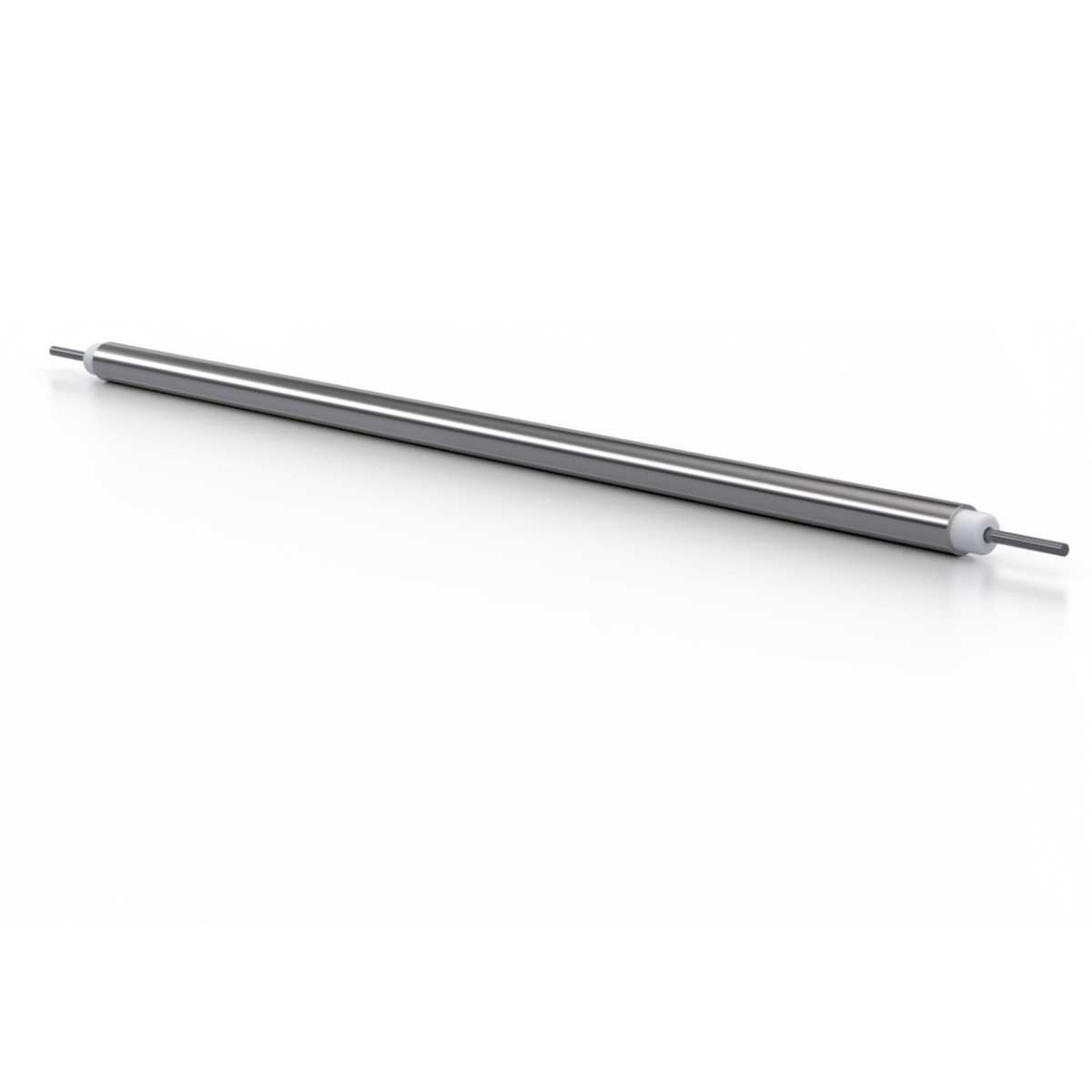
A straight tubular heater is the simplest form of tubular element: one straight rod with no bends and a terminal at each end. It is made for places that already have a straight bore, pipe or channel, where the element can sit in without changing direction.
Formed Tubular Heater
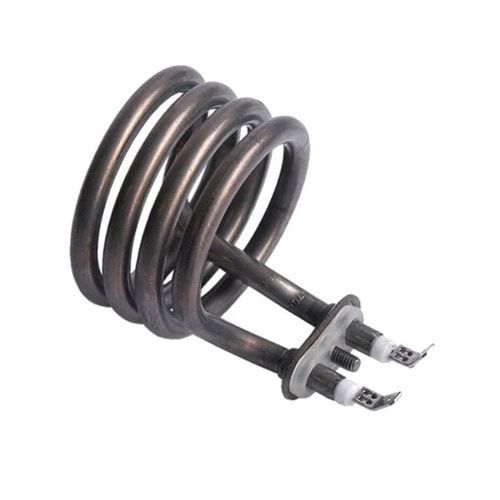
A formed tubular heater is a tubular element bent into shape after it is made: a U, a ring, a spiral, or whatever the drawing calls for. Bending lets you fit a long heated length into a small space, or match the element to the shape of the part it heats.
Ask for a Price or Technical Advice
Call us or send a WhatsApp message for a price, full specifications, or a custom build.
Last updated: