Ceramic Infrared Heater
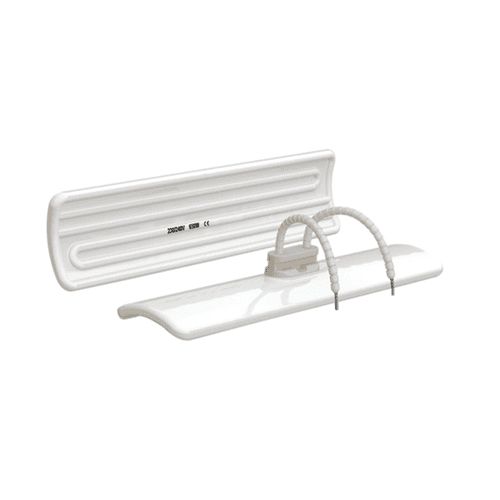
A ceramic infrared heater is a resistance coil embedded in a glazed ceramic body that radiates long-wave infrared from a face running at 300 to 750 °C. It is slow, steady and robust, and it is the radiant element used where plastic has to be heated evenly without being scorched.
- Wavelength
- Long wave infrared
- Face temperature
- 300 to 750 °C
- Response time
- 5 to 10 min
- Shapes
- Flat, trough and hollow
- Built-in sensor
- Optional type J or K
- Voltage
- 220 / 380 V
Ask for a Price or Technical Advice
Call us or send a WhatsApp message for a price, full specifications, or a custom build.
Technical Specifications
The figures below are the usual ranges for this type of element. Builds outside them are possible.
| Property | Value |
|---|---|
| Construction | Resistance coil embedded in a glazed ceramic body, backed by insulation in a housing |
| Face temperature | 300 to 750 °C |
| Wavelength | Long wave, around 3 to 10 micrometres |
| Response time | 5 to 10 minutes, either way |
| Shapes | Flat panel, trough, and hollow with a built-in reflector shape |
| Common sizes | 60 × 60, 122 × 60, 245 × 60 mm |
| Built-in sensor | Type J or K thermocouple, laid into the ceramic |
| Working voltage | 220 single phase or 380 three phase V |
| Control | Thyristor or solid state relay, tuned for a slow element |
| Mounting | In a reflector frame, on ceramic terminal posts |
| Termination | Nickel leads from the back, in ceramic beads |
| Power tolerance | +5 to -10 % |
Where It Is Used
- Plastic thermoforming and sheet heating
- Packaging machinery
- Food and pharmaceutical industry
- Paint and powder curing
- Warming and holding, in food service
Choosing, Fitting and Looking After It
Slow is a feature on a steady process
The mass of a ceramic panel is the reason it takes five or ten minutes to reach temperature, and it is also the reason it holds temperature so evenly once it is there. On an oven that runs all shift at one setting, that mass smooths out everything the controller does. The face barely moves between switching cycles, so the work sees a constant radiant field rather than a pulsing one.
The same mass is why a ceramic heater must be interlocked with the line. When the conveyor stops, the panel keeps radiating for minutes. Anything sitting under it will keep heating, and on plastic that means a scorched sheet by the time anyone reaches the machine.
The shape of the ceramic is a lens
Flat, trough and hollow elements all put out the same watts and put them in very different places. A flat panel covers a broad area evenly. A trough concentrates the radiation into a strip, which suits a narrow band on a moving web. A hollow element carries its own reflecting curve, so it directs its output forward without a separate reflector behind it.
Picking the right body shape is usually a better answer than adding power or adding reflectors, and it costs nothing extra.
Build the array for the edges, not the middle
Any heated area loses at the edges, because the outer work receives radiation from one side only while the middle receives it from all around. In a thermoforming oven this shows up as a sheet that forms well in the centre and badly at the rim. The fix is in the layout: tighten the element spacing around the perimeter, or add a row that overhangs the work. Turning the whole array up lifts the middle by the same amount as the edge and changes nothing.
Zoned control is what ceramic is really for
Because each panel can carry its own thermocouple in the ceramic, an array can be divided into zones and each zone held at a different face temperature. That is how a forming oven puts more heat where a sheet needs to draw deeper and less where it must not thin. An array of identical elements all on one circuit cannot do this, whatever its total power.
Handle the glaze as the working surface it is
The glazed face is what radiates, and it is also what protects the coil inside. Chip it with a tool, crack it with a cold splash, or clean it with anything abrasive, and the coil underneath is exposed. Elements fail at the damaged spot soon after. Let a panel cool before touching it, keep water and wet product away from a hot face, and clean it only when cold and only with a soft brush.
Terminals and lead routing behind the array
The back of a ceramic panel gets hot and the terminal posts sit right there. Use nickel leads in ceramic beads, keep them clear of the housing metal, and support the wiring so nothing hangs on a post. In a large array, run the wiring in a tray above the hot zone rather than draped behind the elements, so a lead never rests against a hot ceramic back.
Price
Price
The price for this product depends on the specification you order.
What Sets the Price
- Diameter and length
- Power and voltage needed
- Sheath material (stainless steel, brass and so on)
- Termination type and lead or thread length
- Whether a thermocouple is built in
- Order quantity
How It Compares
Ceramic against the two faster radiant types.
| Feature | Ceramic | Quartz | Halogen |
|---|---|---|---|
| Wavelength | Long | Medium | Short |
| Response | Minutes | Seconds | Under a second |
| Face temperature | 300 to 750 °C | 900 to 1200 °C | Up to 2200 °C |
| Visible glow | Almost none | Orange | Bright white |
| Robustness | High | Glass tube | Glass lamp |
Common Questions
Why choose the slowest radiant element?
Because a steady process does not need speed, and long wave is what most plastics absorb at the surface. A ceramic panel gives an even, gentle heat that will not mark a sheet, and its mass smooths out the on-off cycling of the controller.
What are the trough and hollow shapes for?
They shape the radiation. A flat panel spreads it broadly; a trough concentrates it into a strip; a hollow element has its own reflecting curve built into the ceramic. Choosing the shape is how the pattern is matched to the work without adding external reflectors.
How should an array be laid out?
In a grid over the work, with the elements spaced close enough that their patterns overlap, and an extra row or tighter spacing at the edges. The edges of a heated area always run cooler because they only receive heat from one side.
Does it need a built-in thermocouple?
On a thermoforming oven, usually yes — the sensor in the ceramic lets each zone be controlled to its own face temperature, which is what makes zoned forming possible. On a simple drying or warming job, a sensor on the work is enough.
Can it be switched with a contactor?
It can, because it is slow enough that the contactor will not cycle constantly. But a thyristor gives much better control: the element can hold a steady partial output instead of swinging between full on and off, which is what an even surface needs.
What damages a ceramic infrared heater?
Thermal shock and impact. A cold splash on a hot face cracks the glaze, and a knock chips it. Once the glaze is broken, the coil underneath is exposed to whatever is in the air and the element fails at that point.
Related Products
Radiant Heater
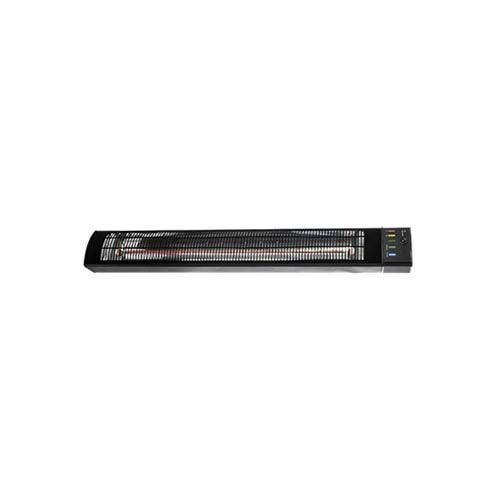
A radiant heater warms an object by infrared light rather than by touching it or by heating the air between them. A quartz tube, a halogen lamp or a ceramic face glows, and the surface facing it absorbs that energy directly. It is used where something has to be heated quickly, across a gap, without contact.
Quartz Heater
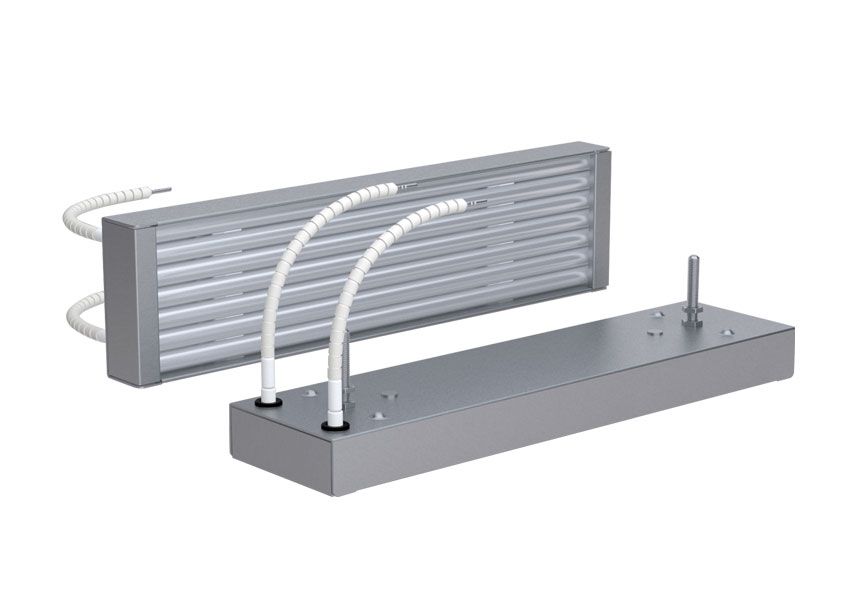
A quartz heater is a coiled resistance wire inside a clear quartz tube. The tube reaches 900 to 1200 °C and radiates medium-wave infrared, which most plastics, coatings and water absorb well. It reaches working output in a second or two and is the general-purpose radiant element for drying and forming.
Halogen Heater
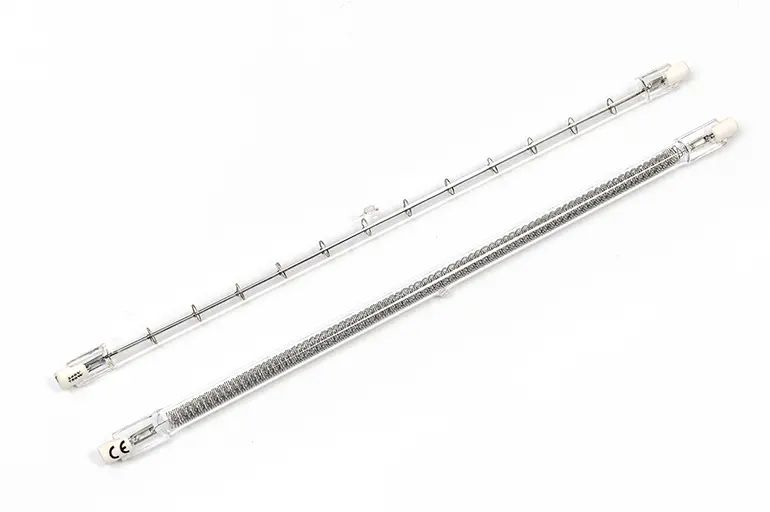
A halogen heater is a tungsten filament in a halogen-filled quartz lamp, running at up to 2200 °C. It emits short-wave infrared, reaches full output in under a second, and goes cold almost as fast. It is chosen where heat has to be intense, local, and switched on and off with the process.
Ask for a Price or Technical Advice
Call us or send a WhatsApp message for a price, full specifications, or a custom build.
Last updated: