Tubular Heater
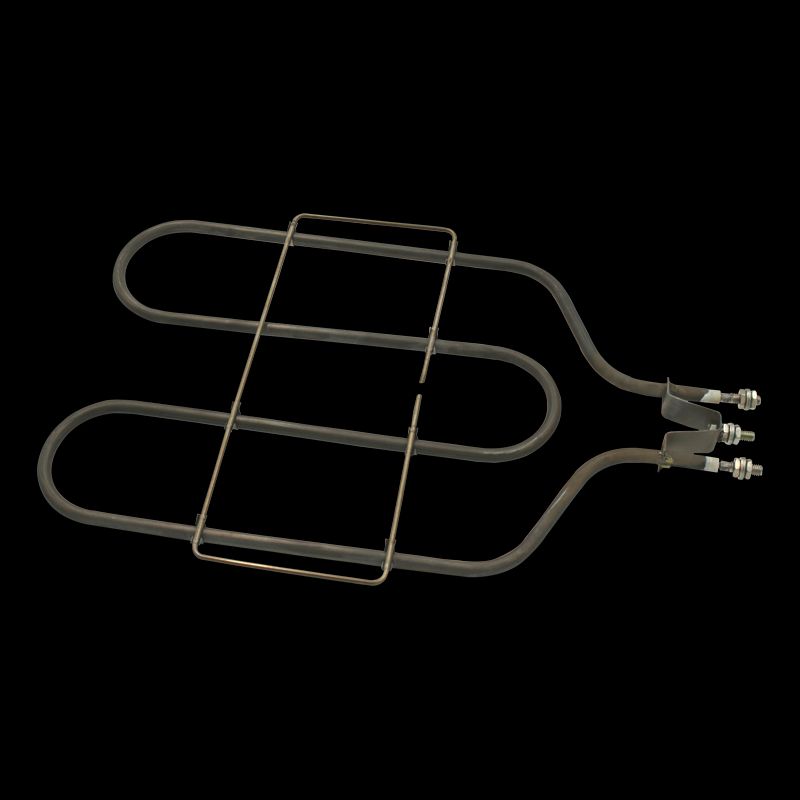
A tubular heater is a metal tube with a resistance wire running down the middle, the gap packed tight with magnesium oxide powder. It is the most widely used industrial heating element, working in water, oil, air and against metal surfaces up to a sheath temperature of around 750 °C.
- Max sheath temperature
- up to 750 °C
- Common diameters
- 6.5 to 16 mm
- Voltage
- 220 / 380 V
- Sheath material
- Stainless, Incoloy, copper
- Internal insulation
- Compacted magnesium oxide
- Custom builds
- To drawing or sample
Ask for a Price or Technical Advice
Call us or send a WhatsApp message for a price, full specifications, or a custom build.
Technical Specifications
The figures below are the usual ranges for this type of element. Builds outside them are possible.
| Property | Value |
|---|---|
| Construction | Nickel-chrome resistance wire in a metal sheath, magnesium oxide insulated |
| Resistance wire | Nickel-chrome 80/20 |
| Sheath material | Stainless 304 and 321, Incoloy 800, carbon steel, copper, titanium |
| Max sheath temperature | 650 (stainless) to 750 (Incoloy) °C |
| Sheath diameter | 6.5, 8, 8.5, 10, 11, 12.7, 16 mm |
| Safe watt density in water | 8 to 12 W/cm² |
| Safe watt density in still air | 2 to 4 W/cm² |
| Safe watt density in oil | 1 to 3 W/cm² |
| Working voltage | 220 single phase or 380 three phase V |
| Termination | M4/M5 threaded studs, silicone lead wire, ceramic beads |
| Power tolerance | +5 to -10 % |
Where It Is Used
Choosing, Fitting and Looking After It
Choose the sheath for the medium, not for the price
Most elements that die early were not worn out; they were corroded. A stainless 304 sheath runs for years in ordinary mains water and lasts months in heavily chlorinated water or an acidic solution. Stainless 304 or 321 is enough for water and steam, stainless 321 for hot oil and mazut, Incoloy 800 for high temperatures and corrosive conditions, and copper or titanium for demineralised water and plating baths.
Watt density matters more than total wattage
This is the most common mistake when ordering. Two elements of the same wattage but different lengths have completely different lives. Watt density comes from:
Watt density (W/cm²) = power ÷ (π × sheath diameter × heated length)
Put the diameter and length in centimetres. If the answer is above the safe figure for your medium, you have two options: make the heated length longer, or split the power across more elements. Reducing the power is usually not an option, because then the machine never reaches its working temperature.
Figures used across the industry: circulating water up to about 12, still water around 8, moving air 3 to 5, still air 2 to 4, and oil 1 to 3 watts per square centimetre. Oil is the strictest. Too high a watt density chars the oil onto the sheath, and that carbon layer acts as insulation and cooks the element from the inside.
Keep the cold end out of the hot zone and out of the spray
The two ends with no resistance wire do not heat up. They need to sit so that neither stays inside the hot zone nor has its terminal exposed to steam and splashing. A wet terminal is the single most common cause of earth leakage and a tripped RCD.
Never run an element out of its medium
An element designed for water, switched on in air, burns out within minutes. Water carries its heat away; air does not. On tanks where the level changes, fit a level switch or a protective thermostat. That part costs less than any element it saves.
Bend radius on a formed element
If the element is bent, the minimum bend radius is usually around twice the sheath diameter. Anything tighter packs or thins the magnesium oxide in the bend and makes a hot spot there. A hot spot is where the next failure happens.
Looking after it
In hard water, descaling on a schedule is the main maintenance job. One millimetre of limescale on the sheath cuts heat transfer enough to send the sheath temperature sharply up. If the machine is heating more slowly than it used to, the problem is usually scale rather than a weakening element.
Before any restart, measure the element’s resistance and its insulation resistance to the body. Low insulation resistance means moisture has reached the powder; drying the element in a low oven sometimes brings it back.
Price
Price
The price for this product depends on the specification you order.
What Sets the Price
- Diameter and length
- Power and voltage needed
- Sheath material (stainless steel, brass and so on)
- Termination type and lead or thread length
- Whether a thermocouple is built in
- Order quantity
How It Compares
The tubular heater against the two elements it is most often confused with.
| Feature | Tubular | Cartridge | Band |
|---|---|---|---|
| Where it sits | In the medium or the air | In a bore in a metal part | Around a cylindrical body |
| Max sheath temperature | Up to 750 °C | Up to 800 °C | Up to 450 °C (mica) |
| Shaping | Very flexible, can be formed | Fixed, cylindrical | Matches the body diameter |
| Main use | Heating fluids and air | Heating dies and metal blocks | Heating injection barrels |
Common Questions
What is a tubular heater and how does it work?
A nickel-chrome resistance wire sits inside a metal tube, and the space around it is packed with magnesium oxide powder. Current through the wire makes heat, the magnesium oxide carries that heat out to the sheath, and at the same time keeps the electricity away from the body.
What is the difference between straight, formed and finned?
All three are built the same way; only the final shape differs. Straight suits bores and straight pipes, formed lets you fit more heated length into a small space, and finned is for heating air, where the fins multiply the surface touching it.
Which sheath material do I need?
Stainless 304 or 321 for water and steam, Incoloy 800 for high temperatures and corrosive conditions, stainless 321 for oil and mazut, and copper or titanium for demineralised water and plating baths. The wrong sheath is the most common cause of an element corroding early.
What is watt density and why does it matter?
Watt density is how many watts come off each square centimetre of sheath. The higher it is, the hotter the sheath runs. Going past the safe figure for your medium burns the element out early, even when the total wattage is right.
Can you build a tubular heater from my sample?
Yes. A physical sample, a drawing, or even a clear photo with dimensions is enough. We match the length, diameter, power, voltage, sheath material and termination.
What is the difference between heated length and overall length?
Overall length includes the cold ends — the sections with no resistance wire, which stay cool. Heated length is only the part that actually makes heat, and that is the figure used to work out watt density.
Types in This Family
Straight Tubular Heater
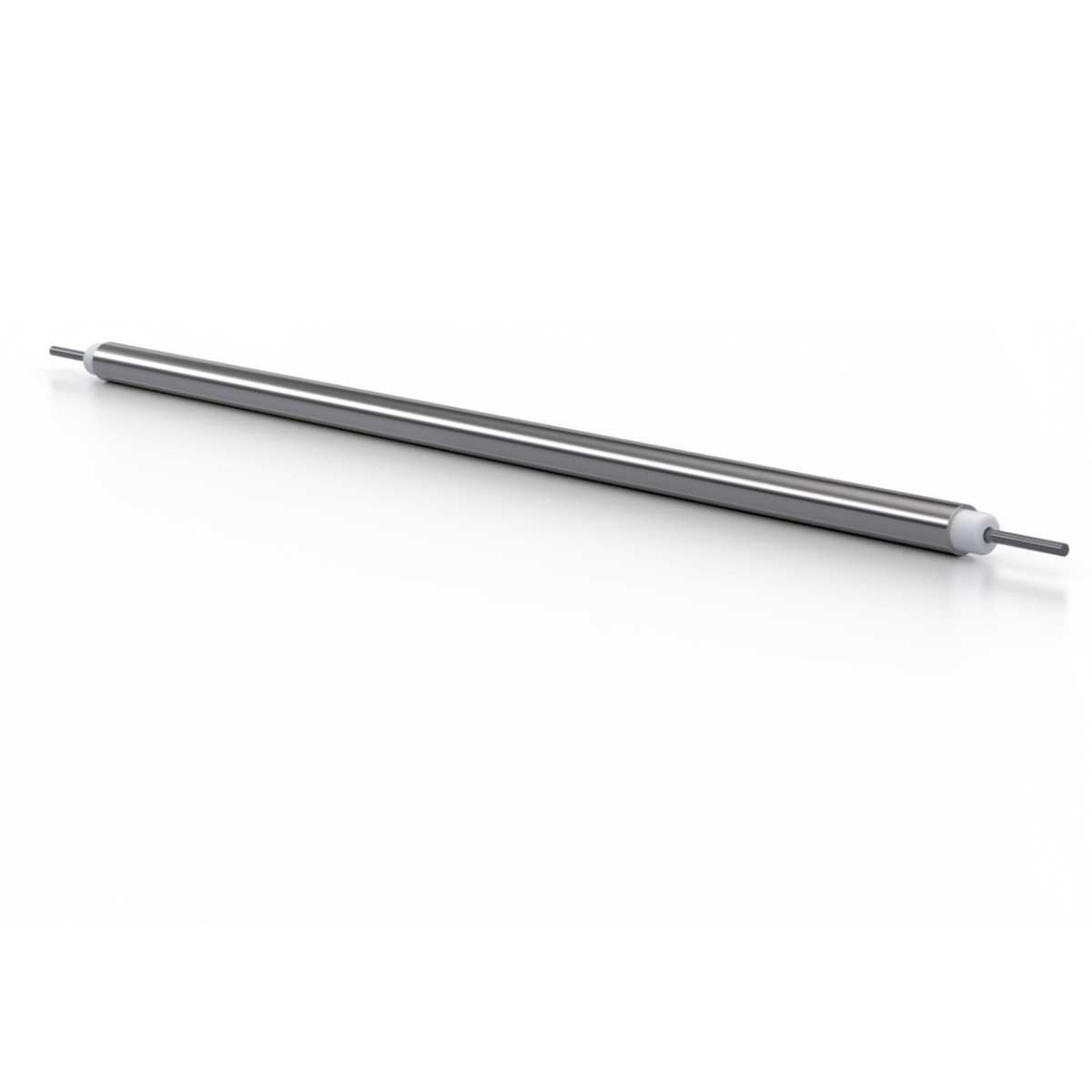
A straight tubular heater is the simplest form of tubular element: one straight rod with no bends and a terminal at each end. It is made for places that already have a straight bore, pipe or channel, where the element can sit in without changing direction.
Formed Tubular Heater
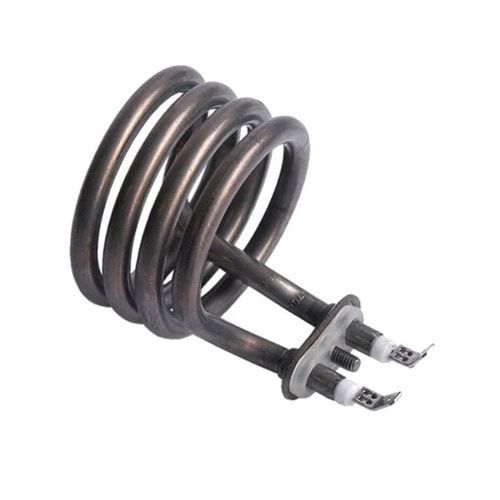
A formed tubular heater is a tubular element bent into shape after it is made: a U, a ring, a spiral, or whatever the drawing calls for. Bending lets you fit a long heated length into a small space, or match the element to the shape of the part it heats.
Finned Tubular Heater
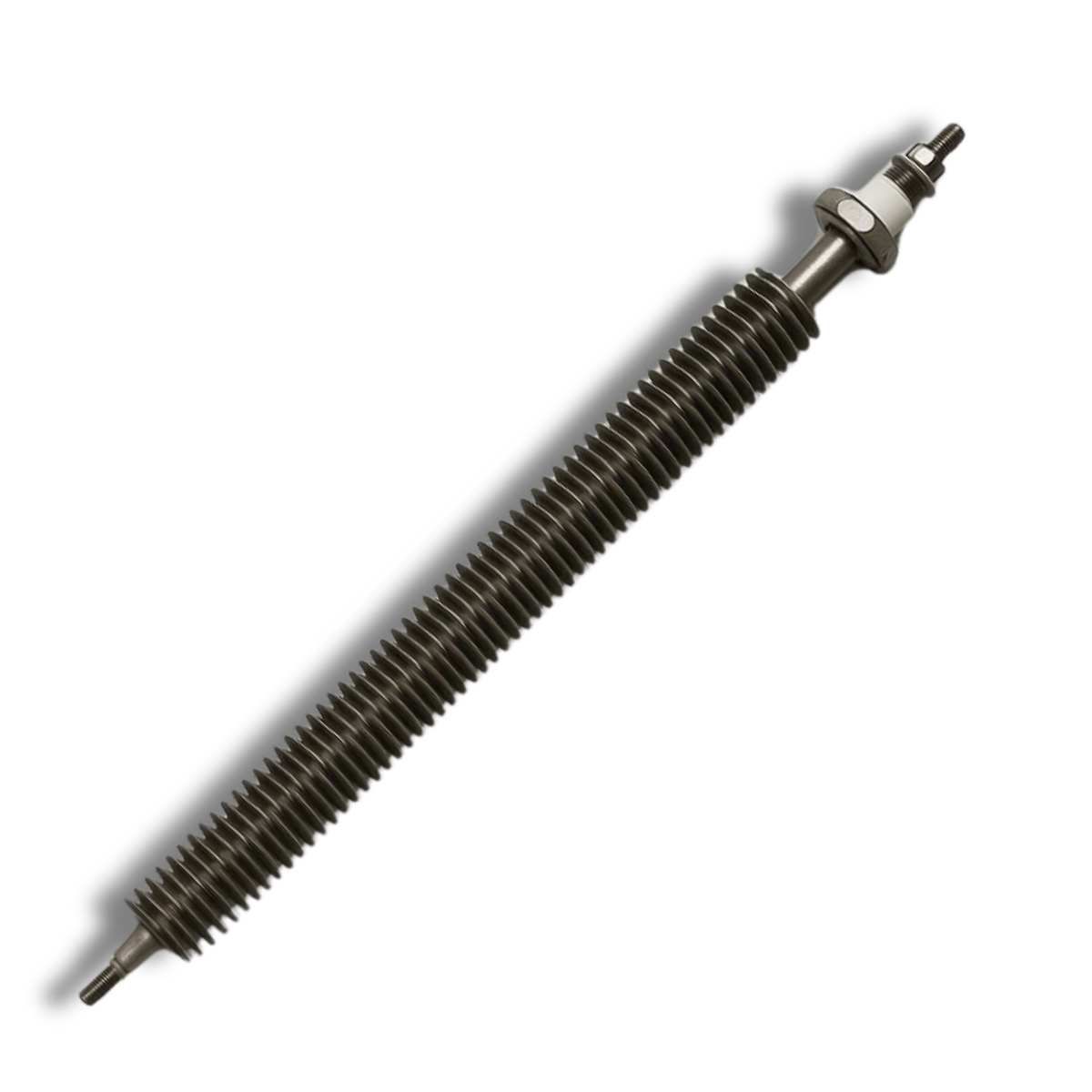
A finned tubular heater is a tubular element with thin metal fins wound and welded around the sheath. The fins multiply the surface touching the air by three to five times, so the same wattage transfers at a much lower sheath temperature. It is the standard choice for heating air and ducts.
Related Products
Straight Tubular Heater
A straight tubular heater is the simplest form of tubular element: one straight rod with no bends and a terminal at each end. It is made for places that already have a straight bore, pipe or channel, where the element can sit in without changing direction.
Formed Tubular Heater
A formed tubular heater is a tubular element bent into shape after it is made: a U, a ring, a spiral, or whatever the drawing calls for. Bending lets you fit a long heated length into a small space, or match the element to the shape of the part it heats.
Finned Tubular Heater
A finned tubular heater is a tubular element with thin metal fins wound and welded around the sheath. The fins multiply the surface touching the air by three to five times, so the same wattage transfers at a much lower sheath temperature. It is the standard choice for heating air and ducts.
Ask for a Price or Technical Advice
Call us or send a WhatsApp message for a price, full specifications, or a custom build.
Last updated: