Nozzle Heater
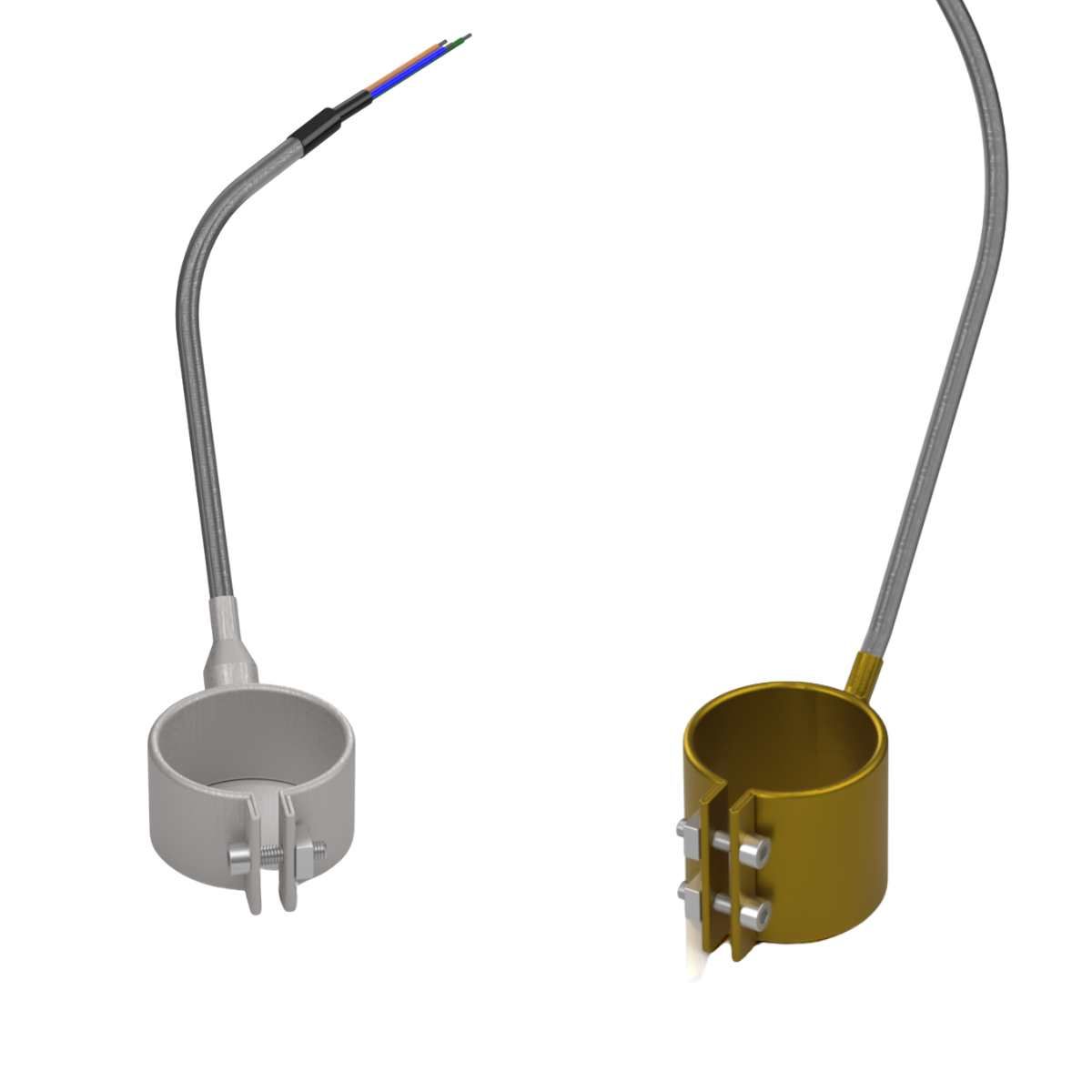
A nozzle heater is a small, narrow band heater made for the tip of an injection machine or a hot runner nozzle. It wraps a diameter of only 15 to 60 mm, often carries its own thermocouple, and holds the melt at temperature through the last few centimetres before it enters the mould.
- Inner diameter
- 15 to 60 mm
- Max temperature
- up to 650 °C
- Width
- 20 to 80 mm
- Built-in sensor
- Optional type J or K
- Voltage
- 220 or 230 V
- Custom builds
- To your nozzle drawing
Ask for a Price or Technical Advice
Call us or send a WhatsApp message for a price, full specifications, or a custom build.
Technical Specifications
The figures below are the usual ranges for this type of element. Builds outside them are possible.
| Property | Value |
|---|---|
| Construction | Resistance wire on mica or in ceramic, in a narrow stainless band with a clamping screw |
| Max working temperature | 450 (mica) to 650 (ceramic) °C |
| Inner diameter range | 15 to 60 mm |
| Width range | 20 to 80 mm |
| Safe watt density | 3 to 8 W/cm² |
| Built-in sensor | Type J or K thermocouple, laid under the band |
| Clamping | Single clamping screw or a spring-tensioned strap |
| Working voltage | 220 or 230, sometimes 110 on hot runner systems V |
| Termination | Braided leads from the edge, usually 1000 mm, with a right-angle exit option |
| Cut-outs | Notches for the thermocouple boss and the nozzle body |
| Power tolerance | +5 to -10 % |
Where It Is Used
- Plastic injection moulding
- Packaging machinery
- Hot runner nozzles and manifolds
- Small diameter pipes and fittings
Choosing, Fitting and Looking After It
The nozzle is the hardest zone on the machine to hold
It is small, so it has almost no thermal mass. It sticks out into the air, so it loses heat constantly. And it touches the cold mould on every cycle, which pulls heat out of it in a pulse rather than steadily. That combination means a nozzle zone swings far more than a barrel zone, and it is the reason a nozzle needs its own heater, its own sensor and its own controller channel.
If the tip freezes off, the shot short-fills or the machine stalls. If it runs too hot, the material degrades in the tip and the next shot carries the burn marks into the part.
Sensor placement decides whether the zone is controllable
A nozzle heater with a built-in thermocouple reads the nozzle surface under the band. That is close to what you want to control. What you must avoid is a sensor that has worked loose and now reads the air, or one sitting at the far end of the nozzle from the tip. A zone that oscillates, or one that reads far below what the melt clearly is, is almost always a sensor problem rather than a heater problem.
The leads are the part that actually fails
Very few nozzle heaters die of a burnt-out element. They die because a lead was pulled during a mould change, crushed when the guard closed, or cooked by purged plastic falling on it. Route the leads upward, clip them so nothing hangs on the band, and use braided lead wire on any nozzle that gets purged.
Ask for the leads long enough to reach the box in one piece. A crimped joint near a nozzle is a fault waiting for a date.
Keep drool off the heater
Purged material that lands on a nozzle heater bakes onto it and then insulates it. Once there is a hard shell of carbonised plastic between the band and the nozzle, the heater runs hotter to deliver the same heat and its life drops. Clean the nozzle and the heater at each mould change, while the plastic is still soft enough to come off without a scraper.
Fitting on a stepped nozzle
Nozzles are rarely a plain cylinder. There are flats, a hex, a step down towards the tip, and the thermocouple boss. A single heater bored for the largest diameter will be loose everywhere else, which is the usual reason a new nozzle heater fails within days. Two shorter heaters of different bores, each tight on its own section, will outlast one that spans the step.
Match the wattage to the tip, not to the barrel
It is tempting to fit a more powerful nozzle heater when a tip keeps freezing. More often the fault is a nozzle sitting against the mould for too long, or a sensor reading the wrong place. Extra watts on a small band means a high watt density on a part that is already the hottest thing on the machine, and it burns the material rather than fixing the cycle.
Price
Price
The price for this product depends on the specification you order.
What Sets the Price
- Diameter and length
- Power and voltage needed
- Sheath material (stainless steel, brass and so on)
- Termination type and lead or thread length
- Whether a thermocouple is built in
- Order quantity
How It Compares
A nozzle heater against the barrel heater it is often confused with.
| Feature | Nozzle | Barrel band |
|---|---|---|
| Diameter | 15 to 60 mm | 60 to 500 mm |
| Job | Hold the melt at the tip | Melt and heat the whole charge |
| Sensor | Often built in | Separate, in the barrel |
| Leads | Long, braided, flexible | Short, to a terminal box |
| Replacement | Frequent, it lives in a hard place | Rare |
Common Questions
Why does the nozzle need its own heater and its own zone?
Because the nozzle is small, sticks out, and touches the cold mould every cycle. It loses heat far faster than the barrel does, and if it runs on the barrel's setpoint the melt in the tip freezes off. It needs its own heat and its own sensor.
Should the thermocouple be built into the heater?
On a nozzle, usually yes. There is rarely room for a separate sensor pocket, and a sensor laid under the band reads the nozzle surface closely enough to control it. On a hot runner tip the mould builder often specifies where the sensor goes, so follow the drawing.
Why do nozzle heaters fail so much more often than barrel heaters?
They live in the worst place on the machine. Hot plastic drools onto them, the mould closes next to them, and the leads get pulled every time the nozzle is serviced. Most failures are mechanical damage or a broken lead, not the element burning out.
What lead length should I ask for?
Long enough to reach the terminal box without a join, usually about a metre, and braided. A joint in a lead near a nozzle sits in exactly the wrong place — heat, plastic and movement all at once — and it will be the next thing that fails.
Can one be made for an odd-shaped nozzle?
Yes. Send the diameter, the length available, where the thermocouple boss and any flats or steps sit, and which way the leads must leave. A nozzle that steps down in diameter can be covered by two heaters of different bores rather than one that fits neither.
How tight should the clamping screw be?
Tight enough to close the band fully onto the nozzle, and no tighter. A small band distorts easily, and overtightening a nozzle heater dents the band into the element. Bring it up, run the machine to temperature, shut down and re-check it once.
Related Products
Band Heater
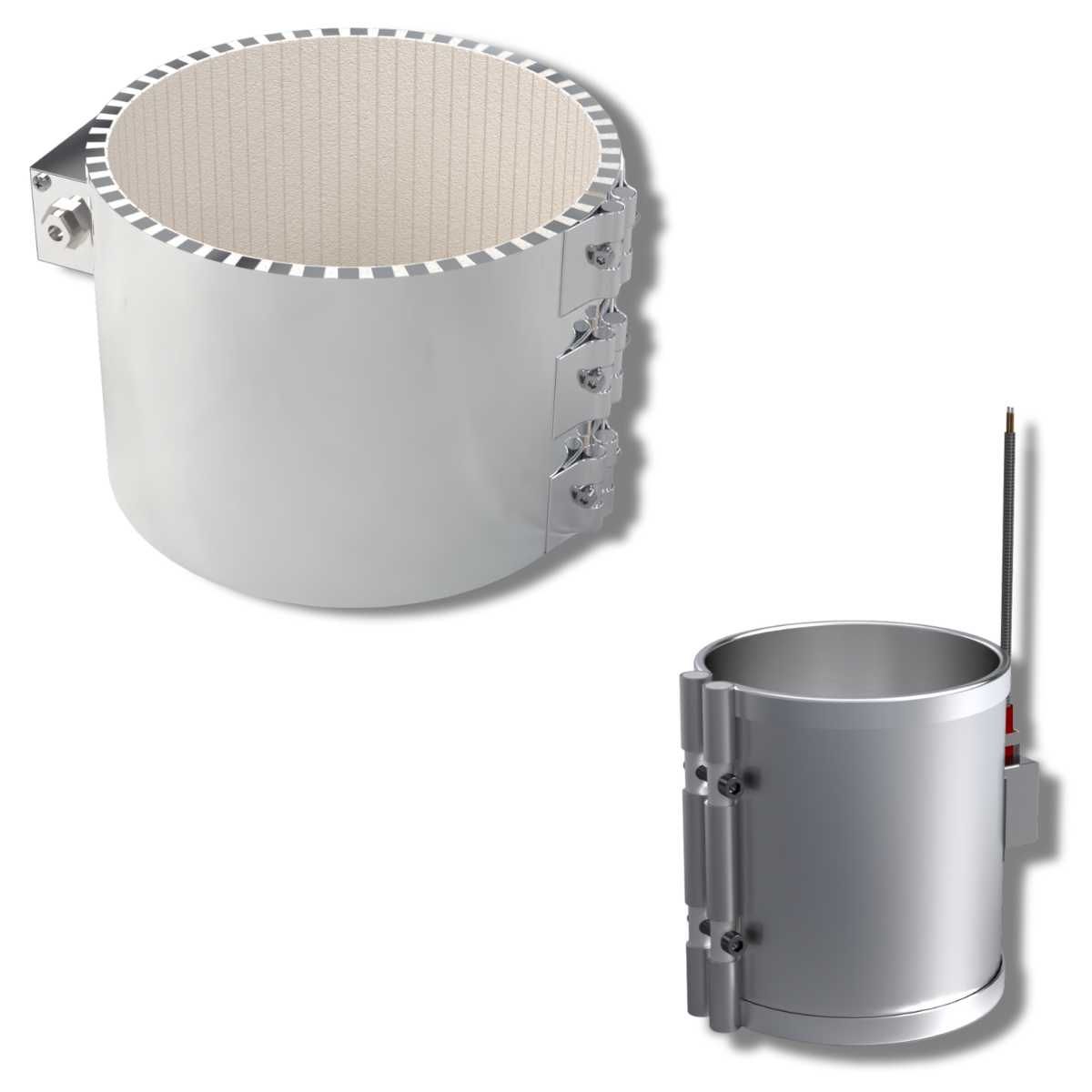
A band heater is a ring-shaped element that clamps around a cylinder and heats it through its wall. Resistance wire sits on mica or inside a ceramic body, wrapped in a stainless steel band that is pulled tight by a clamp. It is the element that heats injection barrels, extruder zones, nozzles and pipes.
Mica Band Heater
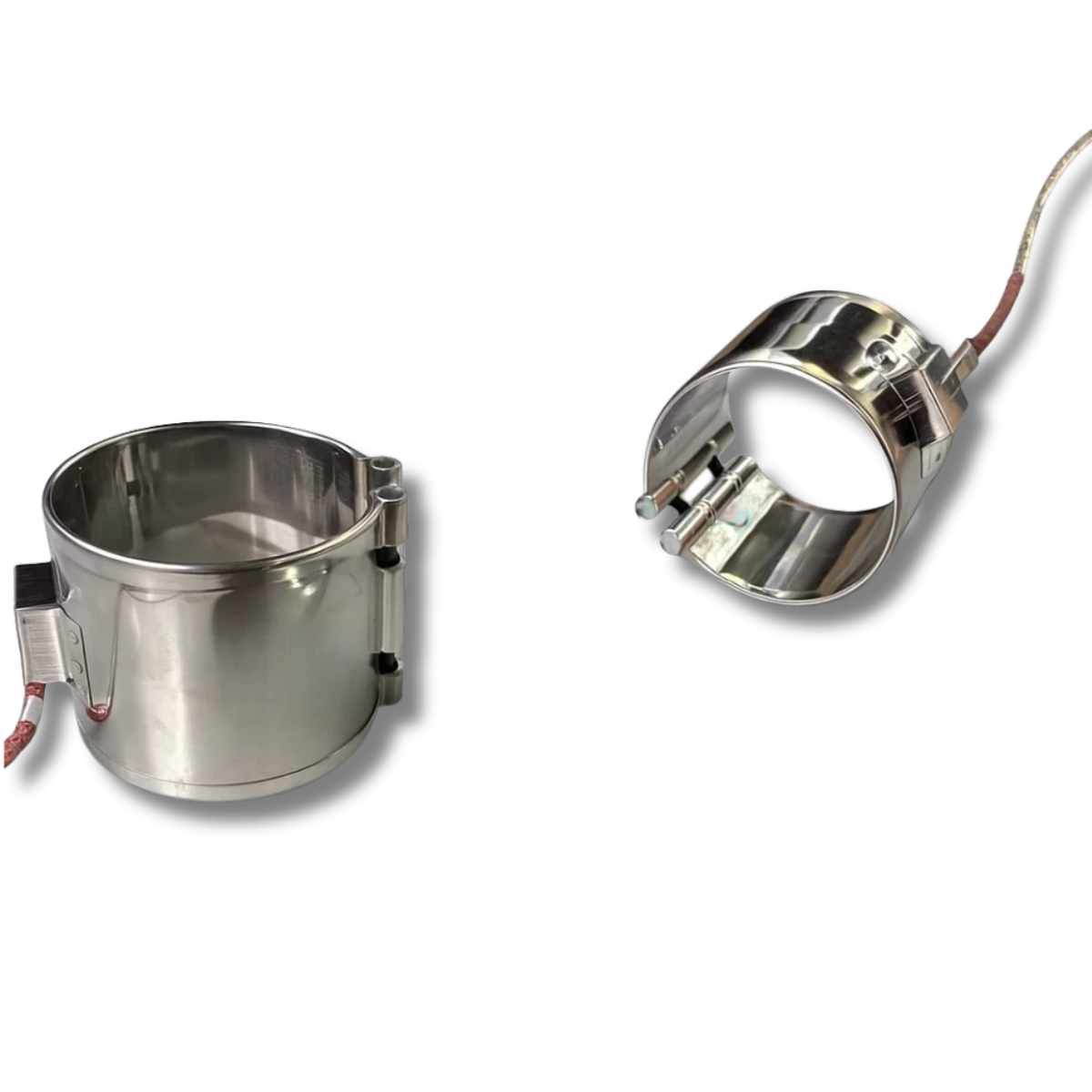
A mica band heater is the thin, fast type of band heater. Flat nickel-chrome ribbon is wound over a mica sheet, covered with more mica and closed inside a stainless steel band about three millimetres thick. It heats an injection barrel quickly and cheaply, and we supply it for working temperatures up to 300 °C.
Ceramic Band Heater
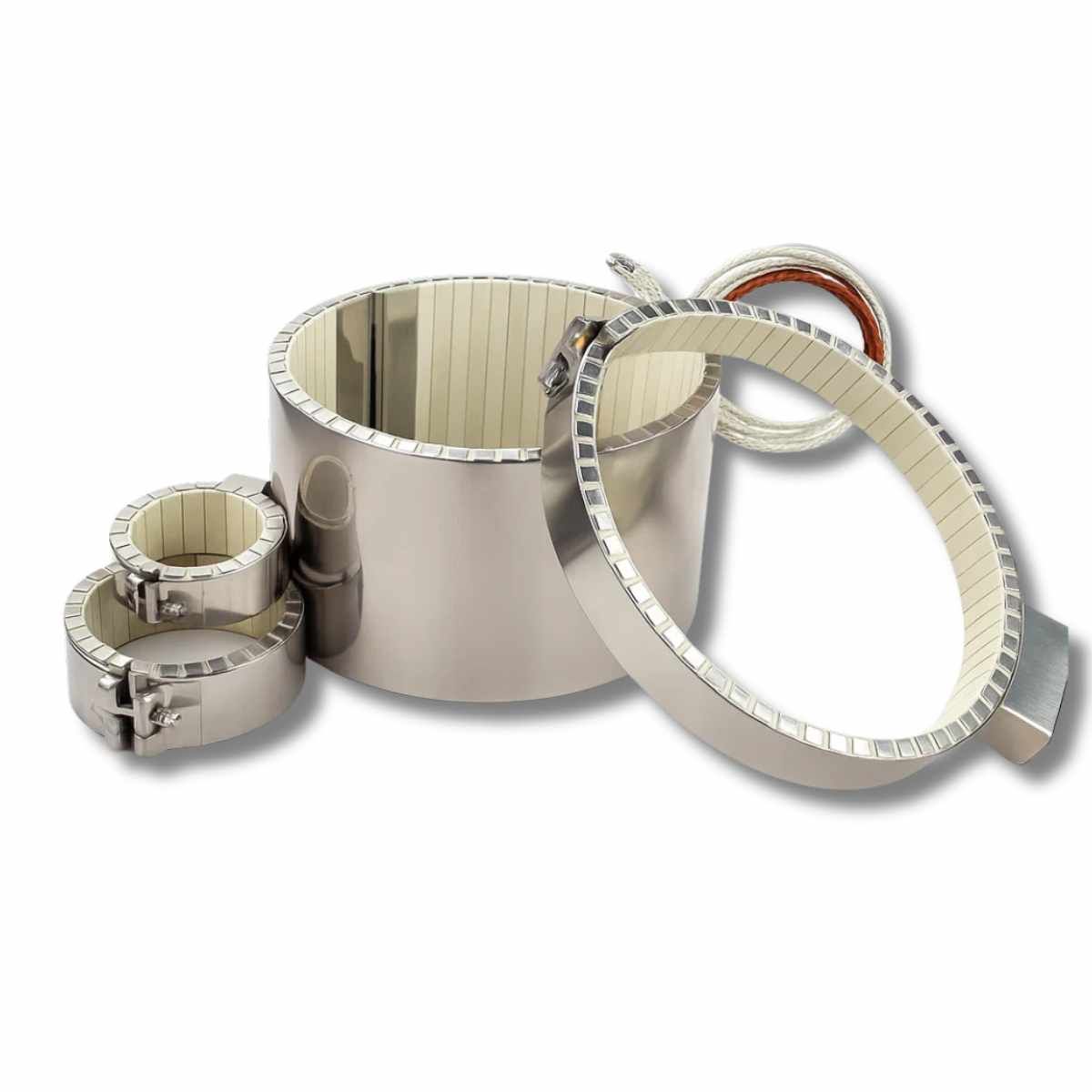
A ceramic band heater carries its resistance wire threaded through interlocking ceramic bricks, with a ceramic fibre blanket and a stainless frame behind them. We supply it for working temperatures up to 500 °C, it keeps heating even where contact with the barrel is imperfect, and its built-in insulation means less of its heat is lost to the workshop.
Ask for a Price or Technical Advice
Call us or send a WhatsApp message for a price, full specifications, or a custom build.
Last updated: