High Temperature Heater
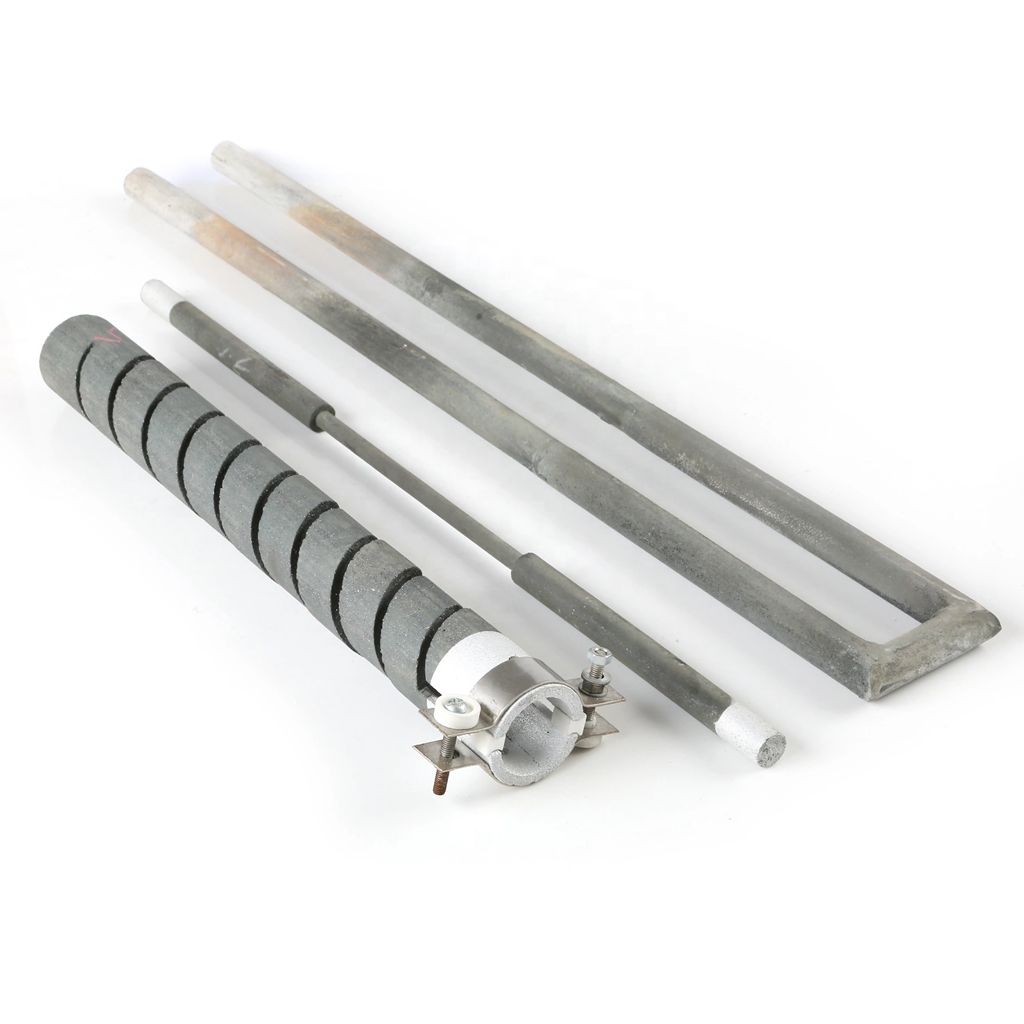
A high temperature heater works above the range where an ordinary sheathed element survives — roughly 1000 °C and up. Silicon carbide rods, molybdenum disilicide elements, open resistance coils and molybdenum heaters take furnaces and kilns from 1000 °C to about 1800 °C, and each one is chosen as much by the atmosphere inside the furnace as by the temperature.
- Temperature range
- 1000 to 1800 °C
- Element types
- Silicon carbide, ceramic, coil, molybdenum
- Supply
- Transformer, low voltage and high current
- Heat transfer
- Radiation, inside the furnace chamber
- Atmosphere
- Air, inert or vacuum, by type
- Custom builds
- To your furnace dimensions
Ask for a Price or Technical Advice
Call us or send a WhatsApp message for a price, full specifications, or a custom build.
Technical Specifications
The figures below are the usual ranges for this type of element. Builds outside them are possible.
| Property | Value |
|---|---|
| Working principle | The element radiates into the chamber; there is no sheath, so the element itself is exposed to the furnace atmosphere |
| Silicon carbide rods | up to 1600 °C |
| Molybdenum disilicide elements | up to 1800 °C |
| Iron-chrome-aluminium coil | up to 1400 °C |
| Molybdenum elements | up to 1700 in vacuum or inert gas only °C |
| Atmosphere | SiC and MoSi₂ run in air; molybdenum oxidises in air above 400 °C |
| Electrical supply | Step-down transformer with tappings, so voltage can be raised as the elements age |
| Control | Thyristor with current limit |
| Mounting | Through the furnace wall on ceramic bushes, hanging free inside |
| Element spacing | At least twice the element diameter from any wall or workpiece |
Where It Is Used
- Industrial furnaces and ovens
- Laboratory equipment
- Ceramic and porcelain kilns
- Glass melting and annealing
- Heat treatment, hardening and annealing
- Brazing and sintering furnaces
Choosing, Fitting and Looking After It
The atmosphere decides as much as the temperature
At these temperatures there is no protective sheath. The element itself sits in whatever the furnace is full of, and that changes what will survive. Air is fine for silicon carbide and molybdenum disilicide. Molybdenum in air above about 400 °C simply oxidises and disappears, so it belongs only in a vacuum or an inert-gas furnace.
Carbon-rich, sulphurous or halogen-bearing atmospheres shorten the life of every type, sometimes dramatically. Say what goes in the furnace as well as how hot it gets — glazes, fluxes and binders all give off something at temperature.
These elements age, and the furnace has to be built for it
A silicon carbide element does not fail suddenly one day. It gets steadily more resistive over months, so the same supply pushes less power and the furnace takes longer to come up. Left alone, that is read as a control fault and chased around the panel for weeks.
The fix is designed in from the start: a transformer with several tappings, and a maintenance habit of measuring the resistance of each circuit once or twice a year and stepping up a tap when the numbers say so.
Never mix a new element into an old circuit
Because they age, elements in service are not interchangeable with new ones. Put one new element in series or parallel with worn ones and it takes the wrong share of the current — too much in a parallel bank, too little in series — and it either burns out or leaves a cold zone. Replace a circuit at a time. Keep the old elements that still work, matched by resistance, as spares for their own group.
Handle them as ceramics, because that is what they are
Silicon carbide and molybdenum disilicide rods are brittle, and a used molybdenum disilicide element is far more brittle cold than it was when new. They break from being levered, from being clamped hard, and from the weight of their own length if unsupported. Support long elements at the middle, let them hang or slide freely as they expand, and never force one that has bonded to its bush.
The contact ends do the failing
Most furnace element failures are at the terminals, not in the hot zone. The cold end is where a braided strap, an aluminium-sprayed contact and a clamp all meet, and where oxide grows between them. A poor contact heats, oxidises further, and heats more, until the end of the element burns off. Clean and re-tension the clamps at every service, and keep the terminal area ventilated and free of dust.
Spacing and radiation
At 1500 °C an element radiates fiercely to anything near it. Too close to the wall, it overheats the lining; too close to the work, it marks it. Keep at least twice the element diameter clear all round, and remember that an element radiating onto another element makes both hotter than the design allowed.
Price
Price
The price for this product depends on the specification you order.
What Sets the Price
- Diameter and length
- Power and voltage needed
- Sheath material (stainless steel, brass and so on)
- Termination type and lead or thread length
- Whether a thermocouple is built in
- Order quantity
How It Compares
The four types, separated by temperature and by what they can breathe.
| Feature | Coil | Silicon carbide | Molybdenum disilicide | Molybdenum |
|---|---|---|---|---|
| Max temperature | 1400 °C | 1600 °C | 1800 °C | 1700 °C |
| In air | Yes | Yes | Yes | No |
| Ages with use | Slowly | Yes, resistance rises | Little | Yes, becomes brittle |
| Cost | Lowest | Medium | Highest | High |
Common Questions
Why do these elements need a transformer?
They are low-resistance and take very high current at low voltage — the opposite of a normal element. Wiring one to 380 V mains would draw a current no cable could carry. A step-down transformer with tappings supplies it, and the tappings matter for the reason in the next answer.
Why does resistance rise as the element gets older?
Silicon carbide slowly oxidises in service, so its resistance climbs and the same voltage delivers less power. The furnace takes longer to reach temperature each year. Moving up a transformer tapping restores the power, which is why the transformer is specified with several.
Can old and new elements be used in the same furnace?
Not on the same circuit. An aged element and a new one have very different resistances, so the new one takes more current and burns out early. Replace a whole circuit at a time, or match the resistance of the replacement to what is already in there.
What decides the type — the temperature or the atmosphere?
Both, and the atmosphere is the one people forget. Molybdenum will reach 1700 °C but oxidises away in air above about 400 °C, so it only belongs in a vacuum or an inert-gas furnace. Silicon carbide and molybdenum disilicide work in open air.
How fast can a furnace be brought up to temperature?
Slower than the elements allow, usually. The limit is the ceramic — the lining, the bricks and the element supports crack under a fast ramp, and so does anything being fired. Follow the ramp the furnace builder gives, not the one the element could stand.
Can you make elements for an existing furnace?
Yes. What is needed is the hot zone length, the cold end length, the diameter, how the element passes through the wall, the number of elements and how they are wired. A photograph of the old element in place answers most of it.
Types in This Family
Silicon Carbide Heater
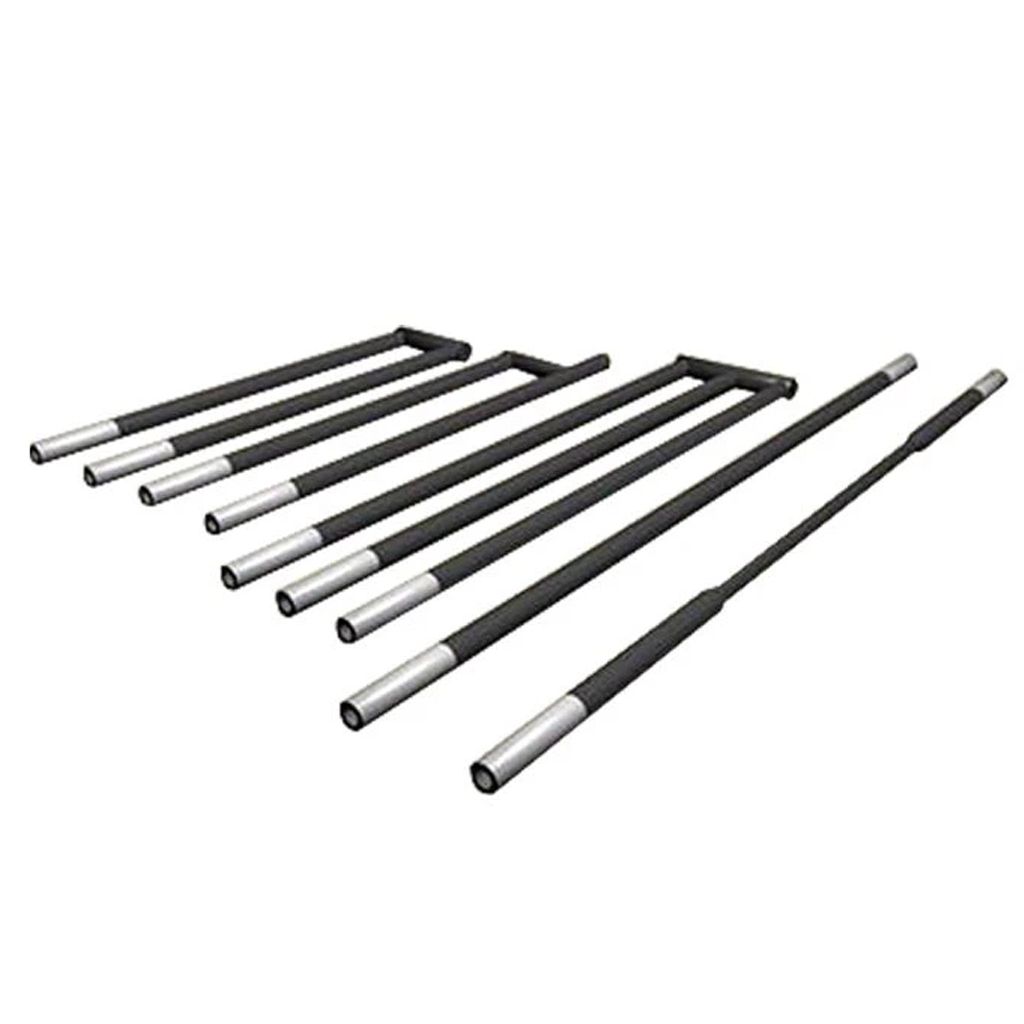
A silicon carbide heater is a ceramic rod that glows in open air at furnace temperatures up to about 1600 °C. It has no sheath and no wire — the rod itself is the resistance. It ages by slowly gaining resistance, so the furnace that runs it needs a transformer with tappings from the start.
Ceramic Heater
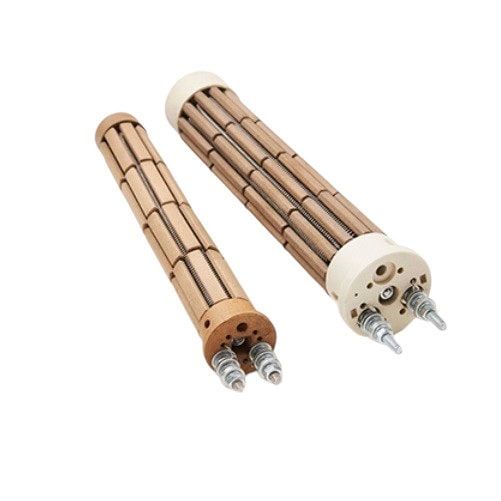
A ceramic heater for high temperature work carries its resistance wire inside a ceramic body rather than leaving it bare in the chamber. Wire threaded through ceramic tubes and beads, or set into a fibre module, reaches about 1200 °C while staying protected from the load and from what the furnace gives off.
Furnace Heater
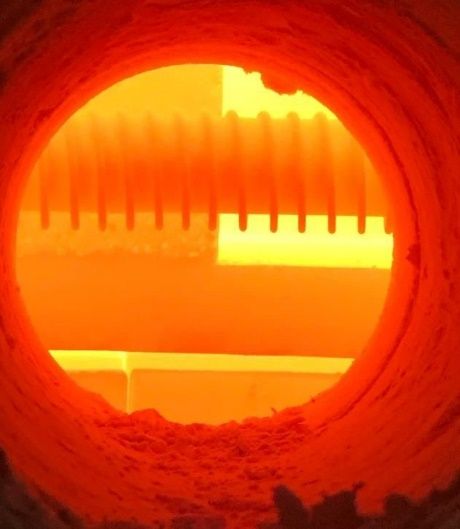
A furnace heater in its simplest form is an open coil of resistance wire laid in grooves in the lining or hung on ceramic supports inside the chamber. Iron-chrome-aluminium wire reaches about 1400 °C, nickel-chrome about 1200, and the coil is wound and pitched for the furnace it goes into.
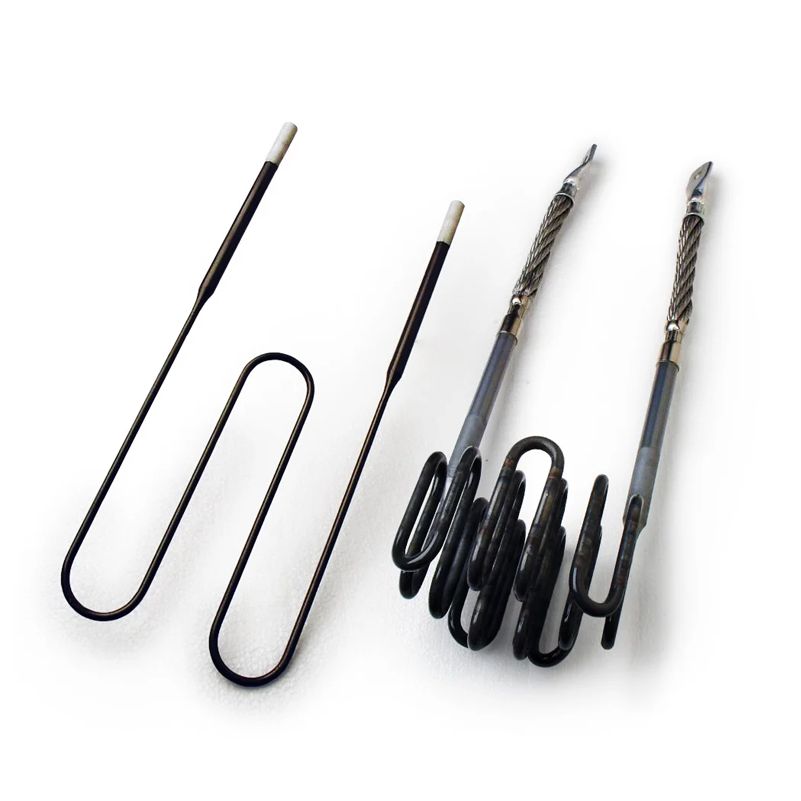
Molybdenum Heater
A molybdenum heater is a wire, strip or rod element for vacuum and inert-gas furnaces. It reaches about 1700 °C, but only where there is no oxygen — molybdenum burns away in air above roughly 400 °C. It is the element used for sintering, brazing and crystal growing under vacuum.
Related Products
Silicon Carbide Heater
A silicon carbide heater is a ceramic rod that glows in open air at furnace temperatures up to about 1600 °C. It has no sheath and no wire — the rod itself is the resistance. It ages by slowly gaining resistance, so the furnace that runs it needs a transformer with tappings from the start.
Ceramic Heater
A ceramic heater for high temperature work carries its resistance wire inside a ceramic body rather than leaving it bare in the chamber. Wire threaded through ceramic tubes and beads, or set into a fibre module, reaches about 1200 °C while staying protected from the load and from what the furnace gives off.
Furnace Heater
A furnace heater in its simplest form is an open coil of resistance wire laid in grooves in the lining or hung on ceramic supports inside the chamber. Iron-chrome-aluminium wire reaches about 1400 °C, nickel-chrome about 1200, and the coil is wound and pitched for the furnace it goes into.
Molybdenum Heater
A molybdenum heater is a wire, strip or rod element for vacuum and inert-gas furnaces. It reaches about 1700 °C, but only where there is no oxygen — molybdenum burns away in air above roughly 400 °C. It is the element used for sintering, brazing and crystal growing under vacuum.
Ask for a Price or Technical Advice
Call us or send a WhatsApp message for a price, full specifications, or a custom build.
Last updated: