Furnace Heater
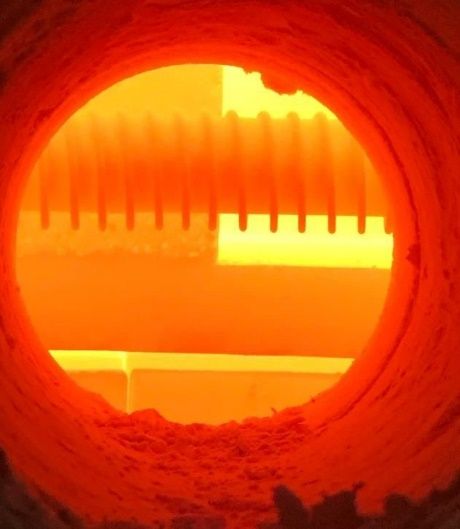
A furnace heater in its simplest form is an open coil of resistance wire laid in grooves in the lining or hung on ceramic supports inside the chamber. Iron-chrome-aluminium wire reaches about 1400 °C, nickel-chrome about 1200, and the coil is wound and pitched for the furnace it goes into.
- Max temperature
- 1200 (NiCr) to 1400 (FeCrAl) °C
- Form
- Open coil in the lining
- Wire
- Iron-chrome-aluminium or nickel-chrome
- Heat transfer
- Radiation into the chamber
- Cost
- The lowest in this family
- Custom builds
- Wound to your groove and power
Ask for a Price or Technical Advice
Call us or send a WhatsApp message for a price, full specifications, or a custom build.
Technical Specifications
The figures below are the usual ranges for this type of element. Builds outside them are possible.
| Property | Value |
|---|---|
| Construction | Resistance wire wound into a coil, stretched to a set pitch, laid in lining grooves or hung on ceramic supports |
| Wire grades | Iron-chrome-aluminium for high temperature, nickel-chrome where the wire must stay ductile |
| Max element temperature | 1200 (nickel-chrome) to 1400 (iron-chrome-aluminium) °C |
| Wire diameter | 0.5 to 5 mm |
| Coil stretch | Typically 2.5 to 4 times the closed-coil length |
| Surface loading on the wire | 1 to 3, lower as the temperature rises W/cm² |
| Atmosphere | Air; not for vacuum or strongly reducing gas |
| Supply | Mains, or a transformer where the resistance is very low |
| Mounting | In grooves in the lining, or on ceramic pins and tubes |
| Termination | Thicker tails brought out through the wall on ceramic bushes |
Where It Is Used
- Industrial furnaces and ovens
- Laboratory equipment
- Ceramic and porcelain kilns
- Heat treatment, hardening and annealing
- Rewinding and repairing existing furnaces
Choosing, Fitting and Looking After It
The cheapest element in the family, and the one most often ruined by fitting
An open coil is just wire, and that is its strength: any power, any chamber, wound to order, replaced for the cost of the wire. Almost every furnace in a small workshop runs on them. What decides whether they last is entirely in the winding and the fitting — the wire diameter, the coil diameter, how far the coil is stretched, and how it is held.
Get those right and an element runs for years. Get the stretch wrong and it fails in weeks, and it looks like a wire quality problem.
Stretch sets the temperature of the wire
A coil is pulled out to a set length before it goes in, usually two and a half to four times its closed length. If it is too tight, adjacent turns face each other across a very small gap, radiate into one another, and run far hotter than the design intends. If it is too stretched, it has less support per unit length and sags out of its groove onto whatever is below.
Fit a coil to the length it was wound for, and check the pitch is even along the whole run. A short section left bunched is a hot spot that will decide where the element fails.
Iron-chrome-aluminium goes brittle, once, and permanently
This is the single fact that catches people out. FeCrAl wire is soft and workable when new. After its first firing it recrystallises and becomes brittle, and from then on it cannot be bent cold — it snaps. So a used element cannot be straightened, re-pitched or eased back into a groove without heating that section first.
Plan for that at fitting: get the geometry right the first time, and when an old element has to be moved to get at something, warm it or accept that it will break. Nickel-chrome keeps its ductility, which is why it is still chosen for elements that hang free or get handled.
The wall crossing is where elements die
The coil in the middle of the chamber is doing what it was designed to do. The tails that leave through the wall are in the worst place — hot, poorly cooled, and joined to a terminal that can loosen. Bring the tails out thicker than the hot coil so they run cool, pass them through ceramic bushes, and keep the terminals clean and tight. Almost every premature failure in an open-coil furnace is within a hand’s width of the wall.
Grooves, pins and gravity
A coil laid in a groove is held by the groove. One hung on ceramic pins is held by the pins, and it will find any that are too far apart. Support spacing has to suit the coil diameter and the temperature: hot wire has very little strength, and a span that is fine at 900 °C will droop at 1300. If a lining groove has broken away, repair the groove before fitting a new element into it.
Match by resistance when replacing part of a set
Elements in a furnace are wired as circuits, and the circuit only behaves if the elements in it are alike. Measure the resistance of a working element in the same circuit and have the replacement wound to match. Two coils can look identical and differ by half in resistance, and the difference shows up as one glowing zone and one dull one.
Price
Price
The price for this product depends on the specification you order.
What Sets the Price
- Diameter and length
- Power and voltage needed
- Sheath material (stainless steel, brass and so on)
- Termination type and lead or thread length
- Whether a thermocouple is built in
- Order quantity
How It Compares
The two wire families, and what actually decides between them.
| Feature | Iron-chrome-aluminium | Nickel-chrome |
|---|---|---|
| Max temperature | Up to 1400 °C | Up to 1200 °C |
| After first firing | Brittle, cannot be reshaped cold | Stays ductile |
| Strength when hot | Lower, needs support | Higher |
| Cost | Lower | Higher |
Common Questions
Which wire should I use?
Iron-chrome-aluminium for the highest temperature and the lowest cost. It goes brittle after its first firing, so it can never be reshaped cold. Nickel-chrome stops lower but stays ductile and stronger when hot, which suits an element that has to be handled or that hangs unsupported.
What is coil stretch and why does it matter?
A wound coil is pulled out to a set length before fitting, typically two and a half to four times its closed length. Too tight and neighbouring turns radiate onto each other and overheat; too stretched and the coil sags out of its groove.
Can I re-shape an old element to fit?
Not if it is iron-chrome-aluminium and it has been fired. It will snap. If it must be reshaped, heat that section with a torch first and work it warm. Nickel-chrome can be worked cold, which is one of the reasons it is still used.
How do I match a replacement to what is already in the furnace?
By resistance, not by appearance. Measure the resistance of the circuit that still works and have the replacement wound to the same figure. Wire diameter, coil diameter, pitch and length together decide it, and two coils that look alike can be very different.
Why do elements always fail near the wall?
Because the wire has to leave the hot chamber and reach a terminal, and that transition runs hot with poor cooling. Thicker tails, ceramic bushes and a clean, tight terminal are what fix it. The middle of a coil is rarely the problem.
Does it work in a vacuum furnace?
No. These wires rely on an oxide layer formed in air to protect them. In a vacuum or a strongly reducing atmosphere that layer does not form or is stripped away, and molybdenum or graphite is the right choice instead.
Related Products
High Temperature Heater
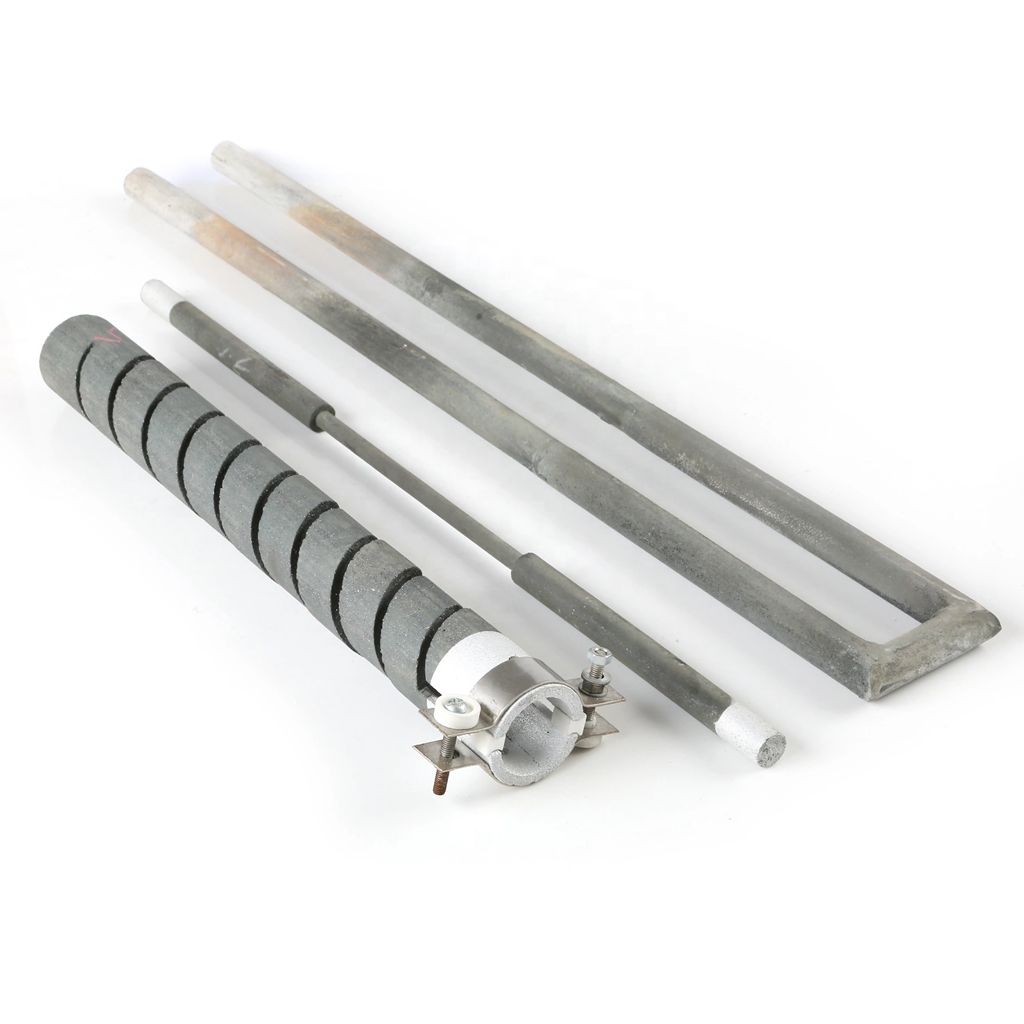
A high temperature heater works above the range where an ordinary sheathed element survives — roughly 1000 °C and up. Silicon carbide rods, molybdenum disilicide elements, open resistance coils and molybdenum heaters take furnaces and kilns from 1000 °C to about 1800 °C, and each one is chosen as much by the atmosphere inside the furnace as by the temperature.
Silicon Carbide Heater
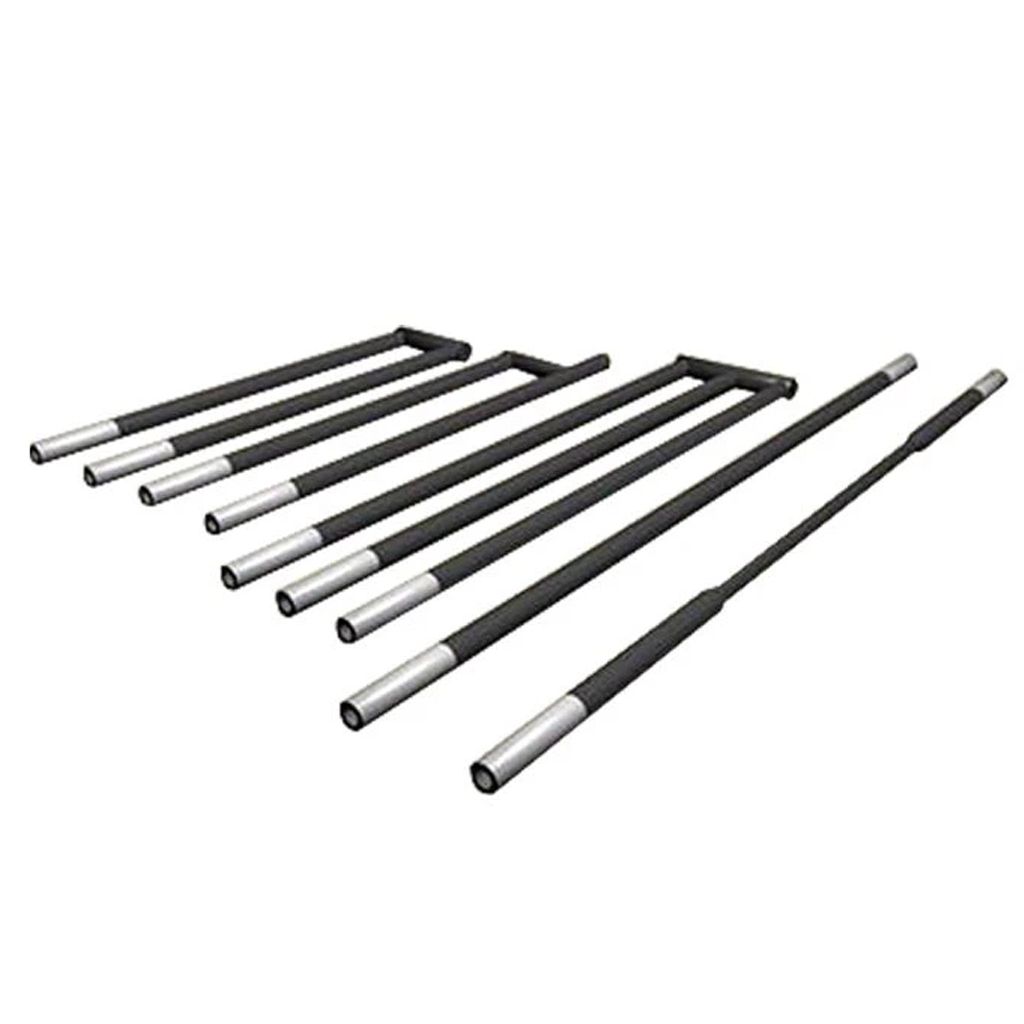
A silicon carbide heater is a ceramic rod that glows in open air at furnace temperatures up to about 1600 °C. It has no sheath and no wire — the rod itself is the resistance. It ages by slowly gaining resistance, so the furnace that runs it needs a transformer with tappings from the start.
Ceramic Heater
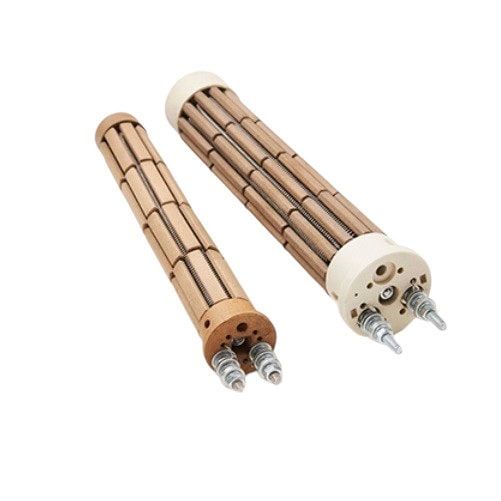
A ceramic heater for high temperature work carries its resistance wire inside a ceramic body rather than leaving it bare in the chamber. Wire threaded through ceramic tubes and beads, or set into a fibre module, reaches about 1200 °C while staying protected from the load and from what the furnace gives off.
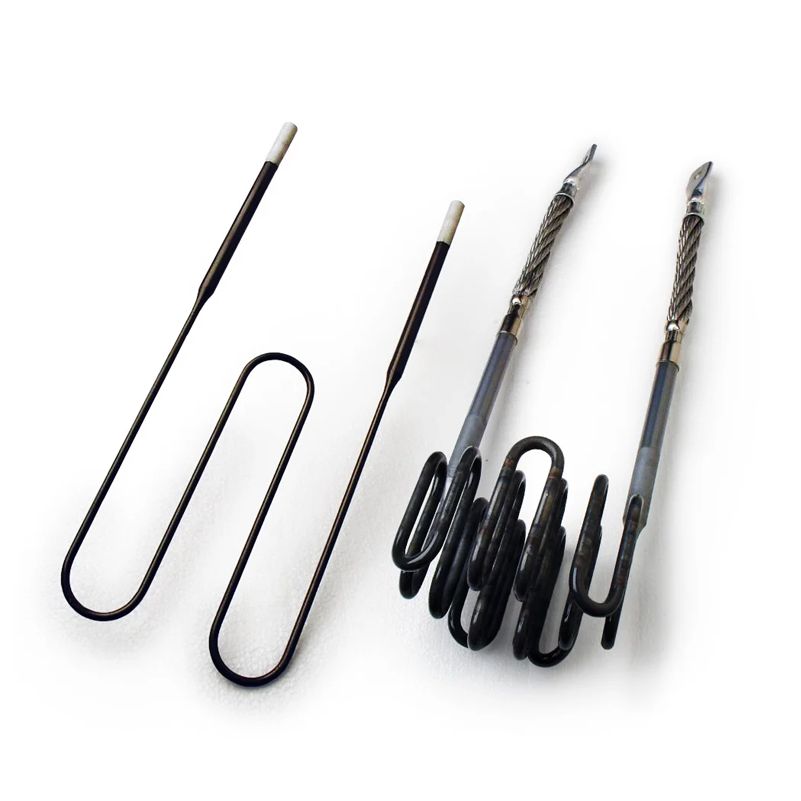
Molybdenum Heater
A molybdenum heater is a wire, strip or rod element for vacuum and inert-gas furnaces. It reaches about 1700 °C, but only where there is no oxygen — molybdenum burns away in air above roughly 400 °C. It is the element used for sintering, brazing and crystal growing under vacuum.
Ask for a Price or Technical Advice
Call us or send a WhatsApp message for a price, full specifications, or a custom build.
Last updated: