Ceramic Heater
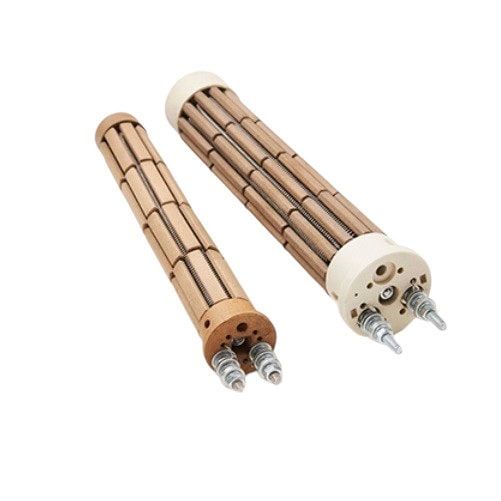
A ceramic heater for high temperature work carries its resistance wire inside a ceramic body rather than leaving it bare in the chamber. Wire threaded through ceramic tubes and beads, or set into a fibre module, reaches about 1200 °C while staying protected from the load and from what the furnace gives off.
- Max temperature
- up to 1200 °C
- Wire position
- Inside a ceramic body
- Forms
- Tubes, beads, fibre modules
- Heat transfer
- Radiation into the chamber
- Atmosphere
- Air and mildly reducing
- Custom builds
- To your chamber dimensions
Ask for a Price or Technical Advice
Call us or send a WhatsApp message for a price, full specifications, or a custom build.
Technical Specifications
The figures below are the usual ranges for this type of element. Builds outside them are possible.
| Property | Value |
|---|---|
| Construction | Resistance wire threaded through ceramic tubes or beads, or embedded in a vacuum-formed ceramic fibre module |
| Max working temperature | 1100 to 1200, by wire grade and body °C |
| Resistance wire | Iron-chrome-aluminium or nickel-chrome, by temperature |
| Body material | Alumina tubes and beads, or vacuum-formed ceramic fibre |
| Higher temperature option | Molybdenum disilicide elements, to 1800 °C |
| Atmosphere | Air and mildly reducing; not for vacuum or strong reducing gas |
| Supply | Mains or a step-down transformer, by the design |
| Mounting | Modules fixed to the shell; tube runs supported on the lining |
| Thermal mass | Low with fibre modules, higher with tube and brick |
| Termination | Wire tails brought out through the wall on ceramic bushes |
Where It Is Used
- Industrial furnaces and ovens
- Laboratory equipment
- Ceramic and porcelain kilns
- Heat treatment and annealing
- Retrofitting an old furnace with modular heating
Choosing, Fitting and Looking After It
The ceramic is there to keep the wire out of the furnace
A bare coil sits in a groove in the lining with nothing between it and the chamber. That is cheap and it works, until something touches it: a piece of work shifting, a shelf collapsing, a coil sagging out of its groove. Then the element shorts or breaks.
Putting the wire inside alumina tubes and beads, or embedding it in a fibre module, removes that whole class of failure. It also slows down chemical attack — glaze volatiles, salt and binder fumes reach a bare wire directly and a shielded one much more slowly. In a kiln that fires glazed work, that difference alone can double element life.
Fibre modules change how fast a furnace can work
A traditional brick furnace stores an enormous amount of heat in its lining. That heat has to be put in before the chamber gets hot and taken out before it cools, which is why a brick furnace takes hours at each end of a cycle. Ceramic fibre weighs a fraction of brick and holds a fraction of the heat, so a module-lined furnace comes up and cools down far faster and uses less energy per cycle.
The trade is durability: fibre is soft, and it does not like mechanical abuse, fast gas flows or being poked. In a furnace that is loaded roughly, brick still wins.
The ceiling comes from the ceramic, not the wire
The wire always runs hotter than the chamber, because it has to drive heat outward through whatever surrounds it. Bare, that gap is small. Inside a ceramic body, it is larger, so the chamber tops out lower for the same wire temperature. That is the honest reason a ceramic-bodied element is a 1200 °C part while a bare high-grade coil reaches further. Above that range, the answer is a different element family, not a thinner ceramic.
Atmosphere first, temperature second
These elements are designed for air. The protective oxide layer on the resistance wire is what keeps it alive, and a strongly reducing atmosphere strips that layer off. Carbon-rich, sulphurous and halogen-bearing atmospheres all shorten life, sometimes dramatically. Vacuum work belongs to molybdenum or graphite entirely.
Say what goes into the furnace as well as how hot it gets — that includes binders, waxes, glazes and fluxes, all of which give off something at temperature.
Ramp rate is set by the ceramic, not the element
Ceramic tubes, beads and fibre all crack under a fast temperature change. On a furnace being commissioned, follow the ramp the builder specifies rather than the one the wire could stand, and give a furnace that has been standing idle a slow first firing to drive moisture out of the lining. Water in a cold lining turns to steam in a fast ramp and spalls the surface.
Bringing the tails out is where the design usually fails
The wire has to leave the hot chamber and reach a terminal, and that transition is the weak point of most builds. Use ceramic bushes through the wall, keep the tails thick enough that they run cool, and never let a tail rest against the shell. Almost every ceramic-bodied element that fails prematurely fails within a hand’s width of where it passes through the wall.
Price
Price
The price for this product depends on the specification you order.
What Sets the Price
- Diameter and length
- Power and voltage needed
- Sheath material (stainless steel, brass and so on)
- Termination type and lead or thread length
- Whether a thermocouple is built in
- Order quantity
How It Compares
Ceramic-bodied against the bare coil it replaces.
| Feature | Ceramic bodied | Bare coil |
|---|---|---|
| Wire exposed to the chamber | No | Yes |
| Max temperature | About 1200 °C | Up to 1400 °C |
| Load touching an element | Protected | Short circuit |
| Replacement | Module or tube run | Rewind the coil |
| Cost | Higher | Lowest |
Common Questions
What does putting the wire inside ceramic actually buy?
Protection. The load cannot touch the wire, the wire cannot fall out of its groove, and vapours from what is being fired reach it more slowly. In a kiln where glaze volatiles attack a bare coil, a ceramic-bodied element lasts considerably longer.
What is a ceramic fibre module?
A block of vacuum-formed ceramic fibre with the element already embedded in its face. It is both the insulation and the heater in one piece, it bolts to the furnace shell, and it has very little thermal mass, so the furnace heats and cools quickly.
Why is the ceiling lower than a bare coil?
Because the wire has to run hotter than the chamber to push its heat through the ceramic around it. That gap costs temperature at the top of the range. Above about 1200 °C the answer is silicon carbide, molybdenum disilicide, or a bare high-grade coil.
Can it be used in a vacuum or a reducing atmosphere?
Not as a rule. These elements are designed for air. Strong reducing atmospheres attack the protective oxide on the wire, and vacuum work needs molybdenum or graphite instead. Say what the furnace atmosphere is before anything is built.
Can modules be fitted to an existing furnace?
That is one of the main reasons to use them. A furnace with a failed brick lining and burnt-out coils can be relined with modules that carry their own elements, which is often quicker than rebuilding the lining and rewinding the coils separately.
What is a molybdenum disilicide element?
A ceramic element for the very top of the range, working in air to about 1800 °C. It ages very little, unlike silicon carbide, but it is brittle when cold after use and it is the most expensive element in this family.
Related Products
High Temperature Heater
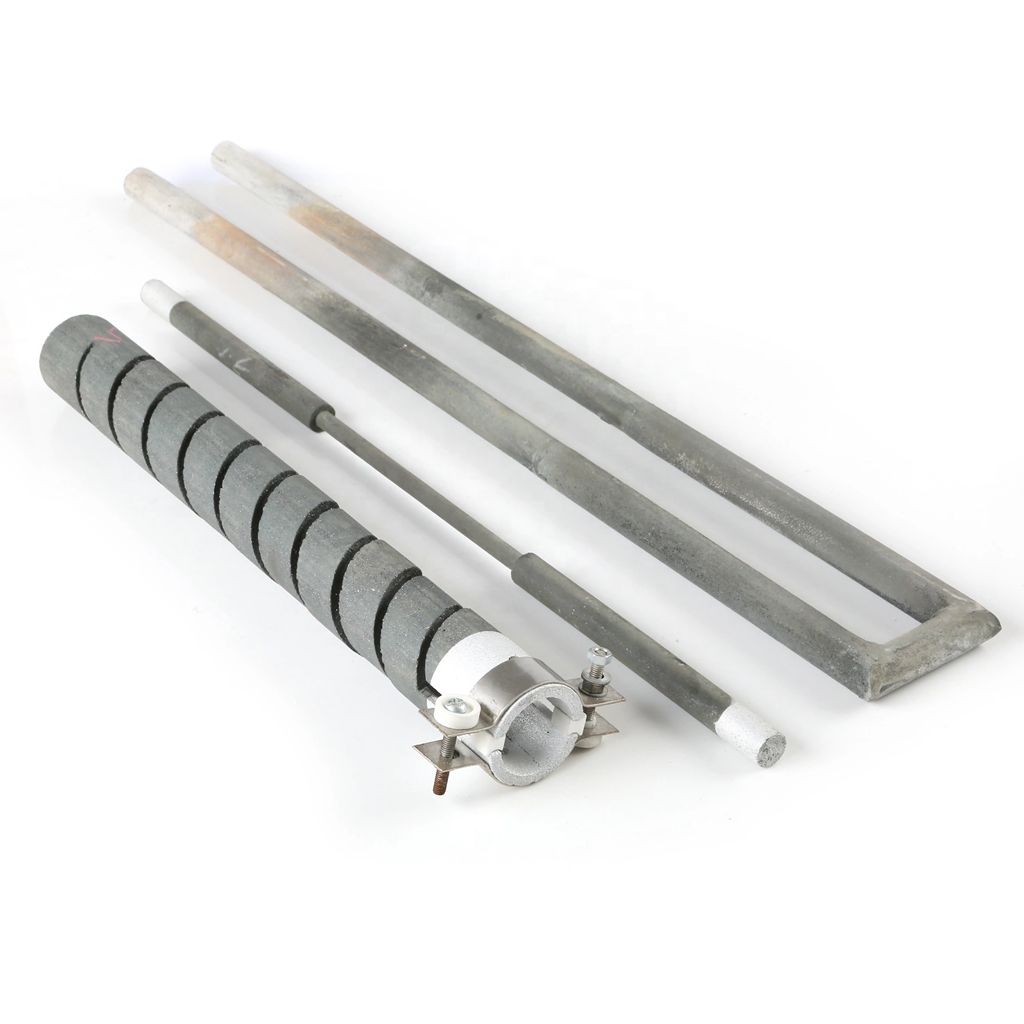
A high temperature heater works above the range where an ordinary sheathed element survives — roughly 1000 °C and up. Silicon carbide rods, molybdenum disilicide elements, open resistance coils and molybdenum heaters take furnaces and kilns from 1000 °C to about 1800 °C, and each one is chosen as much by the atmosphere inside the furnace as by the temperature.
Silicon Carbide Heater
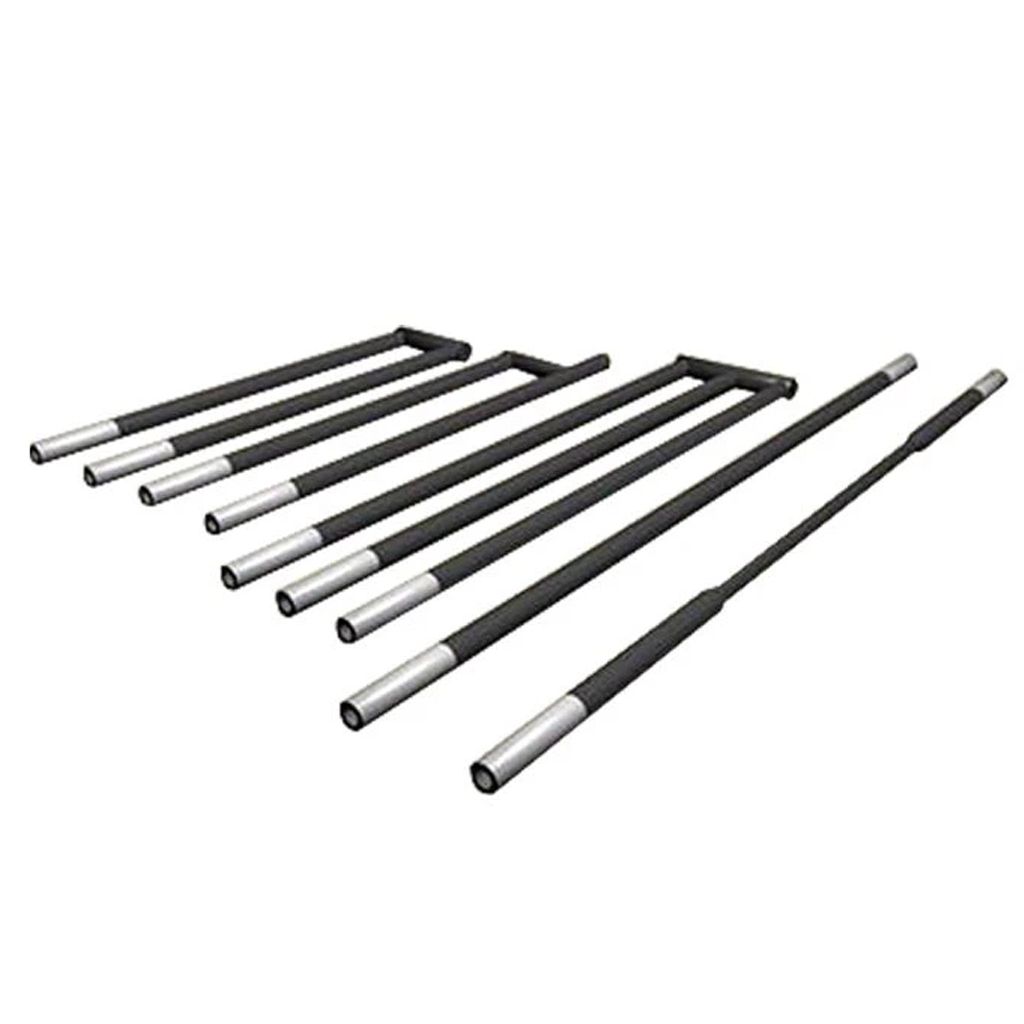
A silicon carbide heater is a ceramic rod that glows in open air at furnace temperatures up to about 1600 °C. It has no sheath and no wire — the rod itself is the resistance. It ages by slowly gaining resistance, so the furnace that runs it needs a transformer with tappings from the start.
Furnace Heater
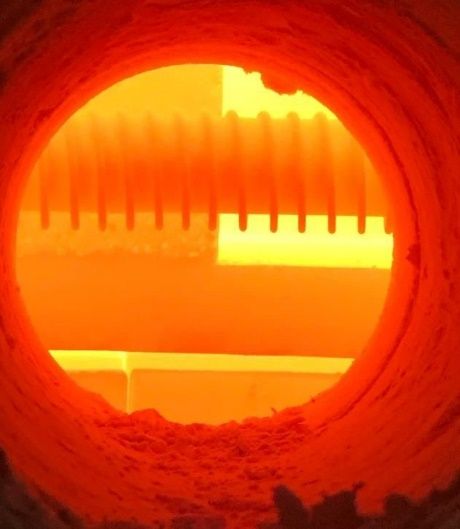
A furnace heater in its simplest form is an open coil of resistance wire laid in grooves in the lining or hung on ceramic supports inside the chamber. Iron-chrome-aluminium wire reaches about 1400 °C, nickel-chrome about 1200, and the coil is wound and pitched for the furnace it goes into.
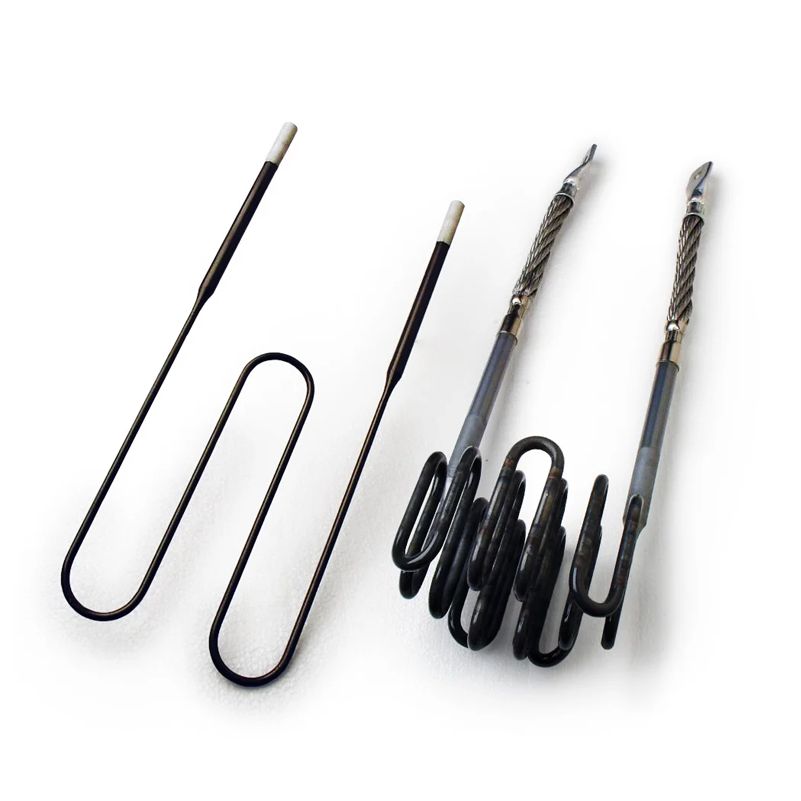
Molybdenum Heater
A molybdenum heater is a wire, strip or rod element for vacuum and inert-gas furnaces. It reaches about 1700 °C, but only where there is no oxygen — molybdenum burns away in air above roughly 400 °C. It is the element used for sintering, brazing and crystal growing under vacuum.
Ask for a Price or Technical Advice
Call us or send a WhatsApp message for a price, full specifications, or a custom build.
Last updated: