Food and Pharmaceutical Industry
Heating in a food or pharmaceutical plant carries an extra requirement: the element has to be cleanable, corrosion-resistant and gentle enough not to scorch the product against its own surface. Watt density is limited by the product, not by the element.
Ask for a Price or Technical Advice
Call us or send a WhatsApp message for a price, full specifications, or a custom build.
The Job
A product that people eat or take as medicine has to be heated evenly and gently, in equipment that can be cleaned properly and will not shed anything into the batch.
Working Conditions
The usual figures for this application. Yours may differ, and the element is sized from your figures, not these.
| Property | Value |
|---|---|
| Common process temperatures | 40 to 140 °C |
| Safe watt density, thin liquids | 3 to 6 W/cm² |
| Safe watt density, syrups and pastes | 1 to 2.5 W/cm² |
| Usual sheath materials | Stainless 316L, stainless 304, titanium |
| Surface finish | Polished, so residue has nowhere to key onto |
| Cleaning | CIP or manual, at temperatures above the process |
What Suits It
The element types that fit this job, best first.
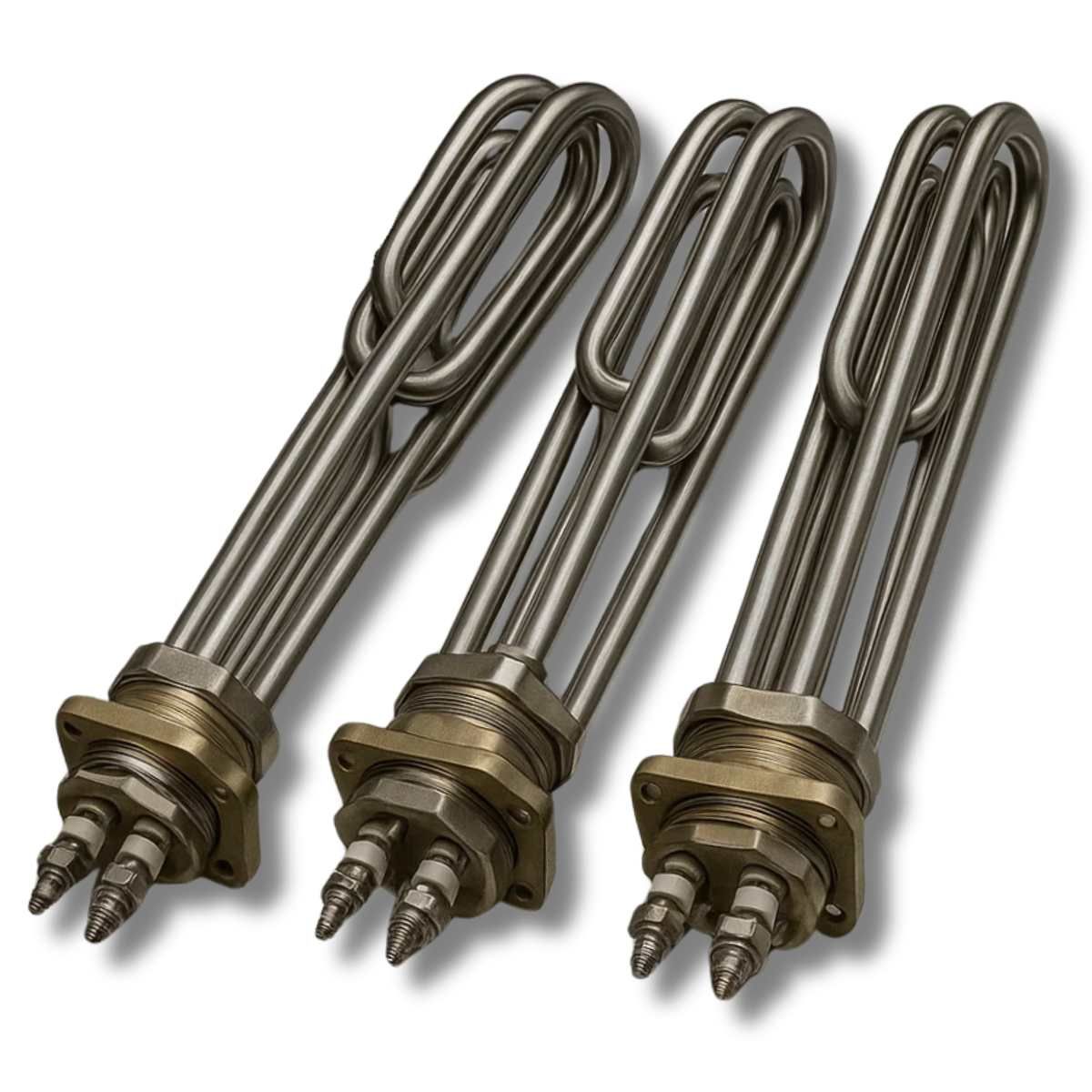
Screw Plug Heater
A screw plug immersion heater is a hairpin element brazed or welded into a threaded plug, so it screws straight into a boss on the side or the top of a tank. It is the simplest sealed way to put heat inside a vessel, and it suits tanks up to a few kilowatts at low and medium pressure.
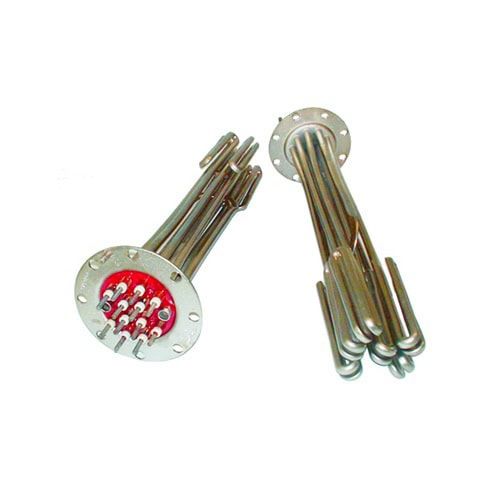
Flanged Heater
A flanged immersion heater is a bundle of hairpin elements welded into a flange that bolts onto a matching flange on the vessel. It is how large powers are put into a tank — tens of kilowatts, three phase — and it is the build used where there is pressure, a hot oil circuit, or a boiler.
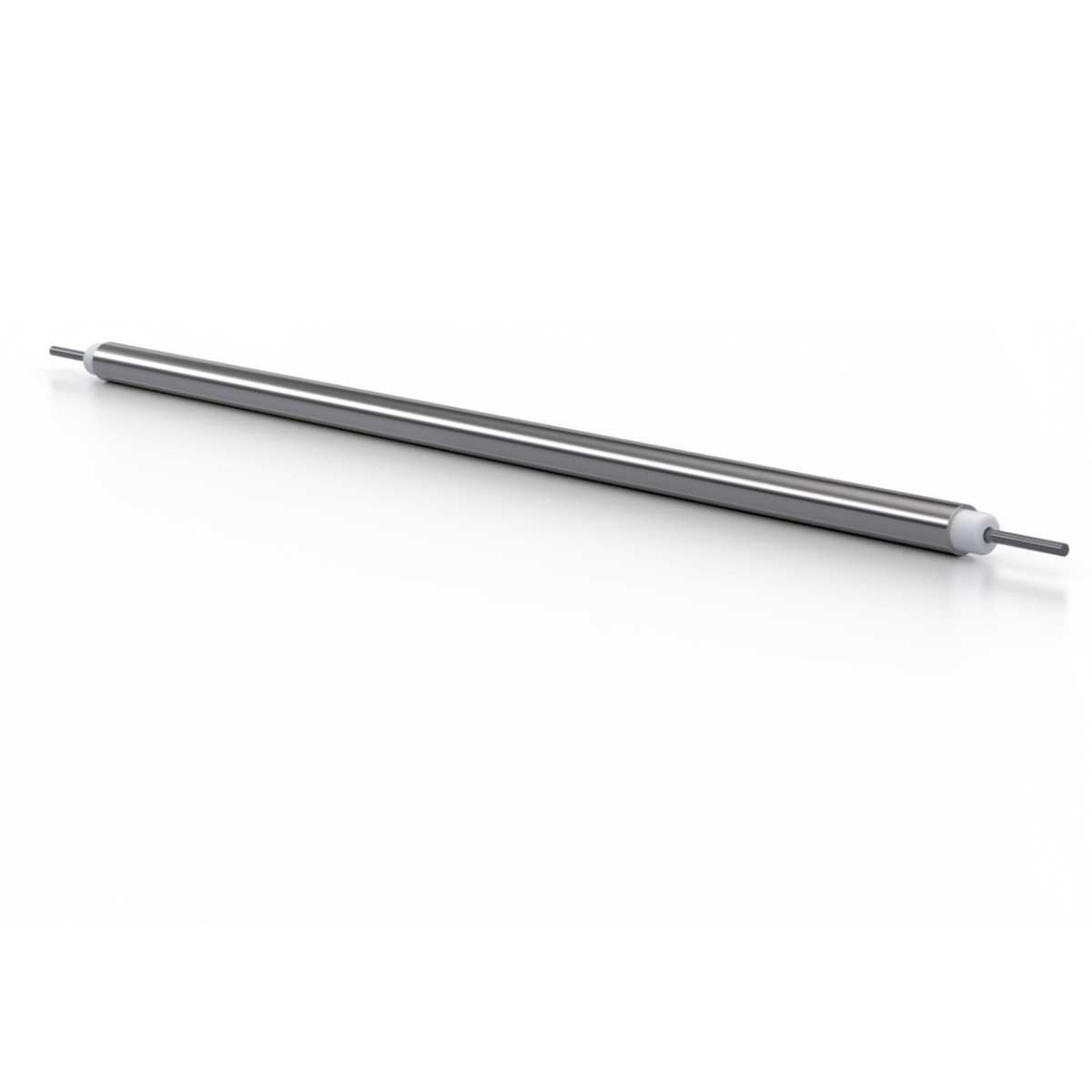
Straight Tubular Heater
A straight tubular heater is the simplest form of tubular element: one straight rod with no bends and a terminal at each end. It is made for places that already have a straight bore, pipe or channel, where the element can sit in without changing direction.
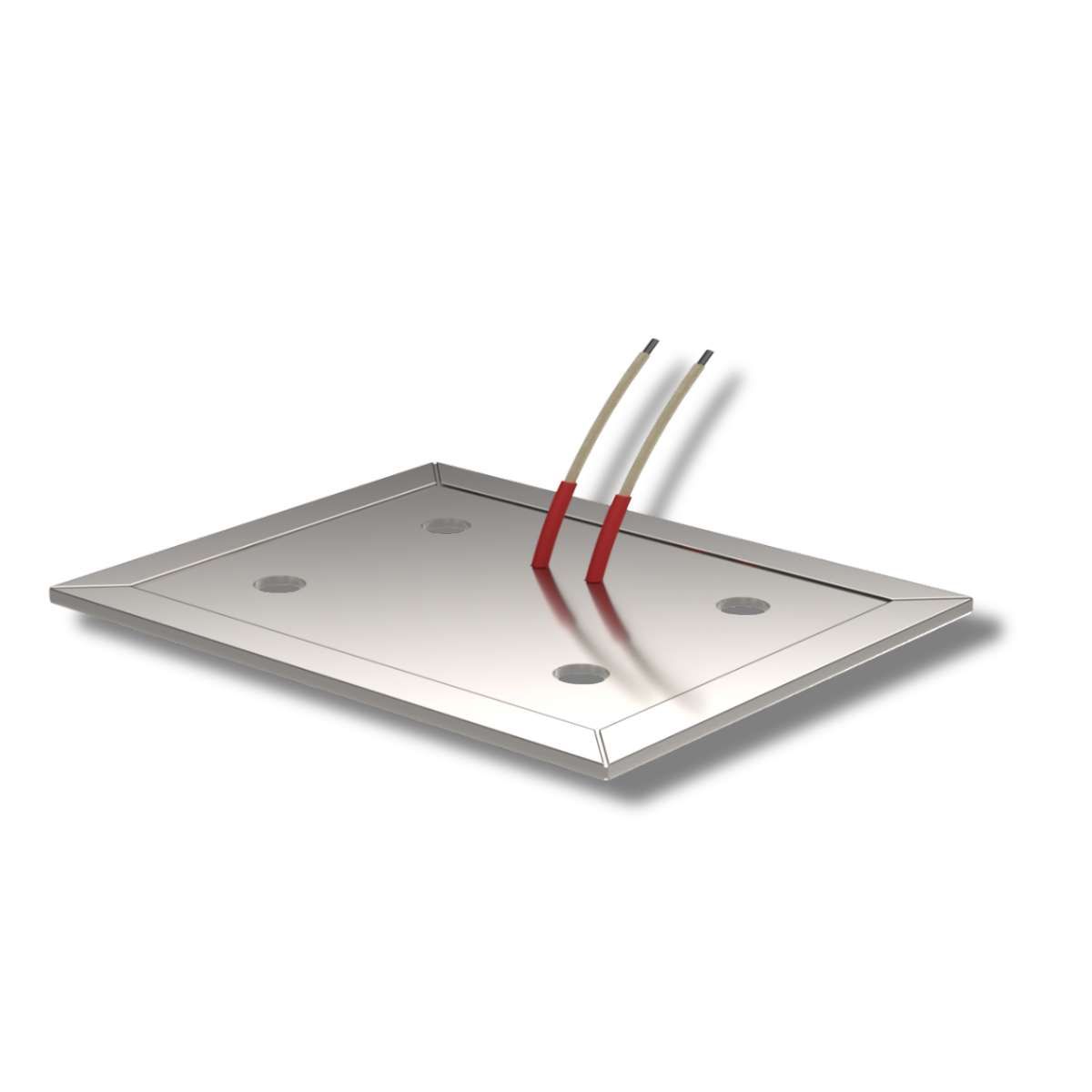
Plate Heater
A plate heater is a wide flat element that heats an area rather than a line. A resistance circuit is spread across a rectangular plate — clamped between metal sheets or cast into aluminium — so the whole face comes up to temperature together. It is used under vessels, moulds, tables and heated surfaces.
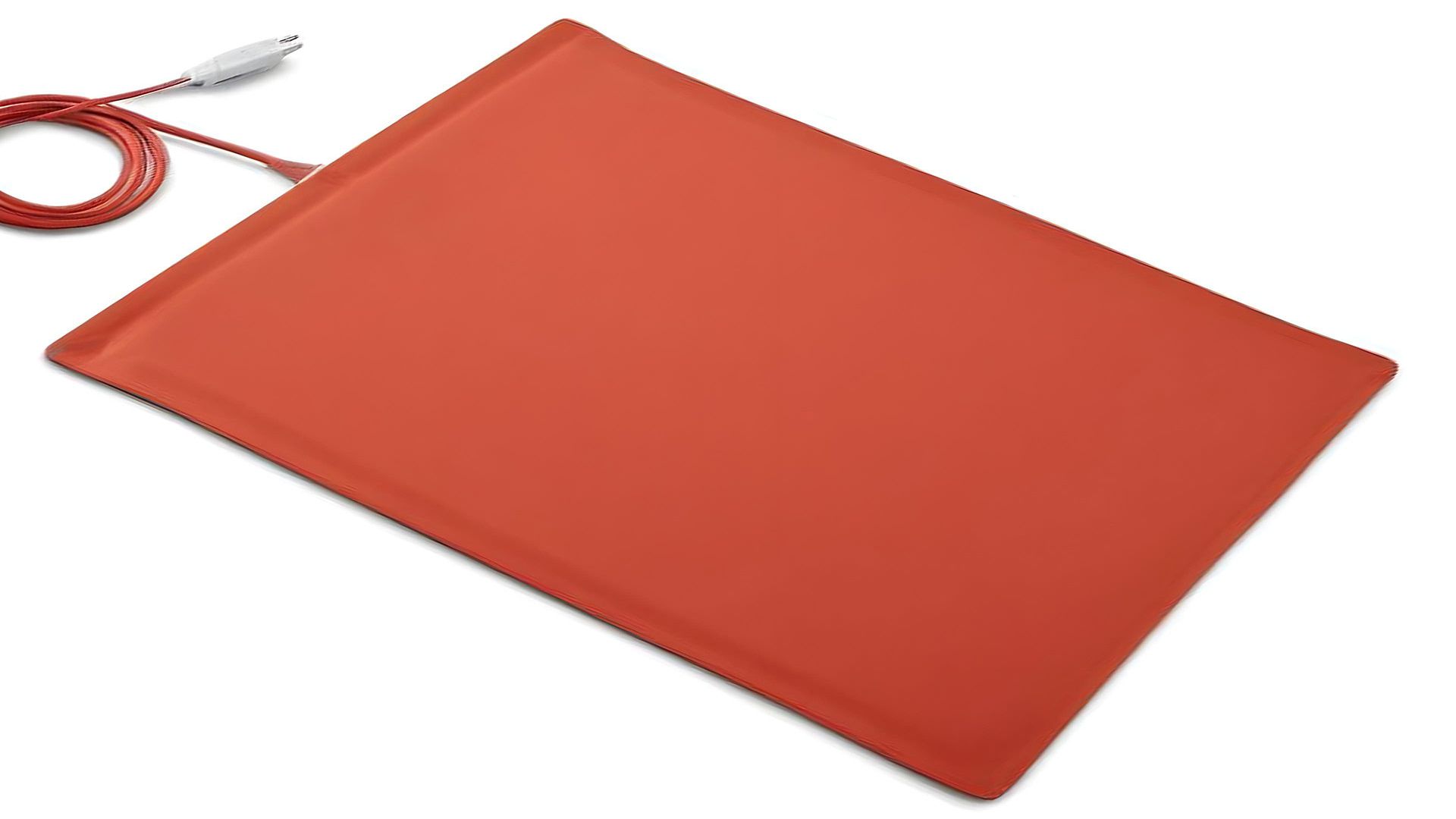
Silicone Rubber Heater
A silicone rubber heater is a thin sheet, one and a half to three millimetres thick, with an etched foil or wound wire circuit sealed between fibreglass reinforced silicone. It bends around curves, follows an irregular shape, and can be made in almost any outline, up to about 230 °C.
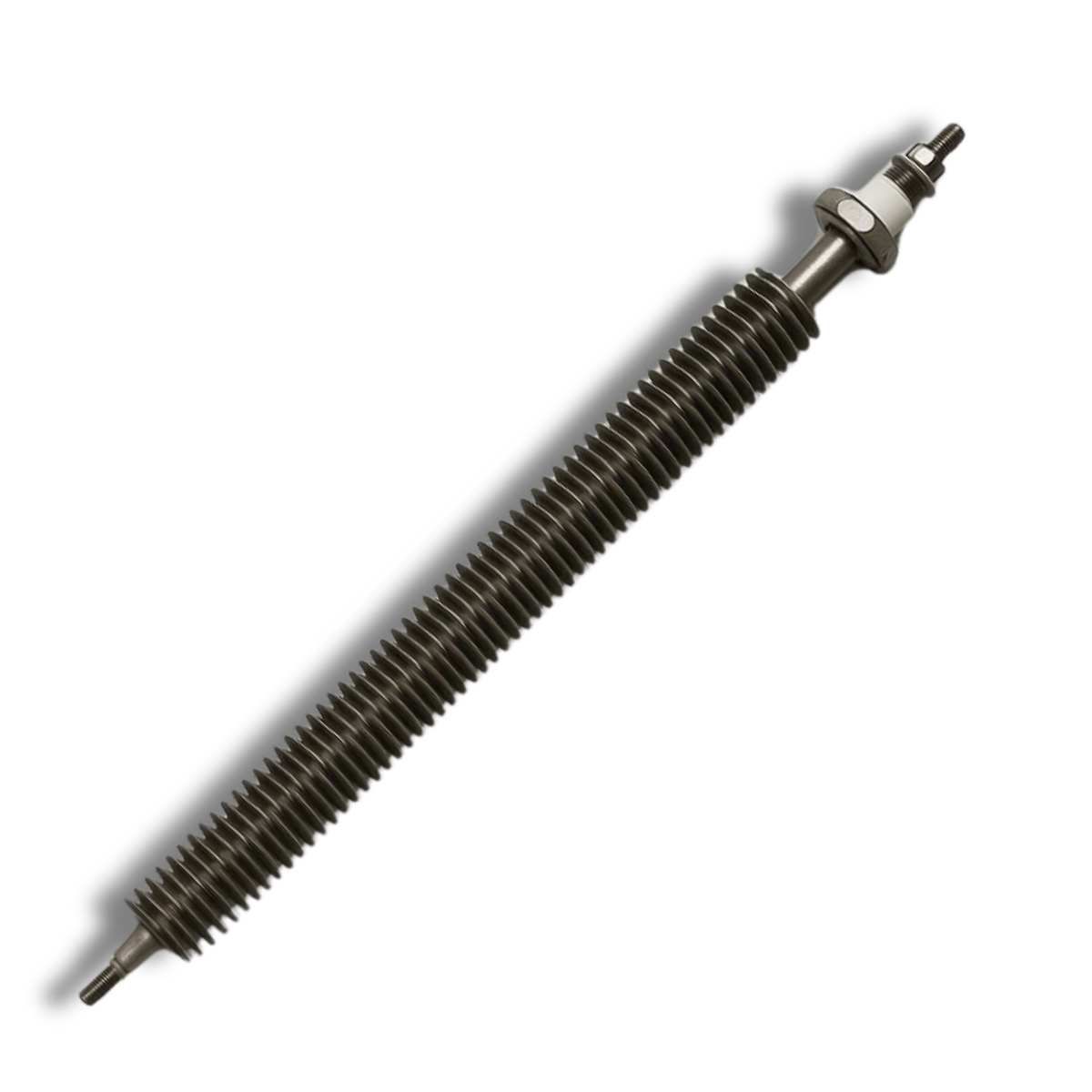
Finned Tubular Heater
A finned tubular heater is a tubular element with thin metal fins wound and welded around the sheath. The fins multiply the surface touching the air by three to five times, so the same wattage transfers at a much lower sheath temperature. It is the standard choice for heating air and ducts.
How to Get It Right
The product sets the watt density
In this industry the limit is never what the element can stand. It is what the product can stand while it sits against the element’s surface.
Milk, cream, fruit syrup, sauces, sugar solutions and many pharmaceutical liquids will burn onto a hot surface at temperatures well below anything that troubles stainless steel. So the design starts from the product: a thin liquid tolerates three to six watts per square centimetre, and a syrup or a paste often allows only one to two and a half. Everything else — length, number of elements, mounting — follows from that ceiling.
Scorching is the same failure as carbon in a fuel tank
Once a film of product has burnt onto the sheath, it insulates. Heat cannot get out into the liquid, so the sheath runs hotter, and the next layer burns on faster. The element eventually fails, but the more expensive damage happens first: every batch after that first burnt film carries the taste, colour or contamination of a cooked deposit.
This is why low watt density is not a luxury here. It is the thing preventing a failure that costs product, not parts.
316L, polished, with no crevices
Stainless 316L is the working material for product contact. It resists the chlorides in cleaning chemicals and the acids in food far better than 304, which pits under exactly the residue nobody can see.
Beyond the alloy, two details matter as much. The surface should be smooth, so residue has nothing to key onto. And the fitting should be free of crevices — a proper hygienic seal at the boss or flange, no unswept dead space, nowhere for product to sit through a cleaning cycle and come out into the next batch.
Design for the clean, not only for the process
Clean-in-place cycles are often hotter than the process and chemically far more aggressive. An element specified only for the product will meet caustic or acid at a temperature it was never chosen for, several times a week.
Ask what the cleaning cycle involves before choosing a sheath, and check that the element can be left in place through it — or that it can be removed cleanly, which is one reason flanged heaters are common in this industry.
Measure the product, and keep it moving
Control from a sensor out in the product, not at the vessel wall. And where the product is at all thick, stir or circulate it. Still liquid against an element forms a hot layer that scorches while the bulk of the tank is still cool, and no control system can see that happening.
Where the product is too delicate for any contact, heat through the wall — a jacket, a plate under the base, or a blanket outside. It is slower and less efficient, and for some products it is the only honest answer.
What Usually Goes Wrong
The mistakes that shorten an element's life on this kind of job.
- Using a watt density that suits water on a product that is a syrup or a paste. Product scorches on the sheath long before the tank is hot.
- Choosing stainless 304 where cleaning chemicals or salt call for 316L, and getting pitting under the residue.
- Rough or scratched sheath surfaces, which hold residue and make proper cleaning impossible.
- Crevices at the fitting — a threaded boss with no seal, a poorly welded flange — where product collects and cannot be cleaned out.
- Sizing the element for the process temperature and forgetting the higher temperature of the cleaning cycle.
- Control from a sensor at the wall, so the product next to the element is far hotter than the reading suggests.
Common Questions
Which sheath material for food and pharmaceutical work?
Stainless 316L is the usual choice: it stands up to cleaning chemicals, salt and acids far better than 304, and it is the standard material for product contact. Titanium is used where chlorides are aggressive.
Why does watt density have to be so low?
Because the product decides, not the element. Milk, syrup, sauce and many pharmaceutical liquids scorch onto a hot surface at temperatures the element does not even notice, and that burnt film both spoils the batch and insulates the element.
What does scorching do besides spoiling the batch?
It insulates. The burnt layer stops heat leaving the sheath, so the sheath runs hotter and scorches faster, exactly as carbon does in a fuel tank. The element fails early and every batch after the first is affected.
Does the element need to survive the cleaning cycle too?
Yes, and CIP cleaning is often hotter and chemically harsher than the process itself. Specify the element for the cleaning cycle as well as the product.
What surface finish should the sheath have?
As smooth as you can get. A polished surface gives residue nothing to hold onto, cleans properly and delays the build-up that leads to scorching.
Can heating be done without the element touching the product?
Yes — a jacketed vessel, a plate heater under the base, or a silicone blanket on the outside wall. It is slower and less efficient, but it removes the contact question entirely.
Ask for a Price or Technical Advice
Call us or send a WhatsApp message for a price, full specifications, or a custom build.
Last updated: