Tank and Drum Heating
Material that has gone solid or too thick to pump — resin, wax, honey, grease, a chemical that crystallised in the cold — has to be warmed back to a working state. It can be heated from inside the tank or through its wall, and the choice decides everything else.
Ask for a Price or Technical Advice
Call us or send a WhatsApp message for a price, full specifications, or a custom build.
The Job
A drum, IBC or storage tank holds material that will not pour or pump at ambient temperature, and it has to be warmed evenly without scorching what is next to the heat.
Working Conditions
The usual figures for this application. Yours may differ, and the element is sized from your figures, not these.
| Property | Value |
|---|---|
| Container | 20 to 220 litre drums, 1000 litre IBCs, fixed tanks |
| Usual target temperature | 30 to 120 °C |
| Safe watt density, silicone blanket | 0.4 to 1.2 W/cm² |
| Safe watt density, immersed in a thick medium | 1 to 3 W/cm² |
| Typical drum band power | 800 to 1500 W |
| Warm-through time, full drum | 6 to 24 h |
What Suits It
The element types that fit this job, best first.
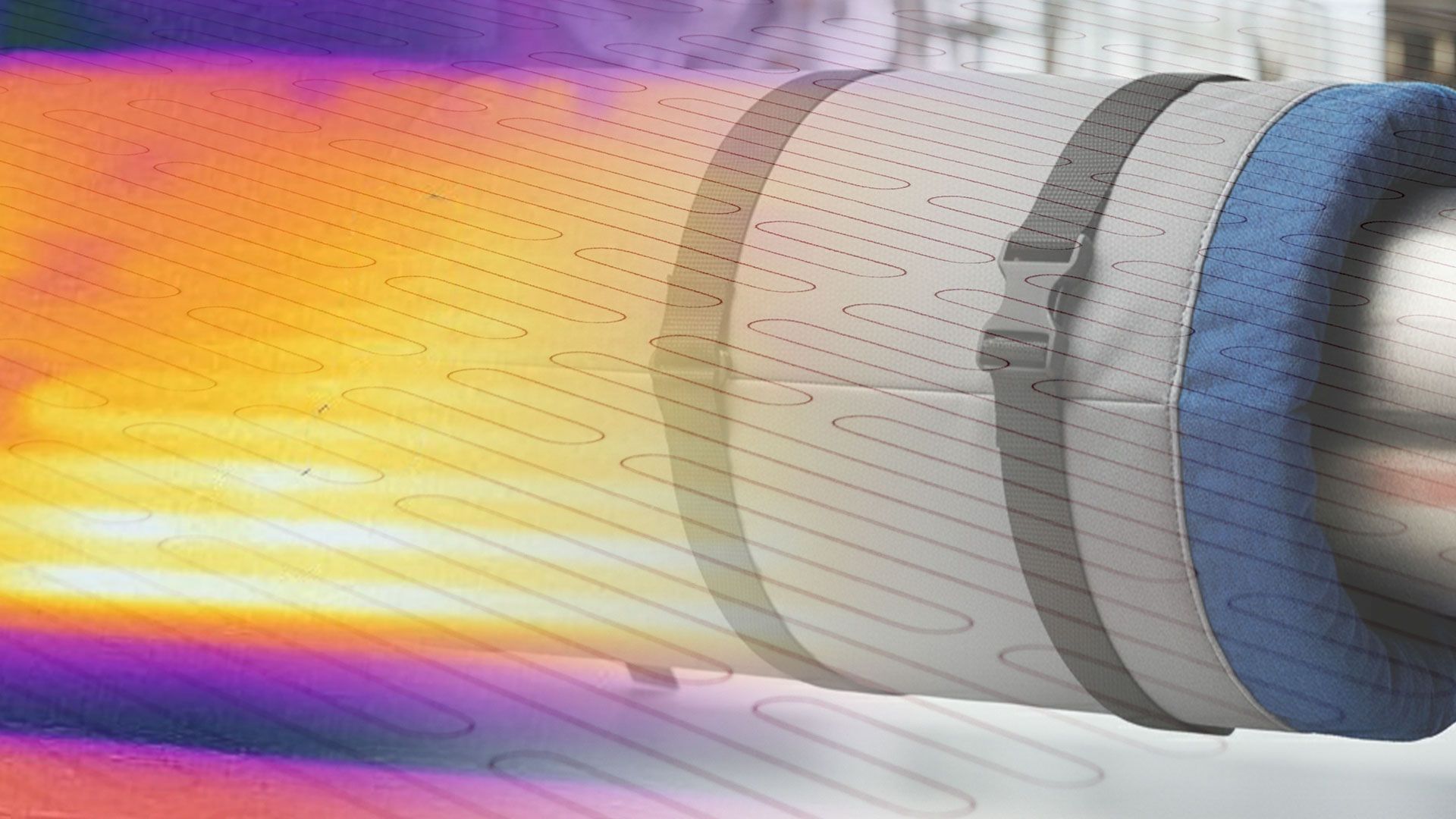
Drum and Tank Heater
A drum and tank heater is a flexible jacket that straps around the outside of a drum, a barrel or a small tank and warms the contents through the wall. Nothing goes into the liquid, so it suits material that must not be contaminated and vessels that have no opening to fit an element into.
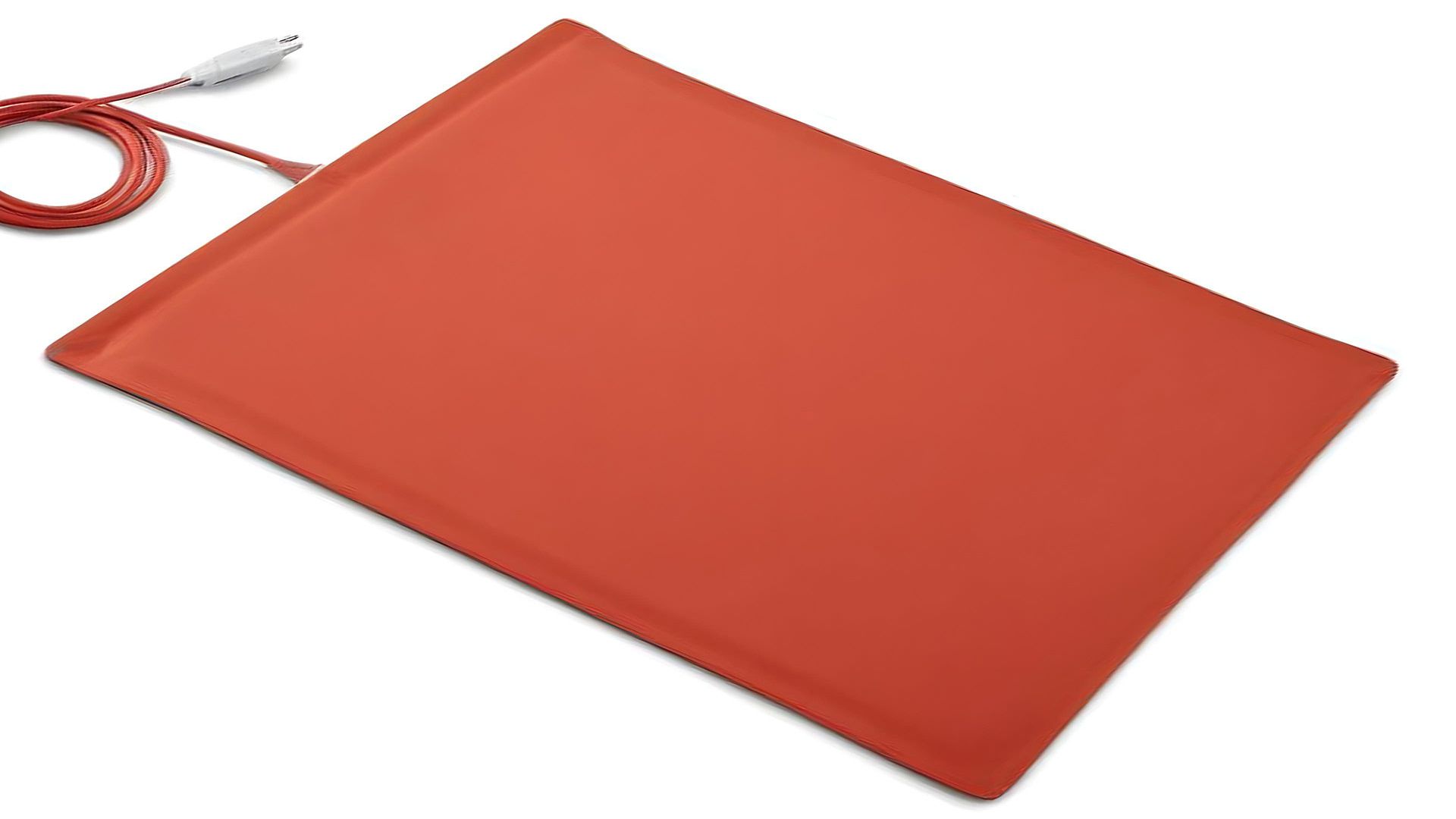
Silicone Rubber Heater
A silicone rubber heater is a thin sheet, one and a half to three millimetres thick, with an etched foil or wound wire circuit sealed between fibreglass reinforced silicone. It bends around curves, follows an irregular shape, and can be made in almost any outline, up to about 230 °C.
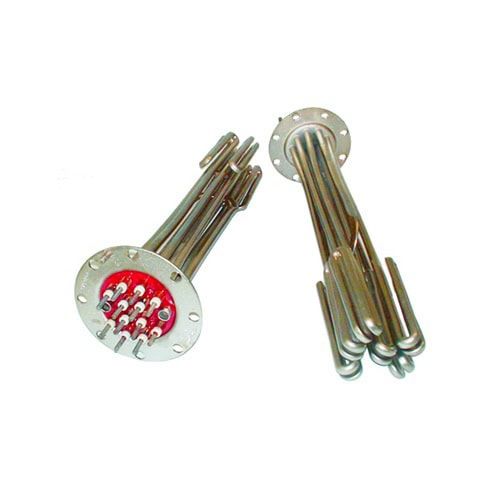
Flanged Heater
A flanged immersion heater is a bundle of hairpin elements welded into a flange that bolts onto a matching flange on the vessel. It is how large powers are put into a tank — tens of kilowatts, three phase — and it is the build used where there is pressure, a hot oil circuit, or a boiler.
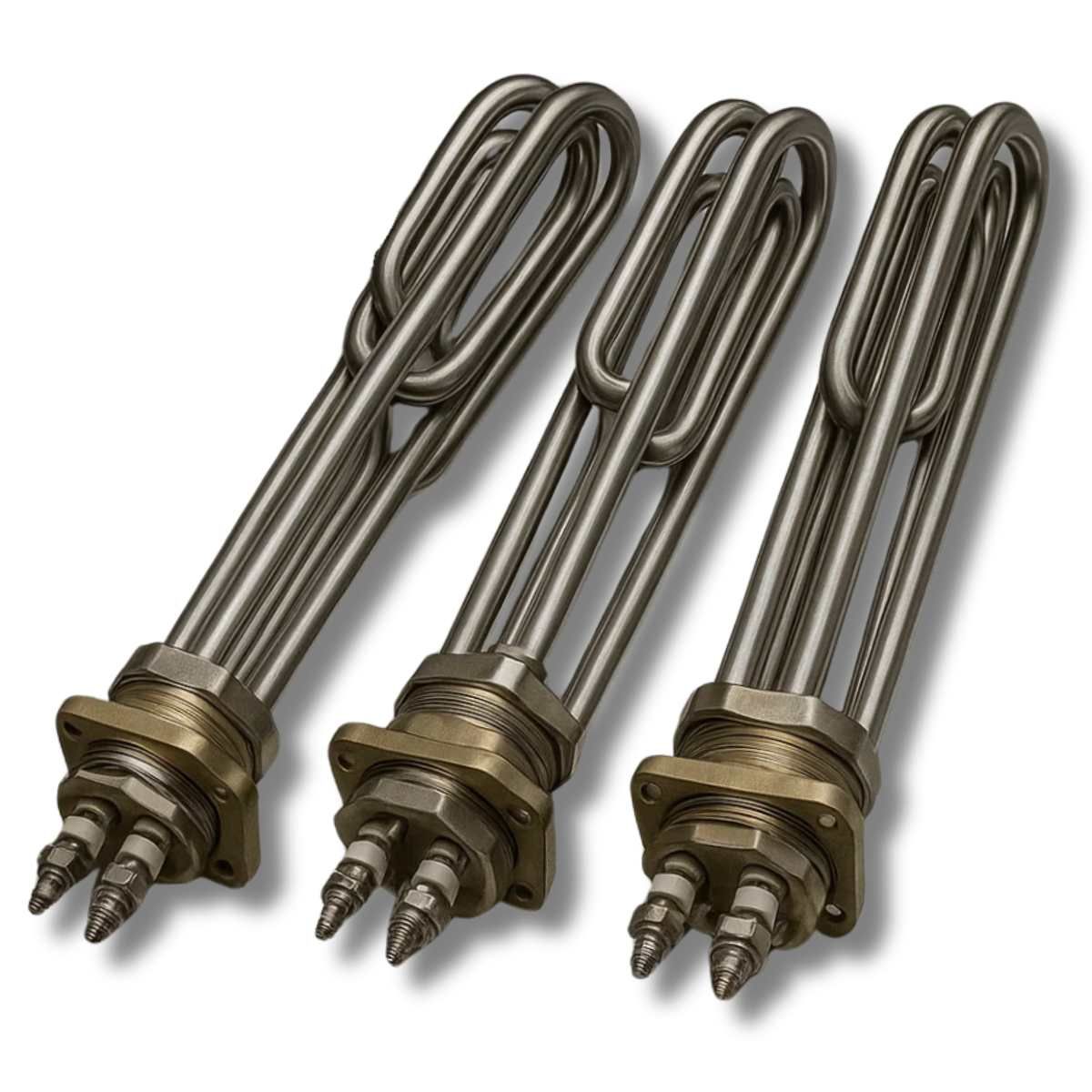
Screw Plug Heater
A screw plug immersion heater is a hairpin element brazed or welded into a threaded plug, so it screws straight into a boss on the side or the top of a tank. It is the simplest sealed way to put heat inside a vessel, and it suits tanks up to a few kilowatts at low and medium pressure.
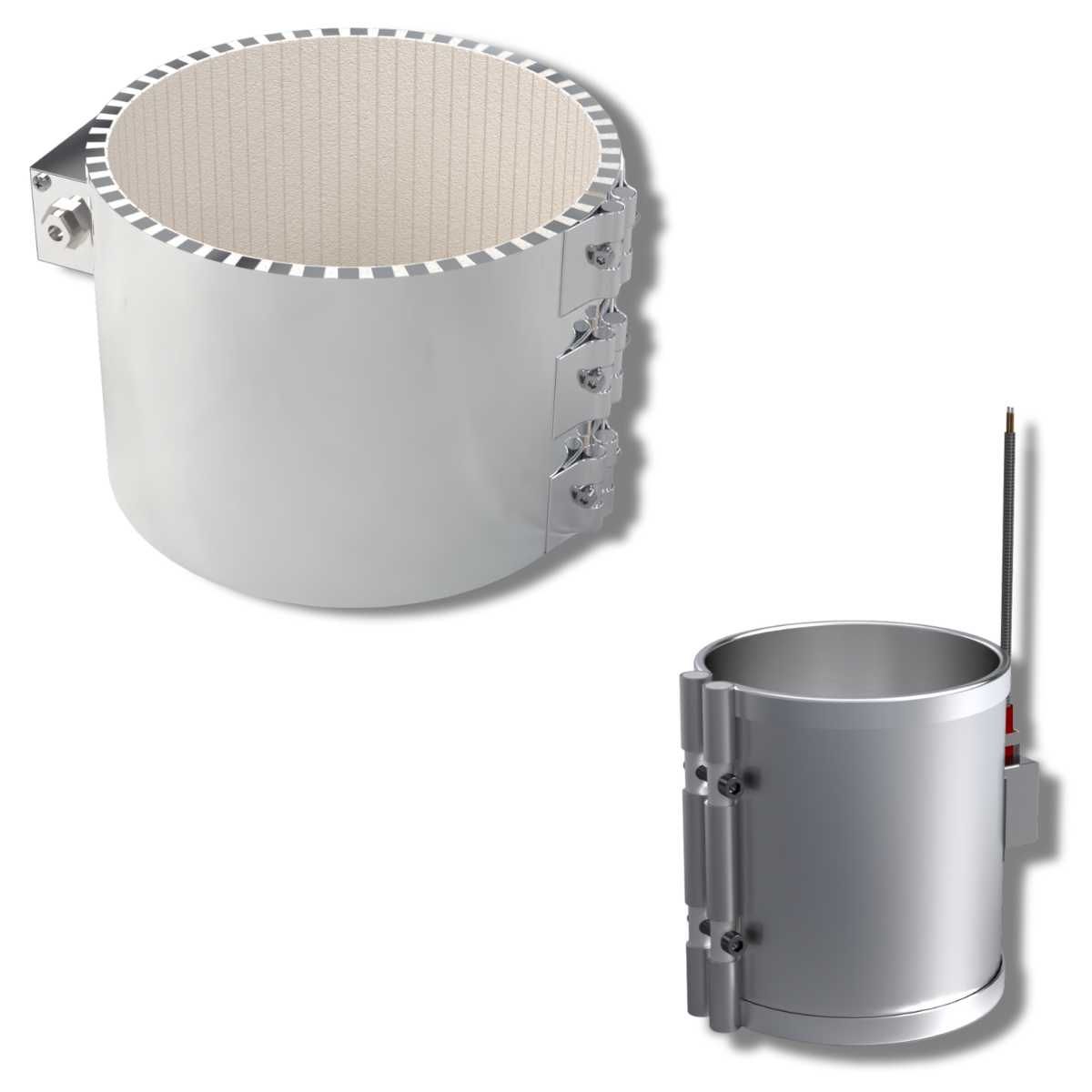
Band Heater
A band heater is a ring-shaped element that clamps around a cylinder and heats it through its wall. Resistance wire sits on mica or inside a ceramic body, wrapped in a stainless steel band that is pulled tight by a clamp. It is the element that heats injection barrels, extruder zones, nozzles and pipes.
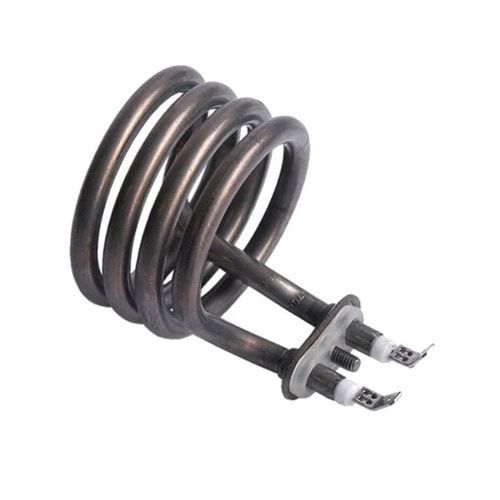
Formed Tubular Heater
A formed tubular heater is a tubular element bent into shape after it is made: a U, a ring, a spiral, or whatever the drawing calls for. Bending lets you fit a long heated length into a small space, or match the element to the shape of the part it heats.
How to Get It Right
Inside or through the wall — decide this first
Everything else follows from this one choice.
Heating through the wall, with a drum band or a silicone blanket, touches nothing. It suits solid material, contaminated material, anything that must stay clean, and any container you are not allowed to cut a hole in. It is slow, and it heats a layer rather than a volume.
Heating from inside, with a flanged or screw-plug immersion heater, is far more efficient because all the heat goes into the product. But the element must be under liquid before it is switched on, so it suits a fixed tank whose contents stay pumpable, not a drum of material that arrived solid.
Slow is the specification, not a compromise
The instinct is to reach for more power to shorten a twelve-hour warm-up. It almost always spoils the product. The heat has to cross the material by conduction, and thick material conducts badly, so the only thing extra power does is raise the temperature of the layer already touching the heater.
Resins skin over. Waxes discolour. Foods caramelise. In every case the damage happens at the wall, out of sight, while the middle of the drum is still cold.
Watt density on a blanket is very low on purpose
A silicone blanket runs at well under half the watt density of an element in water, and covers a large area to do it. That is the whole point: spread out enough that no part of the product sees a hot surface. Anyone comparing a blanket with a band on watts alone is comparing the wrong number.
Never power a heater against an empty wall
A band or a blanket needs product behind the metal to take the heat away. On an empty or part-empty drum the dry section has nothing to cool it, and the temperature climbs until something gives. Strap the band low, keep it under the liquid line, and if the drum is drawn down in use, interlock the heater with a level switch.
The same rule kills immersion heaters in tanks of thick material: an element buried in a block of solid resin cannot shed heat and burns out before the resin around it softens.
Stir, or accept a temperature gradient
Any warming job in a tank benefits from movement, and thick material needs it. A slow stirrer or a recirculating pump turns a hot wall and a cold middle into one temperature. Without it, the control thermostat reads whichever layer it happens to sit in, and the number on the panel means very little.
Control on the product, protect on the element
Two devices. The thermostat controls to the temperature the product needs. The independent cut-out exists for the day the thermostat sticks closed, and it should be set by what the product can survive, not by what the element can.
What Usually Goes Wrong
The mistakes that shorten an element's life on this kind of job.
- Heating from the wall with no stirring, so the product next to the wall cooks while the middle stays solid.
- Using a band or blanket sized for a full drum on a part-empty one. The dry section above the level overheats.
- Choosing watt density on speed. Warming a drum is a slow job by nature, and forcing it damages the product first.
- Immersing an element in material that is still solid, so it has nothing to carry heat away.
- Leaving a blanket wrapped and powered on an empty drum.
- No over-temperature cut-out on a product that degrades — resins and food products spoil well below the element's limit.
Common Questions
Should I heat the drum from outside or put an element inside?
From outside where the material is solid, dirty or must not be contaminated — a band or a silicone blanket. From inside where the material is already liquid and the tank is fixed and big enough to justify a flange or a screw plug.
How long does it take to warm a full drum?
Typically six to twenty-four hours with a normal band or blanket. It is slow because it has to be: the outside must not be spoiled while the middle catches up.
What is a silicone blanket heater?
A flexible sheet with the element woven into silicone rubber, strapped around the drum. It follows the shape, spreads the heat over a large area and so runs at very low watt density — which is what makes it safe on material that scorches.
Can I heat a part-full drum?
Only with the heat below the liquid level. A band or blanket against an empty section has nothing taking heat away and will overheat, and on a flammable product that is a serious risk.
Do I need stirring?
For anything thick, yes. Without movement the warm material stays at the wall and the cold stays in the middle, so the wall layer is overheated long before the centre softens.
What temperature control should it have?
A control thermostat reading the product, plus an independent over-temperature cut-out. Many materials in drums — resins, waxes, foods — are ruined at temperatures far below anything that would harm the element.
Ask for a Price or Technical Advice
Call us or send a WhatsApp message for a price, full specifications, or a custom build.
Last updated: