Industrial Furnaces and Ovens
Above about 600 °C the ordinary metal-sheathed element runs out. Furnace work belongs to resistance wire in ceramic, silicon carbide rods and, at the top end, molybdenum disilicide — each with its own temperature ceiling, its own atmosphere limits and its own way of ageing.
Ask for a Price or Technical Advice
Call us or send a WhatsApp message for a price, full specifications, or a custom build.
The Job
A furnace chamber has to hold a high, even temperature for hours, with elements that survive both the heat and whatever atmosphere the process puts in the chamber.
Working Conditions
The usual figures for this application. Yours may differ, and the element is sized from your figures, not these.
| Property | Value |
|---|---|
| Drying and curing ovens | Up to 300 °C |
| Heat-treatment furnaces | 600 to 1100 °C |
| Silicon carbide element ceiling | Up to 1600 °C |
| Molybdenum disilicide ceiling | Up to 1800 °C |
| Metal-sheathed element ceiling | About 750 °C |
| Chamber uniformity, typical target | ±5 to ±10 °C |
| Atmosphere | Air, inert, reducing or vacuum — it changes the element choice |
What Suits It
The element types that fit this job, best first.
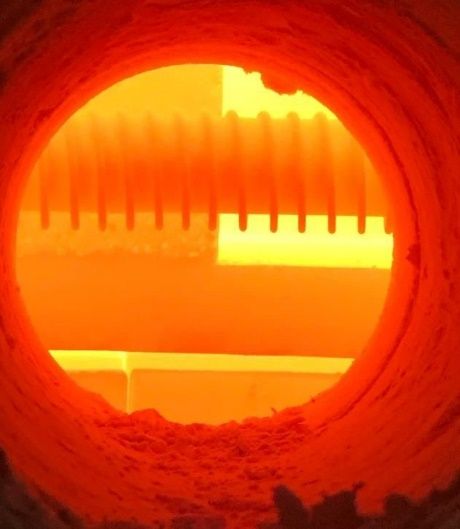
Furnace Heater
A furnace heater in its simplest form is an open coil of resistance wire laid in grooves in the lining or hung on ceramic supports inside the chamber. Iron-chrome-aluminium wire reaches about 1400 °C, nickel-chrome about 1200, and the coil is wound and pitched for the furnace it goes into.
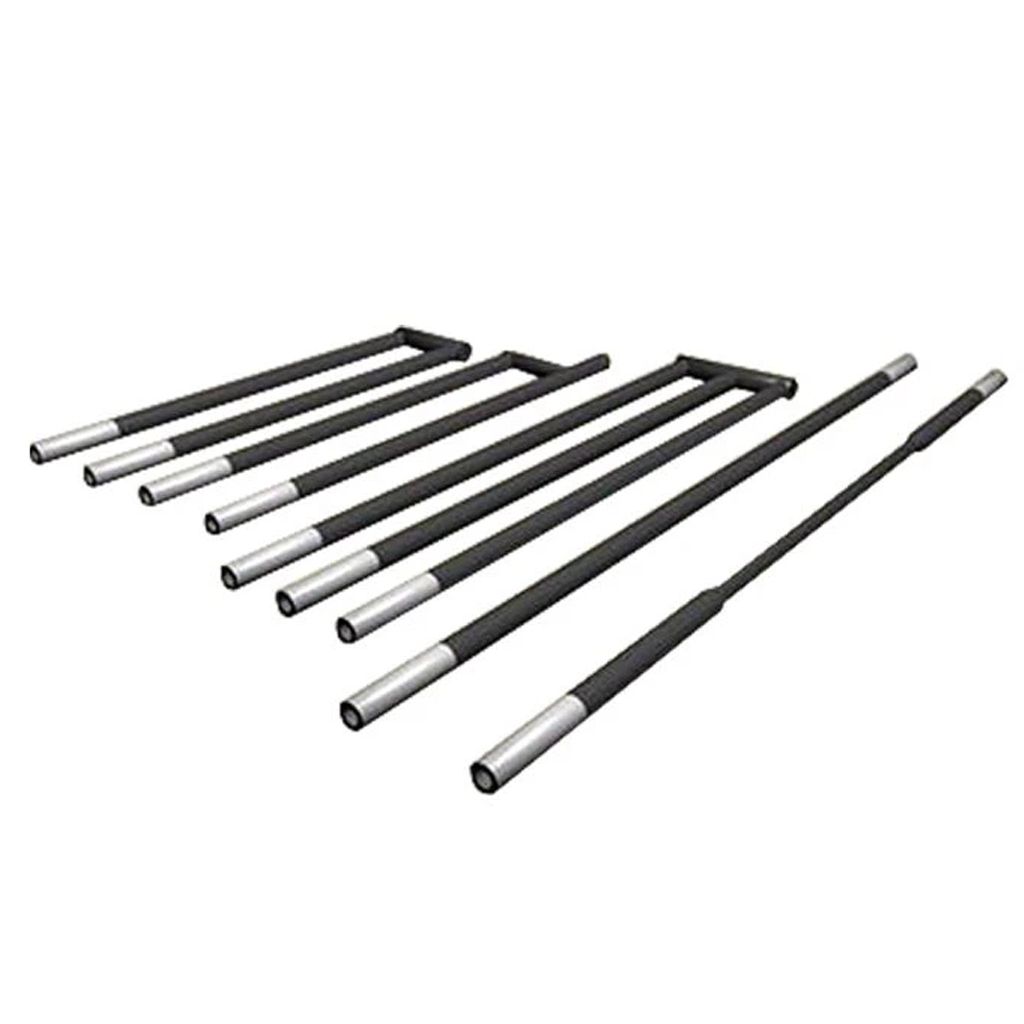
Silicon Carbide Heater
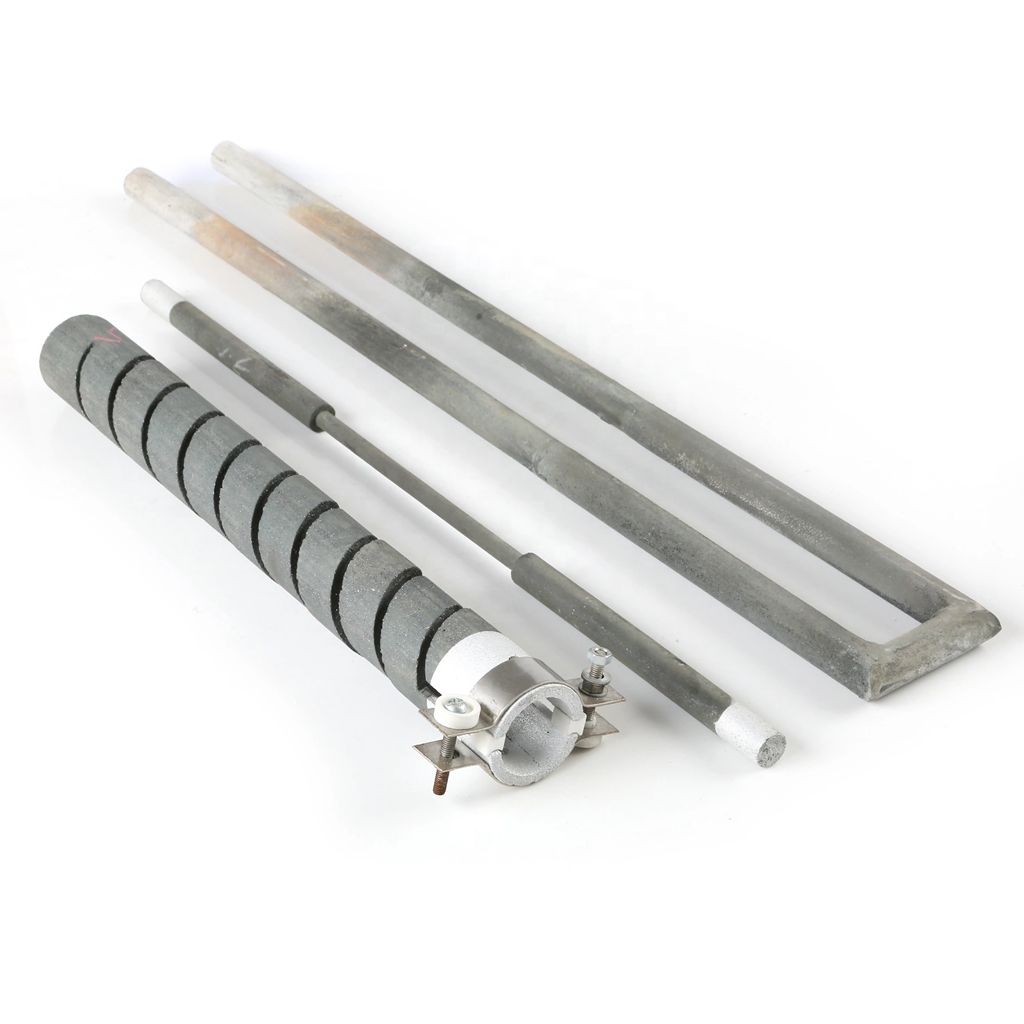
A silicon carbide heater is a ceramic rod that glows in open air at furnace temperatures up to about 1600 °C. It has no sheath and no wire — the rod itself is the resistance. It ages by slowly gaining resistance, so the furnace that runs it needs a transformer with tappings from the start.
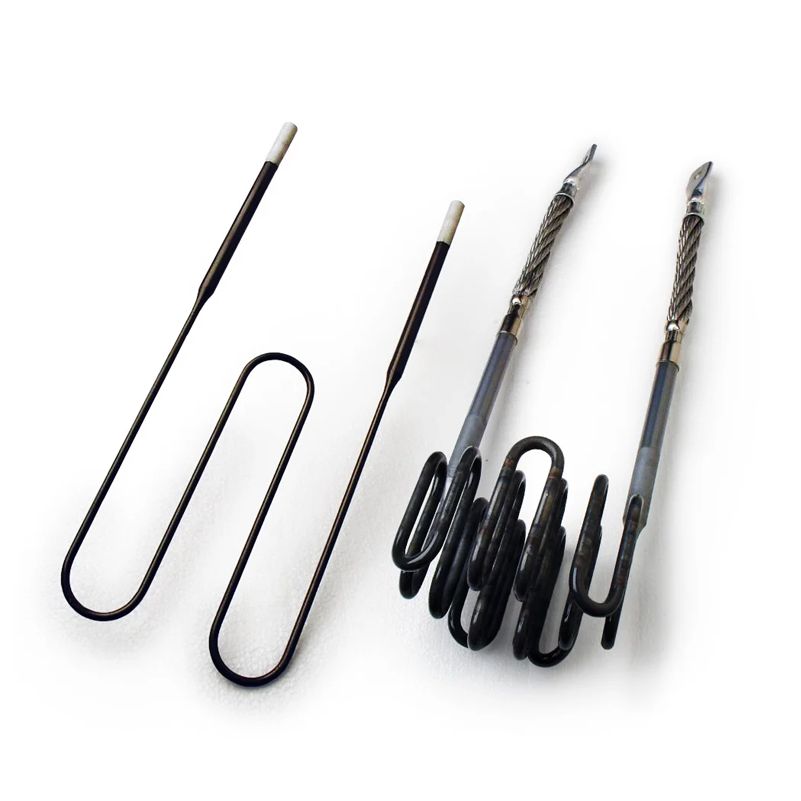
Molybdenum Heater
A molybdenum heater is a wire, strip or rod element for vacuum and inert-gas furnaces. It reaches about 1700 °C, but only where there is no oxygen — molybdenum burns away in air above roughly 400 °C. It is the element used for sintering, brazing and crystal growing under vacuum.
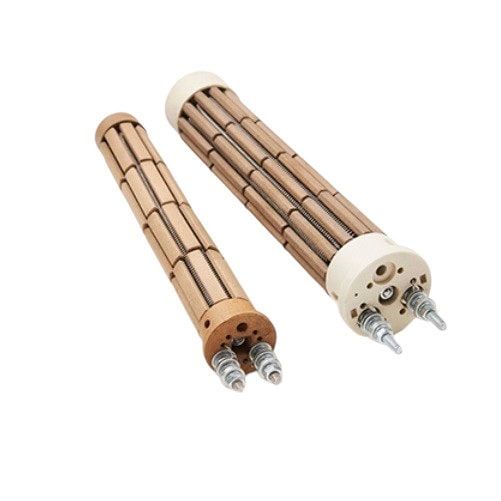
Ceramic Heater
A ceramic heater for high temperature work carries its resistance wire inside a ceramic body rather than leaving it bare in the chamber. Wire threaded through ceramic tubes and beads, or set into a fibre module, reaches about 1200 °C while staying protected from the load and from what the furnace gives off.
High Temperature Heater
A high temperature heater works above the range where an ordinary sheathed element survives — roughly 1000 °C and up. Silicon carbide rods, molybdenum disilicide elements, open resistance coils and molybdenum heaters take furnaces and kilns from 1000 °C to about 1800 °C, and each one is chosen as much by the atmosphere inside the furnace as by the temperature.
Finned Tubular Heater
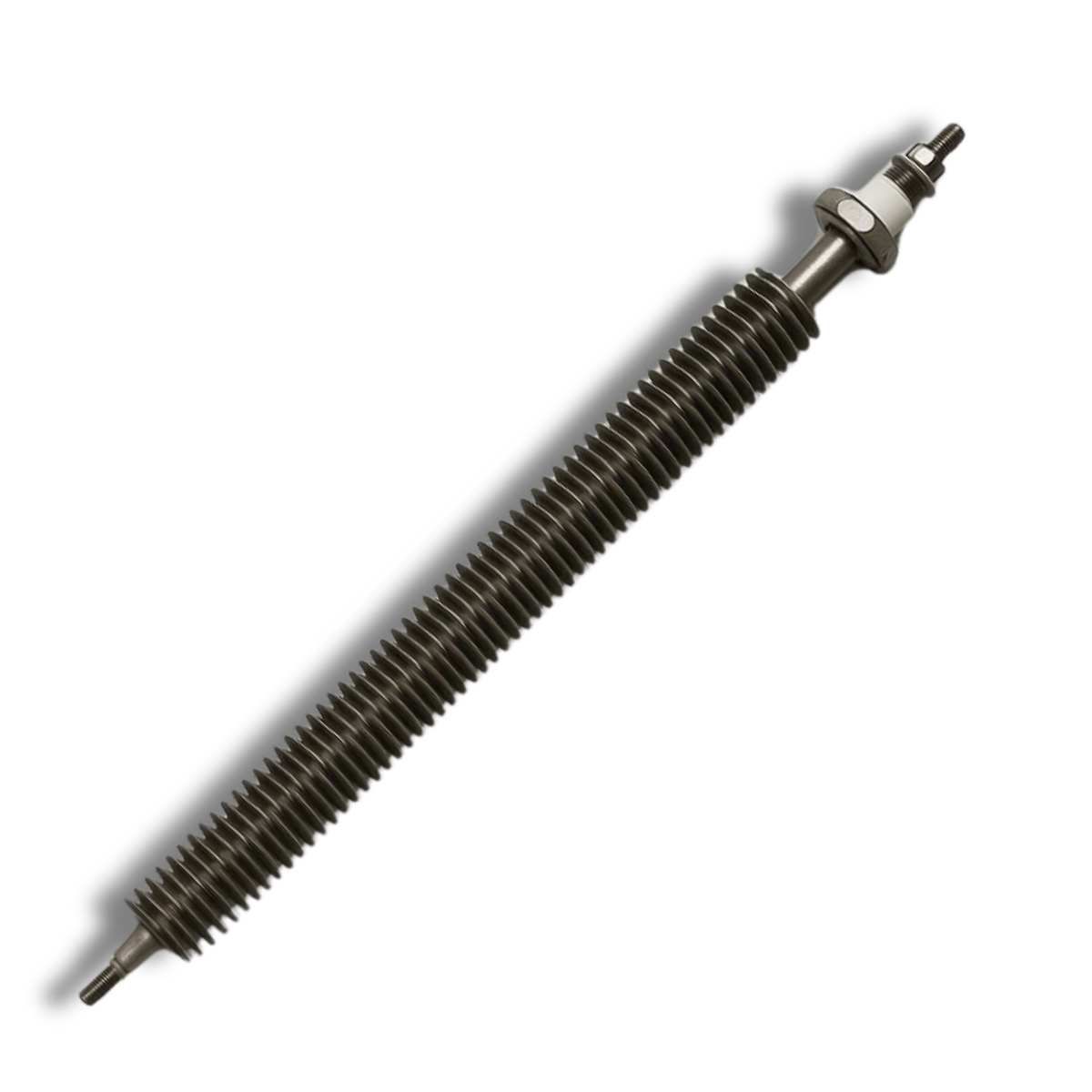
A finned tubular heater is a tubular element with thin metal fins wound and welded around the sheath. The fins multiply the surface touching the air by three to five times, so the same wattage transfers at a much lower sheath temperature. It is the standard choice for heating air and ducts.
How to Get It Right
Temperature decides the family, atmosphere decides the life
Pick the element family by the top temperature the process needs: metal-sheathed tubular up to about 750 °C, ceramic and wire-in-quartz above that, silicon carbide to around 1600 °C, molybdenum disilicide to around 1800 °C.
Then check the atmosphere, because that is what actually determines how long the element lasts. Silicon carbide is happy in air and unhappy in strongly reducing conditions. Molybdenum disilicide relies on growing a protective glassy skin, which needs oxygen, so it suffers in vacuum and low-oxygen work. Halogens, salt vapours and silicone fumes attack several families at once. An element chosen on temperature alone and installed into the wrong atmosphere fails without ever being overloaded.
High-temperature elements age, and the design has to expect it
Silicon carbide rods rise in resistance through their life. That is normal behaviour, not a fault. It means a fixed-voltage supply delivers less power as the elements get older, and a furnace that hit temperature easily in its first year gradually stops making it.
Two consequences follow. Size the installation so it still reaches temperature with aged elements, and hold the power back electrically while they are new — a tapped transformer or a thyristor controller. And when replacing, replace by circuit or match resistances: one new rod among old ones takes a large share of the current and burns itself out proving the point.
Uniformity comes from layout, not from more power
A chamber that is hot at the walls and cold in the middle does not need bigger elements. It needs the heat spread — elements on more than one wall, zoned independently, with the load kept clear of them so nothing sees direct radiation at close range.
Zoning also fixes the other common complaint: the top of a chamber running hotter than the bottom, because hot air rises. Independent top and bottom zones with their own sensors settle that far better than any single-zone controller can.
Count the losses before sizing the elements
Furnace demand is not just the load. It is the load, the chamber’s own thermal mass, and everything the chamber leaks through door seals, thin insulation, viewing ports and cable entries. On an old furnace the losses can be a large part of the total, and new elements will not fix what worn insulation is giving away.
Ramp, do not slam
High-temperature elements and the ceramics around them do not like sudden change. Bring a cold furnace up on a controlled ramp rather than switching it to full power, and let it cool on a ramp too where the process allows. Thermal shock cracks supports and shortens element life, and it is the one abuse most easily avoided in the controller.
What Usually Goes Wrong
The mistakes that shorten an element's life on this kind of job.
- Choosing an element on peak temperature alone and ignoring the furnace atmosphere, which is what actually kills it.
- Mixing old and new silicon carbide rods in one circuit. The old ones have aged to a higher resistance and the new ones take the load.
- Sizing with no allowance for ageing, so the furnace stops reaching temperature halfway through the element's life.
- Elements too close to the load, giving a hot face and a cold core.
- Ignoring the chamber's own heat losses — door seals, poor insulation and cable entries can be a large part of the demand.
- Switching a cold, high-temperature element straight to full power instead of ramping.
Common Questions
Why not use a normal tubular element in a furnace?
Because its sheath cannot go much past 750 °C. Above that the metal oxidises and the magnesium oxide insulation loses its grip on the electricity. Furnace work needs an element designed to be hot on the outside, not one protecting a wire inside.
Silicon carbide or molybdenum disilicide?
Silicon carbide up to about 1600 °C, cheaper, and it works well in air. Molybdenum disilicide up to about 1800 °C, forms a protective glassy layer in air, and is the choice when silicon carbide has run out of temperature.
Why do silicon carbide rods need replacing as a set?
They age by rising in resistance. Put a new rod in a circuit with old ones and the new low-resistance rod takes far more than its share of the current, runs hot and fails early. Replace by circuit, or match resistance.
How much extra power should I allow for ageing?
The usual practice is to size the supply so the furnace still reaches temperature with the elements at end-of-life resistance, and to control the power down when they are new. A transformer with taps, or a thyristor controller, is how that is done.
Does the atmosphere in the chamber matter?
More than almost anything else. Reducing atmospheres, vacuum, halogens, salts and silicone vapours each attack different elements. The atmosphere is part of the specification, not a detail.
How is a drying oven different from a furnace?
Below roughly 300 °C it is an air-heating problem — finned elements, a fan, an airflow interlock — not a radiant one. Furnace rules only start where the metal sheath gives up.
Ask for a Price or Technical Advice
Call us or send a WhatsApp message for a price, full specifications, or a custom build.
Last updated: