Water and Liquid Heating
Heating water or a water-based liquid means putting an element into the tank or the pipe and letting the liquid carry the heat away. Water is a forgiving medium and allows a high watt density, but it scales, it corrodes, and it ruins any element switched on while dry.
Ask for a Price or Technical Advice
Call us or send a WhatsApp message for a price, full specifications, or a custom build.
The Job
A tank, a boiler or a pipeline has to reach and hold a set water temperature, and it has to do it with an element that survives the water it sits in.
Working Conditions
The usual figures for this application. Yours may differ, and the element is sized from your figures, not these.
| Property | Value |
|---|---|
| Medium | Water, water and glycol, water-based washing and plating solutions |
| Usual working temperature | 40 to 95 °C |
| Under pressure | Up to 180 (in a closed vessel) °C |
| Safe watt density, circulating water | 8 to 12 W/cm² |
| Safe watt density, still water | 6 to 8 W/cm² |
| Usual sheath materials | Stainless 304 and 321, copper, titanium, Incoloy 800 |
| Usual voltage | 220 single phase or 380 three phase V |
What Suits It
The element types that fit this job, best first.
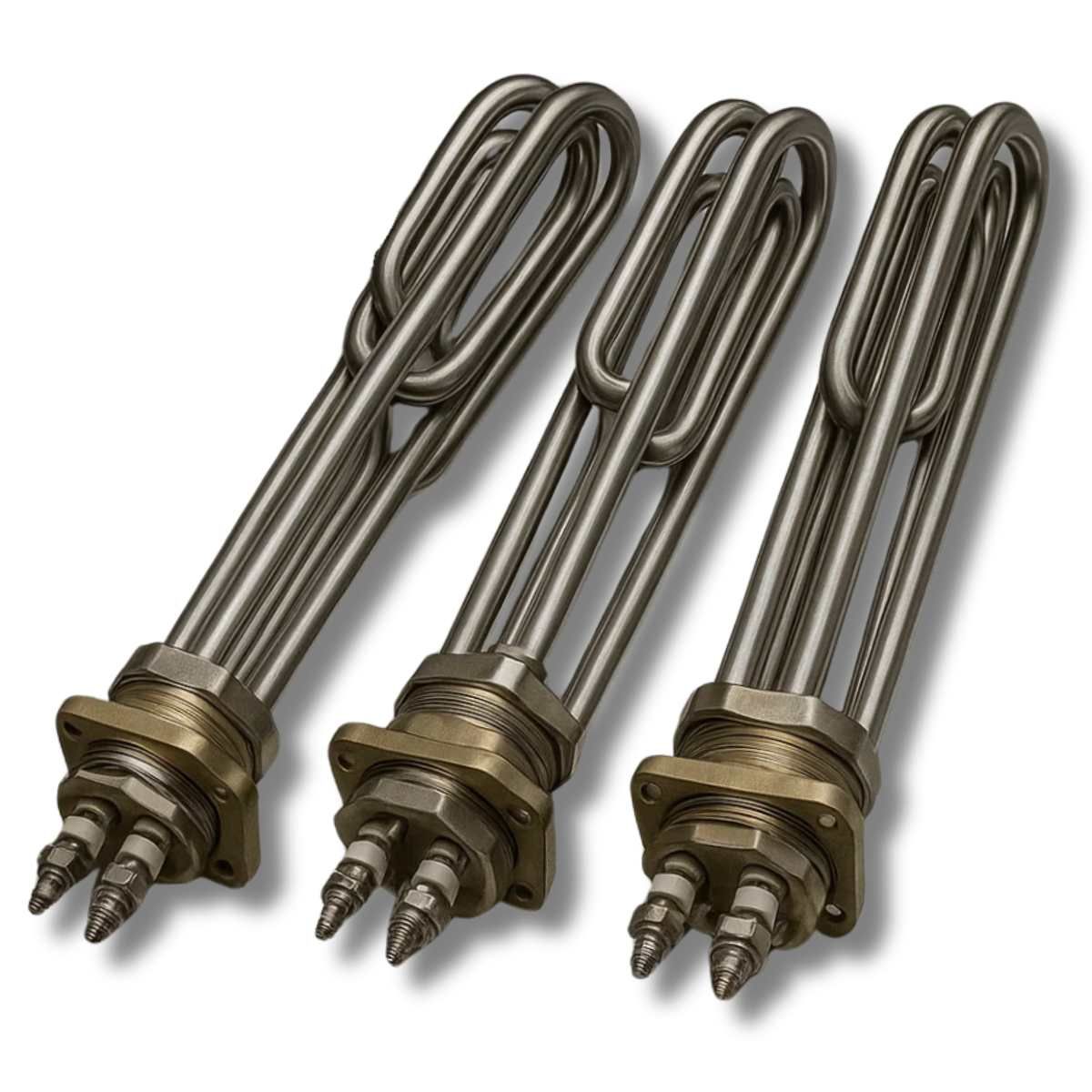
Screw Plug Heater
A screw plug immersion heater is a hairpin element brazed or welded into a threaded plug, so it screws straight into a boss on the side or the top of a tank. It is the simplest sealed way to put heat inside a vessel, and it suits tanks up to a few kilowatts at low and medium pressure.
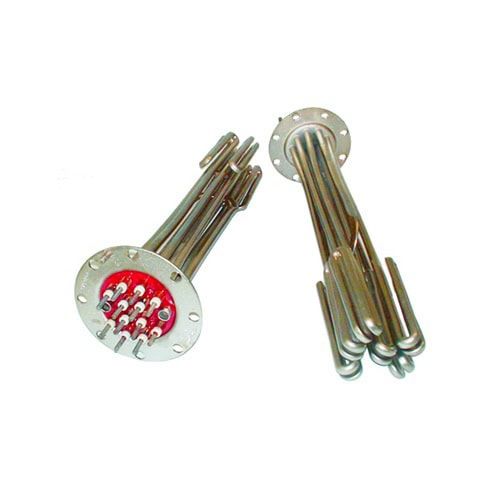
Flanged Heater
A flanged immersion heater is a bundle of hairpin elements welded into a flange that bolts onto a matching flange on the vessel. It is how large powers are put into a tank — tens of kilowatts, three phase — and it is the build used where there is pressure, a hot oil circuit, or a boiler.
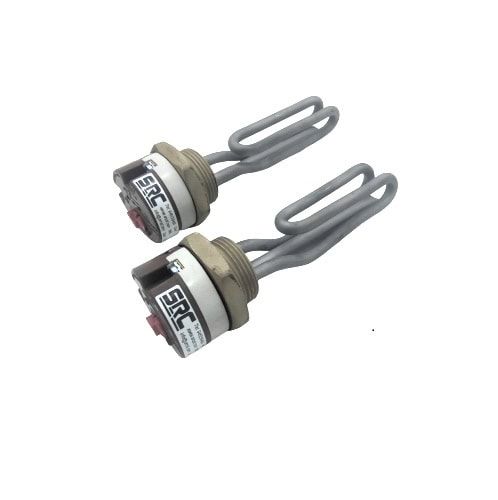
Water Heater Element
A water heater element is the screw-in element that heats a storage water heater or a hot water cylinder. It is usually a stainless steel or brass hairpin on a threaded plug, with a pocket down the middle for the thermostat, and it is chosen mainly by how hard the water is.
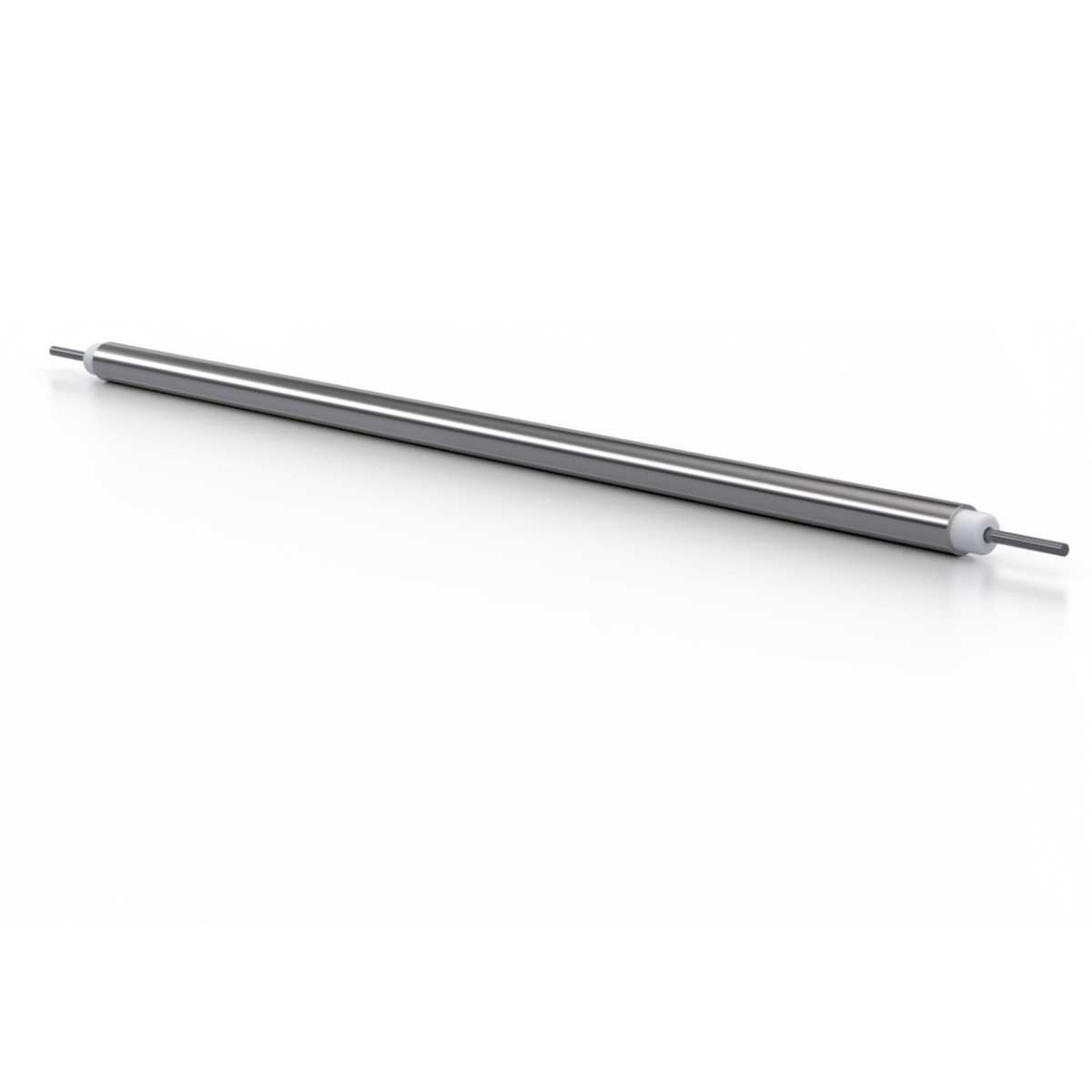
Straight Tubular Heater
A straight tubular heater is the simplest form of tubular element: one straight rod with no bends and a terminal at each end. It is made for places that already have a straight bore, pipe or channel, where the element can sit in without changing direction.
Formed Tubular Heater
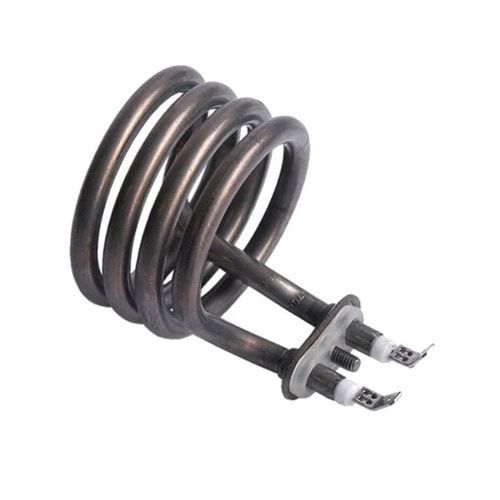
A formed tubular heater is a tubular element bent into shape after it is made: a U, a ring, a spiral, or whatever the drawing calls for. Bending lets you fit a long heated length into a small space, or match the element to the shape of the part it heats.
Drum and Tank Heater
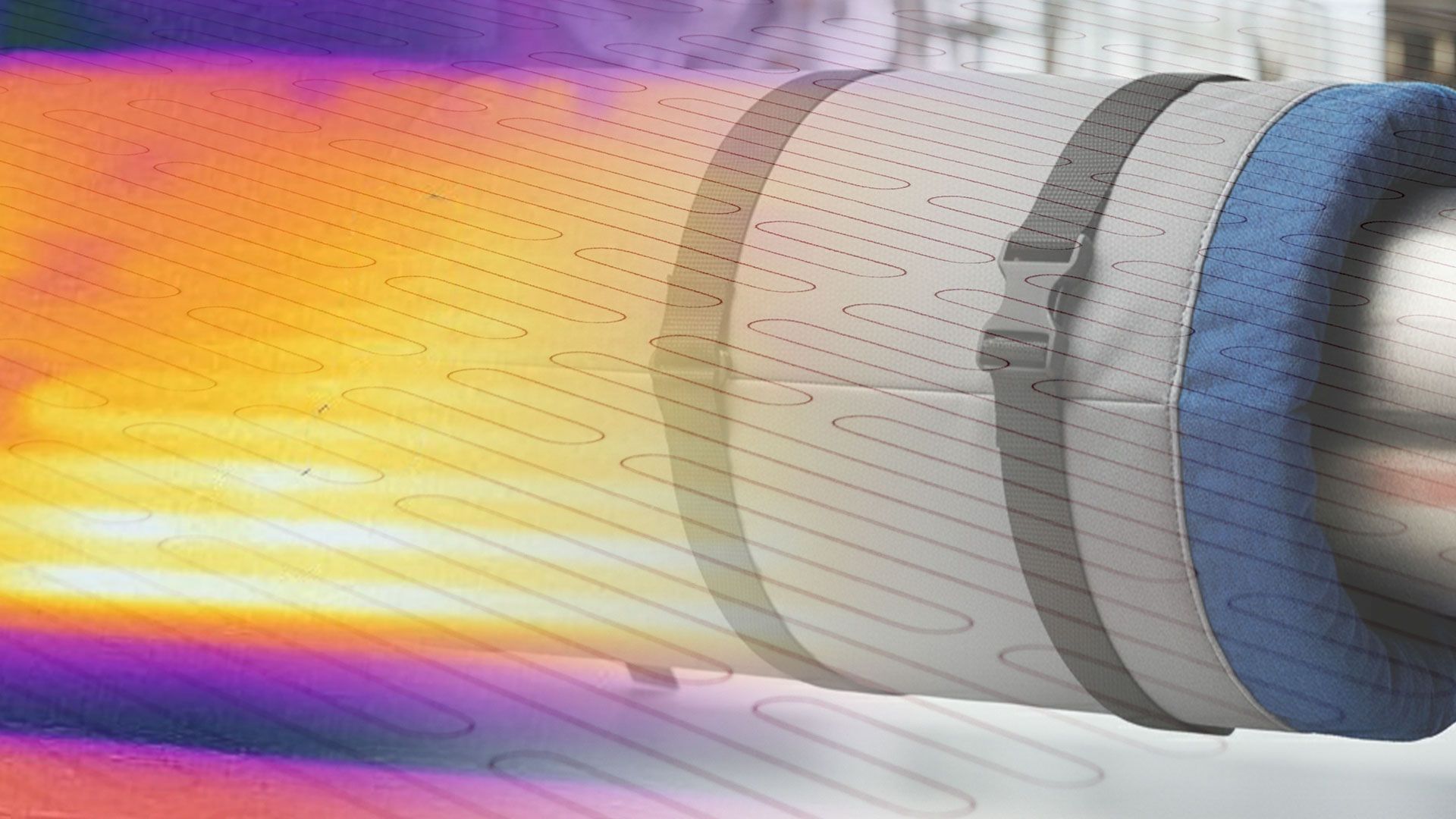
A drum and tank heater is a flexible jacket that straps around the outside of a drum, a barrel or a small tank and warms the contents through the wall. Nothing goes into the liquid, so it suits material that must not be contaminated and vessels that have no opening to fit an element into.
How to Get It Right
Watt density decides how long it lasts
Total wattage decides how fast the water heats. Watt density decides whether the element is still working next year. It is the power divided by the heated surface:
Watt density (W/cm²) = power ÷ (π × sheath diameter × heated length)
Put the diameter and the length in centimetres. If the answer comes out above the safe figure for your case, do not reduce the power — the tank would never reach temperature. Make the heated length longer, or split the same power across two or three elements.
Water is generous compared with oil or air, because it carries heat away well. That generosity ends the moment the sheath gets hot enough to boil a thin film of steam against itself. Steam is an insulator. Once that film forms, the heat has nowhere to go and the sheath temperature climbs while the water temperature does not.
The sheath has to match the water, not the budget
Ordinary mains water, up to about 90 °C, is fine with stainless 304 or 321. Domestic hot-water cylinders traditionally use copper, which conducts well and handles soft water. Demineralised water, plating baths and seawater want titanium. Water that is hard, hot or chemically aggressive wants Incoloy 800.
Chlorine is the one to watch. Swimming-pool water and heavily chlorinated municipal supplies pit stainless steel from the outside in, and the first sign is usually a tripped RCD rather than a cold tank.
Where the element sits matters as much as what it is
Mount the element low, so it stays under the water even when the level drops, and horizontal if you can, so heat rises through the full body of the liquid. Leave a clear gap under it for sediment. Scale and sludge that settle onto a sheath act as insulation in exactly the way steam does.
Keep the cold ends — the sections at each end with no resistance wire — out of the hot zone, and keep the terminal box above any splash line. If the box cannot be above it, it needs a proper gland and a cover, not tape.
Control it from the water, not from the element
Put the thermostat probe out in the body of the water, away from the element itself. A probe sitting beside the sheath reads the hot layer around the element and switches off early, so the tank never reaches the temperature the dial says. On anything that matters, fit a second, independent over-temperature cut-out. Thermostats fail closed more often than open.
Descaling is the whole maintenance job
In hard water, plan for descaling rather than reacting to it. If the machine takes longer to heat than it used to, the cause is almost always scale, not a weakening element. Before any restart after a period standing idle, measure the element’s resistance and its insulation resistance to the body — a low insulation reading means moisture has reached the magnesium oxide powder inside, and drying the element in a low oven will sometimes bring it back.
What Usually Goes Wrong
The mistakes that shorten an element's life on this kind of job.
- Running the element while the tank is empty. In water it burns out in minutes, and this is the single most common failure.
- Choosing the sheath by price. Stainless 304 lasts years in ordinary water and months in chlorinated or acidic water.
- Sizing on total wattage alone. Two elements of the same power and different lengths have completely different lives.
- Letting limescale build up. One millimetre on the sheath sends the sheath temperature sharply up while the water heats more slowly.
- Mounting the terminal box where steam or splashing reaches it. A wet terminal is the usual cause of earth leakage and a tripped RCD.
- Putting the thermostat probe next to the element instead of out in the body of the water, so it reads the element rather than the tank.
Common Questions
Which element should I use to heat a water tank?
For a tank with a threaded boss, a screw-plug immersion heater. For a large tank or one that has to come apart for cleaning, a flanged immersion heater. For a small tank or an open bath, a formed tubular element bent to the shape of the tank floor.
What watt density is safe in water?
Around 8 to 12 watts per square centimetre where the water moves, and 6 to 8 where it is still. Above that the film of steam that forms on the sheath stops carrying heat away and the element runs hot inside its own bubble.
Which sheath material for water?
Stainless 304 or 321 for ordinary mains water, copper for domestic water cylinders, titanium for plating baths and seawater, and Incoloy 800 where the water is hot, hard or chemically aggressive.
How do I stop the element burning out when the tank runs dry?
Fit a level switch or a dry-run protection thermostat wired to cut the supply. This costs a fraction of the element it saves, and no element design can survive being switched on in air.
How much power do I need?
For water, roughly 1.16 watt-hours lifts one litre by one degree. Work out the litres, the temperature rise and the time you will accept, then add for the heat the tank loses. The power calculator does this arithmetic for you.
Can the same element heat a glycol mix or a washing solution?
Usually yes, at a lower watt density. Anything thicker than water carries heat away more slowly, and anything with detergent, salt or acid in it changes which sheath material you need.
Ask for a Price or Technical Advice
Call us or send a WhatsApp message for a price, full specifications, or a custom build.
Last updated: