Heat Press Heater
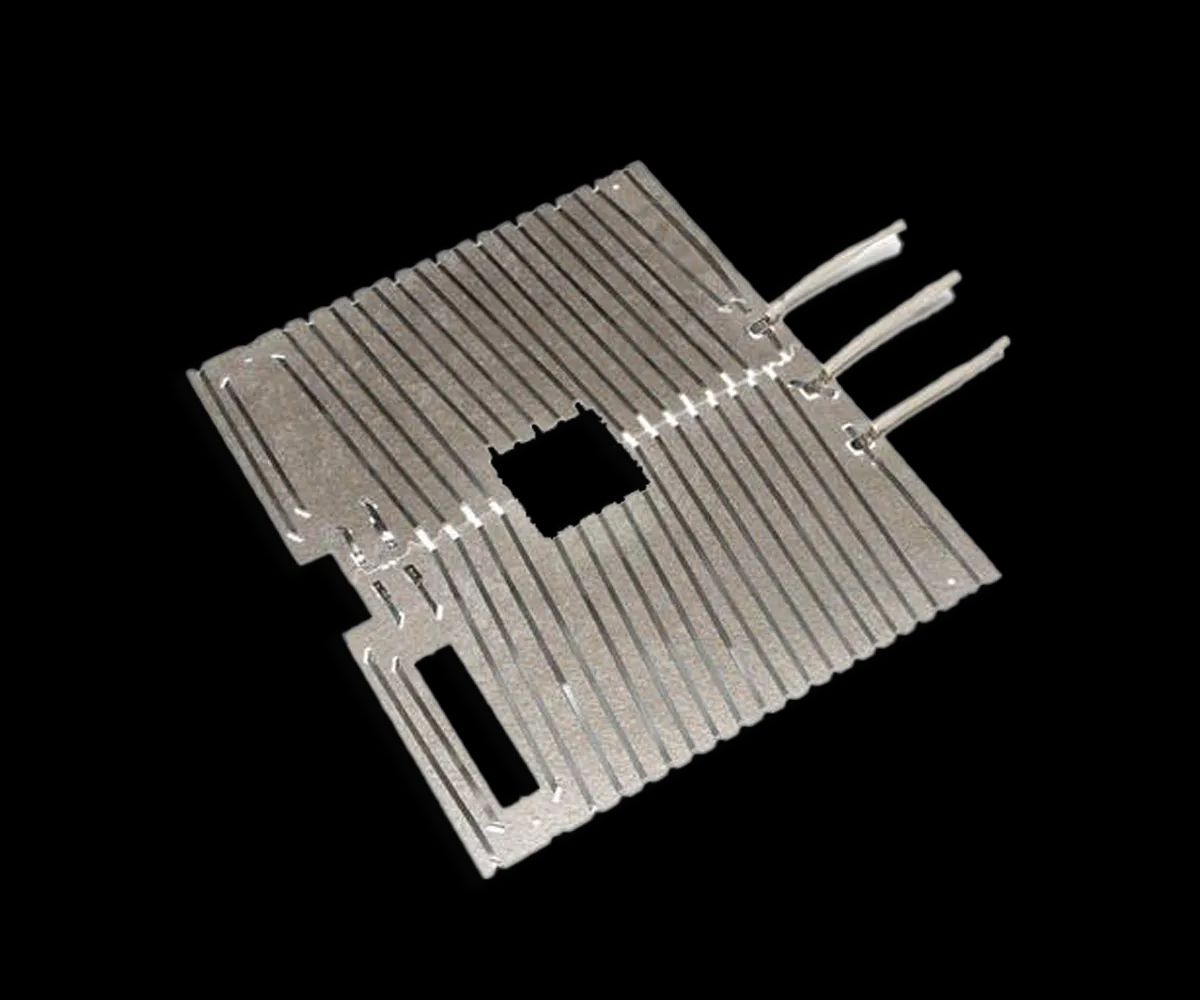
A heat press heater is the element built into the platen of a press — a heat transfer press, a laminating press, a hot stamping or a vulcanising machine. Its whole job is an even temperature across the pressing face, because everything the press makes is only as good as the coldest corner of that face.
- What matters most
- Even temperature across the face
- Max temperature
- 250 to 400 °C
- Watt density
- 1 to 3 W/cm²
- Build
- Cast into or clamped behind the platen
- Voltage
- 220 / 380 V
- Custom builds
- To your platen size and fixings
Ask for a Price or Technical Advice
Call us or send a WhatsApp message for a price, full specifications, or a custom build.
Technical Specifications
The figures below are the usual ranges for this type of element. Builds outside them are possible.
| Property | Value |
|---|---|
| Construction | A tubular element cast into an aluminium platen, or a flat circuit clamped behind a steel one |
| Platen material | Cast aluminium or steel |
| Max working temperature | 250 (cast aluminium) to 400 (steel with a ceramic-insulated element) °C |
| Safe watt density | 1 to 3 W/cm² |
| Face evenness aimed at | Within about ±5 across the working area °C |
| Warm-up time | 10 to 25 minutes from cold, by platen mass |
| Working voltage | 220 single phase or 380 three phase V |
| Sensor | Pocket in the platen, positioned away from the centre and the edge |
| Back insulation | Ceramic fibre or calcium silicate board, between platen and frame |
| Termination | Terminal box at the back, clear of the press mechanism |
| Power tolerance | +5 to -10 % |
Where It Is Used
- Packaging and sealing machinery
- Plastic forming and laminating tools
- Heat transfer and sublimation presses
- Hot stamping and embossing
- Rubber vulcanising presses
Choosing, Fitting and Looking After It
Evenness is the product, not the temperature
A press with a face that reads 180 °C at the sensor and 158 °C in one corner will produce good work over most of the bed and bad work in that corner, all shift, and the operator will chase it by raising the setpoint — which makes the good part of the bed too hot. The specification for a press platen is not a temperature, it is a temperature spread. Ask for the face to hold within a few degrees across the working area and design the circuit to do it.
Edges need more circuit, not more power
The rim of a platen loses heat from its edge as well as its faces. If the element runs at an even pitch right to the edge, the rim will always be cooler. The fix is geometric: bring the runs closer together near the perimeter, and carry the circuit as near the edge as the build allows. Raising the total wattage instead lifts the middle along with the rim and leaves the same gap between them.
Check the face on a grid, at temperature, and write it down
Nine measured points across the bed, taken twenty minutes after the press reached setpoint, will tell you more about a press than anything else you can do in ten minutes. Do it when a press is new and keep the numbers. When work starts going wrong months later, the second grid against the first says immediately whether the platen has changed or the process has.
Full support behind the element, or the press breaks it
The platen carries the full pressing force on every cycle. Where the element sits in a pocket with air behind it, that force bends the platen into the void, a fraction of a millimetre at a time, thousands of times. Cast-in elements do not have this problem. Clamped assemblies must be supported across their whole area, not just at the fixing points.
Insulate the back, and gain on four counts at once
A press platen bolted straight onto a steel frame is heating the frame. Put a board of calcium silicate or a ceramic fibre blanket between them and four things improve together: warm-up gets shorter, the corners come up because less heat is being pulled out through the mounting, energy drops, and the machine stops radiating at whoever is loading it.
Leads and the moving half
On a press, one platen moves. Its leads flex every cycle, and a lead that flexes at a fixed clamp breaks inside the insulation within months. Give the moving side a proper flexible lead, a generous service loop, and a clamp at each end of the loop so the bending happens along the free length instead of at a termination.
The sensor represents the whole face
There is one sensor and a large area, so where it sits defines what “at temperature” means. Dead centre reports the hottest point and leaves everything else colder. A point about a third of the way in from an edge is a fairer average. Whatever is chosen, keep it consistent when a platen is replaced — a new platen with the pocket in a different place changes every setpoint the operators know.
Price
Price
The price for this product depends on the specification you order.
What Sets the Price
- Diameter and length
- Power and voltage needed
- Sheath material (stainless steel, brass and so on)
- Termination type and lead or thread length
- Whether a thermocouple is built in
- Order quantity
How It Compares
A press platen against the plate heater it looks like.
| Feature | Press platen | Plate heater |
|---|---|---|
| What decides it | Evenness under pressure | Reaching temperature |
| Mechanical load | Full press force, every cycle | None to speak of |
| Edge temperature | Must hold to the edge | Edges may fall off |
| Sensor | Placed to represent the whole face | Placed near the work |
Common Questions
Why is my press hotter in the middle than at the corners?
Because the corners lose heat on two sides while the middle loses it on one, and because most element layouts do not bring the circuit close enough to the edge. A platen designed for a press turns the circuit tighter near the rim to make up for it.
How do I check the temperature across the face?
With an infrared thermometer or contact probe, on a grid — nine points is usually enough — after the press has held setpoint for at least twenty minutes. Checking during warm-up tells you nothing; the platen is still moving towards balance.
How long should a press take to heat up?
Ten to twenty-five minutes from cold, depending on the platen mass. Trying to make it faster by fitting a higher wattage element usually makes the face less even, because the extra power arrives at the circuit lines rather than across the area.
Does the press force damage the heater?
It should not, when the element is cast into the platen or clamped fully behind it. It does damage a heater fitted with gaps behind, because the pressing force then bends the platen into those gaps, cycle after cycle, until the element cracks.
Is insulation behind the platen worth it?
It is the cheapest improvement available on most presses. Without it a large share of the heat goes into the frame, the corners run cold, warm-up takes longer, and the machine radiates onto the operator. A board of calcium silicate fixes all four.
Can you build a platen heater for an old press with no drawings?
Yes. Measure the platen size and thickness, the fixing holes, where the sensor pocket is, where the leads must leave, and the voltage on the plate. A photograph of the back of the platen usually answers the rest.
Related Products
Flat and Strip Heater
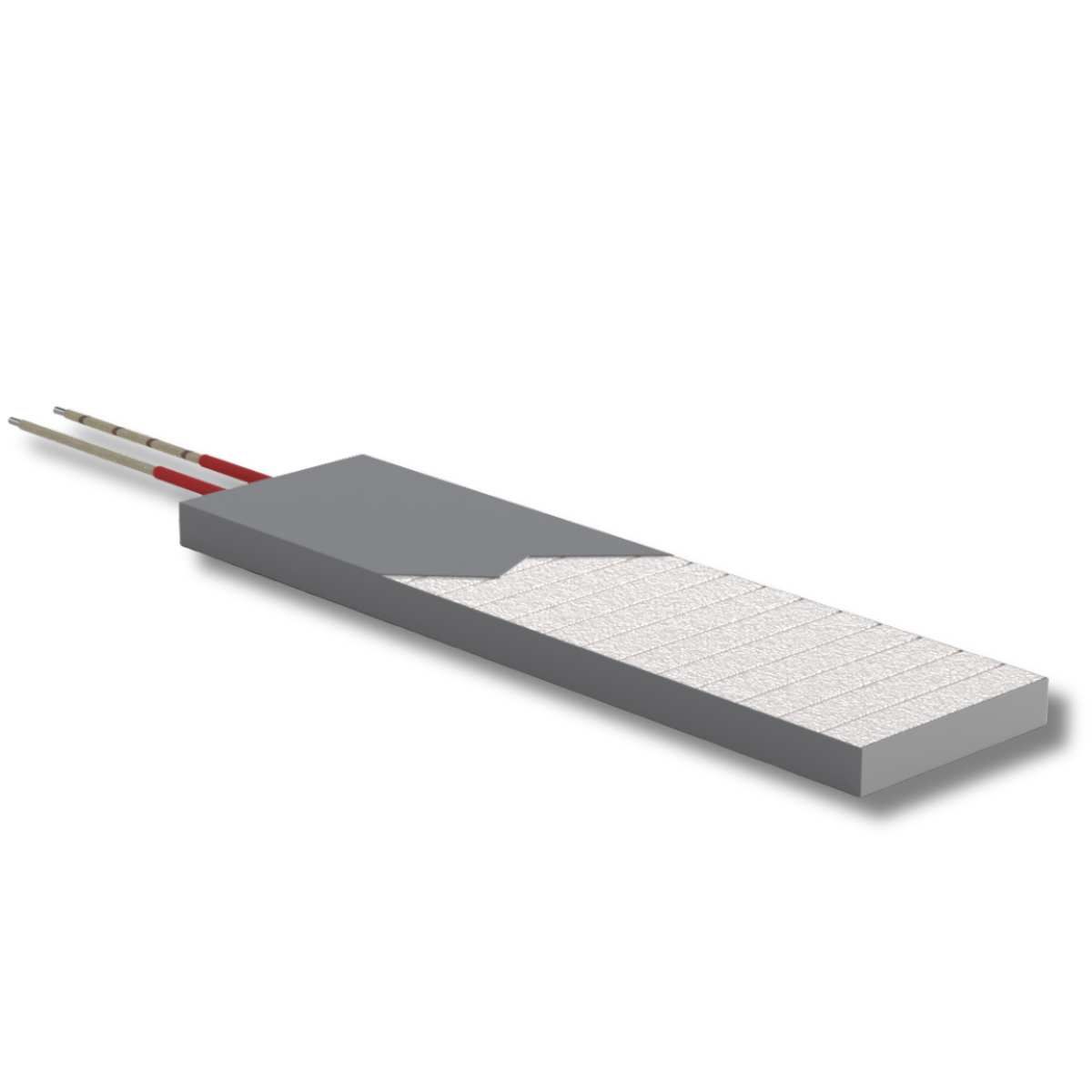
A flat or strip heater is a rectangular element that bolts against a flat surface and heats it by contact. Resistance wire sits on mica or in compacted magnesium oxide inside a steel or stainless case. It is the element used wherever the thing being heated is a plate, a bar or a platen rather than a liquid or a pipe.
Strip Heater
A strip heater is a long, narrow flat element, usually 25 to 60 mm wide, that bolts along a bar, an edge or a plate and heats it in a line. Fitted with fins it becomes an air heater instead, and it is the simplest way to add heat to a surface that has no room for anything thicker.
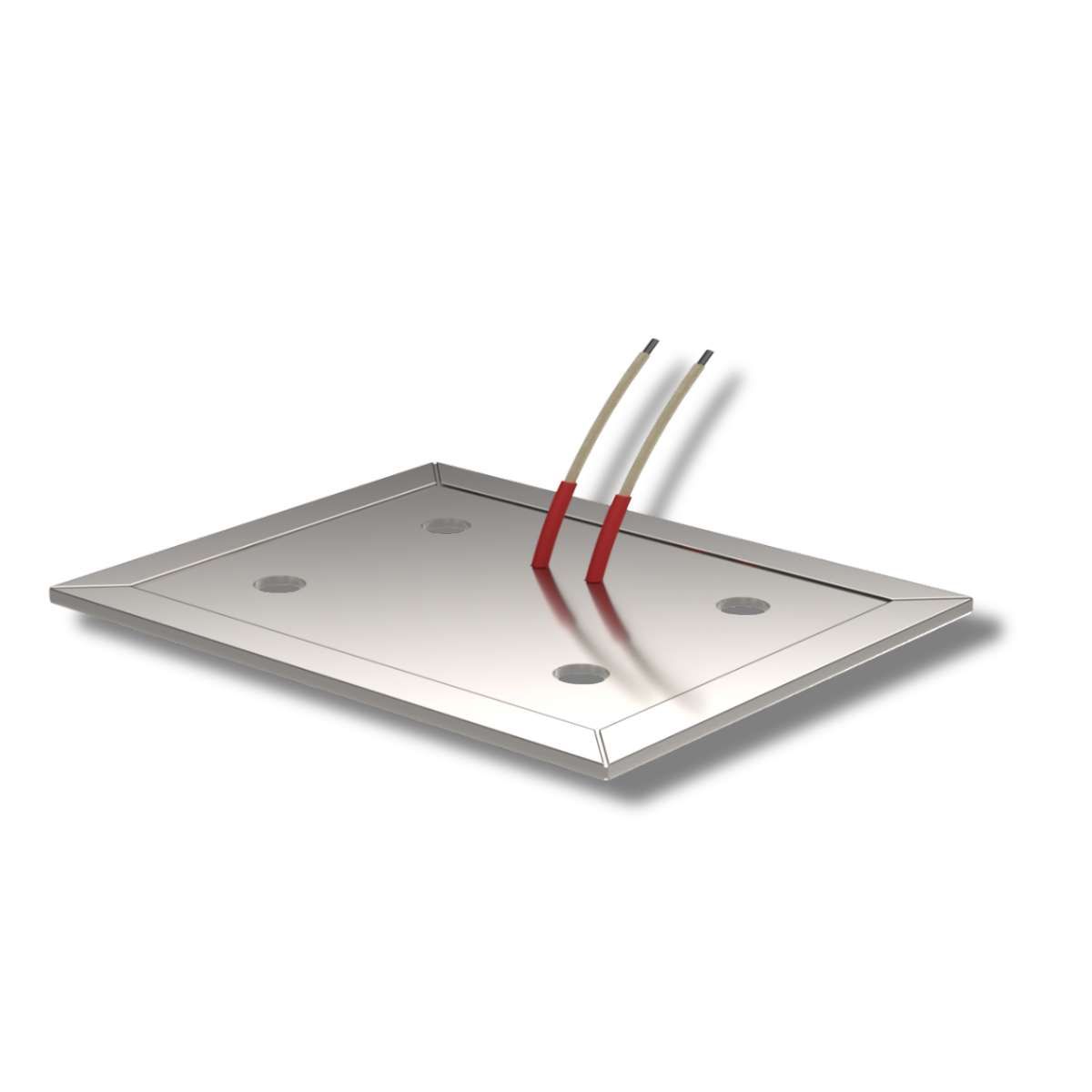
Plate Heater
A plate heater is a wide flat element that heats an area rather than a line. A resistance circuit is spread across a rectangular plate — clamped between metal sheets or cast into aluminium — so the whole face comes up to temperature together. It is used under vessels, moulds, tables and heated surfaces.
Ask for a Price or Technical Advice
Call us or send a WhatsApp message for a price, full specifications, or a custom build.
Last updated: