Formed Tubular Heater
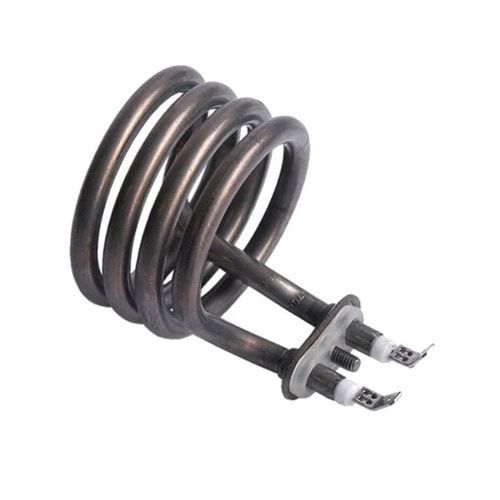
A formed tubular heater is a tubular element bent into shape after it is made: a U, a ring, a spiral, or whatever the drawing calls for. Bending lets you fit a long heated length into a small space, or match the element to the shape of the part it heats.
- Shape
- U, ring, spiral, custom
- Min bend radius
- about 2x diameter
- Diameter
- 6 to 10 mm
- Max working temperature
- up to 600 °C
- Built from
- A drawing or a sample
- Terminals
- Both on the same side
Ask for a Price or Technical Advice
Call us or send a WhatsApp message for a price, full specifications, or a custom build.
Technical Specifications
The figures below are the usual ranges for this type of element. Builds outside them are possible.
| Property | Value |
|---|---|
| Final shape | Bent to drawing; U, W, ring, spiral or free form |
| Minimum bend radius | About 2x the sheath diameter |
| Sheath material | Stainless steel |
| Sheath diameter | 6, 8, 10 mm |
| Max working temperature | up to 600 °C |
| Dimensional tolerance after bending | around ±3 mm |
| Working voltage | 12, 24 or 220 single phase V |
| Terminal position | Usually both ends on the same side |
Sizes and Specifications We Supply
| Property | What we supply |
|---|---|
| Diameter | 6 to 10 mm |
| Length | 300 mm to 6 m |
| Maximum power per element | 5,000 W |
| Voltage | 12, 24, 220 V |
| Sheath material | Stainless steel |
| Maximum working temperature | 600 °C |
| Termination | Nut or threaded boss |
| Delivery | 1 working day |
| Minimum order | 1 piece |
Where It Is Used
- Water and liquid heating
- Tank and drum heating
- Industrial furnaces and ovens
- Food and pharmaceutical production
- Industrial fryers and grills
Choosing, Fitting and Looking After It
Formed means more heated length in less space
Say you have a tank only 40 cm deep but you need six kilowatts. With a straight 400 mm element the watt density climbs so high that the element will not last. Bend the same element into a U and the heated length doubles while the watt density halves. This is the simplest and most common reason to choose formed.
What the drawing needs on it
So we can build without going back and forth, put these figures on the drawing: the length of each leg, the centre-to-centre distance between legs, the bend radius, the sheath diameter, the cold end length, the power and voltage, and whether the termination is a stud or a lead wire. If you send a physical sample instead, we take the same measurements off it.
Do not put the bend in the hottest place
We normally design the bend as cold or low-wattage, because through a curve the distance from the resistance wire to the sheath is not the same on both sides. If you send a drawing that puts the bend right in the middle of the high-power zone, we will tell you and suggest a change.
Ring and spiral shapes
A ring suits heating the bottom of a round tank evenly. A spiral suits small heat exchangers and pre-heaters. Both cost more than a U, because there are more bending steps and holding the dimensions is harder.
What cannot be changed afterwards
A formed element is effectively unalterable once made. Opening out or reshaping a bend wrecks the insulation inside. So we go over the dimensions with you once more before production — those few minutes prevent a rebuild.
Fitting and looking after it
Never hold or lever a formed element by its bend. When fitting, take the weight only on the cold end or the flange. If it goes inside a tank, fix the brackets so the element can grow slightly in length as it heats. Clamping it completely rigid will crack it after a few heating and cooling cycles.
Price
Price
500,000 – 3,000,000 Toman
Prices checked — confirm the figure before ordering, as it moves with the exchange rate and with the specification.
What Sets the Price
- Diameter and length
- Power and voltage needed
- Sheath material (stainless steel, brass and so on)
- Termination type and lead or thread length
- Whether a thermocouple is built in
- Order quantity
How It Compares
Why bending the element is sometimes the only way.
| Feature | Formed | Straight |
|---|---|---|
| Heated length in a small space | Several times more | Limited |
| Terminal position | Can be on one side | At opposite ends |
| Matching the part's shape | Complete | Straight paths only |
| Cost | Higher | Lower |
Common Questions
What do you build a formed element from?
A drawing, a physical sample, or even a photo with dimensions. If you have the old element, that is the best reference of all — we take the shape, length, diameter and termination straight off it.
What is the minimum bend radius?
Usually about twice the sheath diameter. For an 8 mm element that is a bend radius of around 16 mm. Anything tighter shifts the insulating powder inside and makes a hot spot at the bend.
Does watt density change at the bend?
Yes, and that is the point to watch. On the outside of a bend the resistance wire stretches slightly and on the inside it compresses. We normally design the bend as a cold section or at a lower wattage for exactly this reason.
Can both terminals be on the same side?
Yes, and it is one of the main reasons to choose a U shape. It means all the wiring and maintenance happens on one side of the machine.
How long does a formed element take to make?
It depends on the shape and the quantity. Send the drawing or a photo of the sample over WhatsApp and we will come back with a time and a price.
Related Products
Tubular Heater
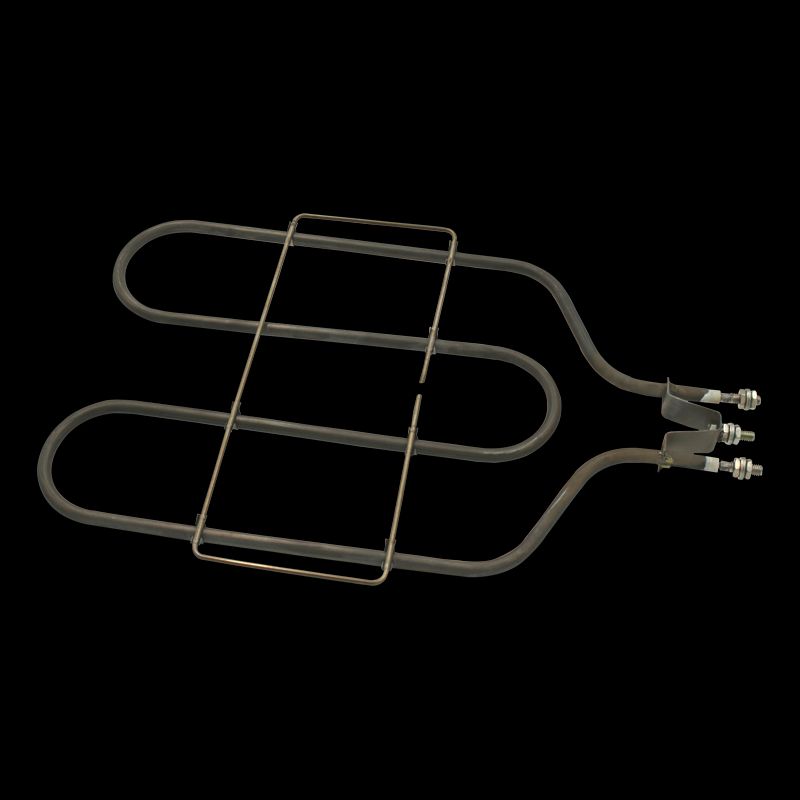
A tubular heater is a metal tube with a resistance wire running down the middle, the gap packed tight with magnesium oxide powder. It is the most widely used industrial heating element, working in water, oil, air and against metal surfaces up to a sheath temperature of around 750 °C.
Straight Tubular Heater
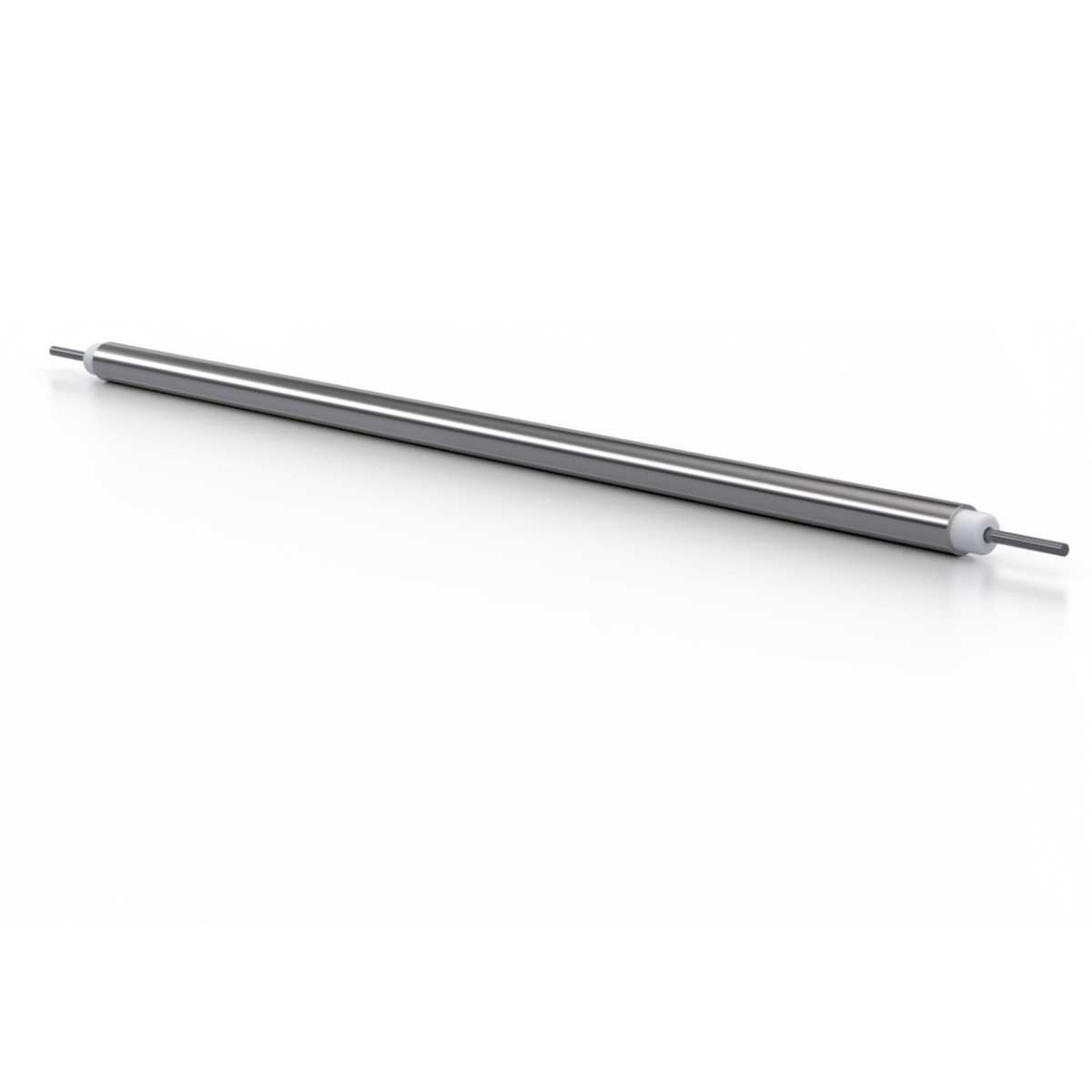
A straight tubular heater is the simplest form of tubular element: one straight rod with no bends and a terminal at each end. It is made for places that already have a straight bore, pipe or channel, where the element can sit in without changing direction.
Finned Tubular Heater
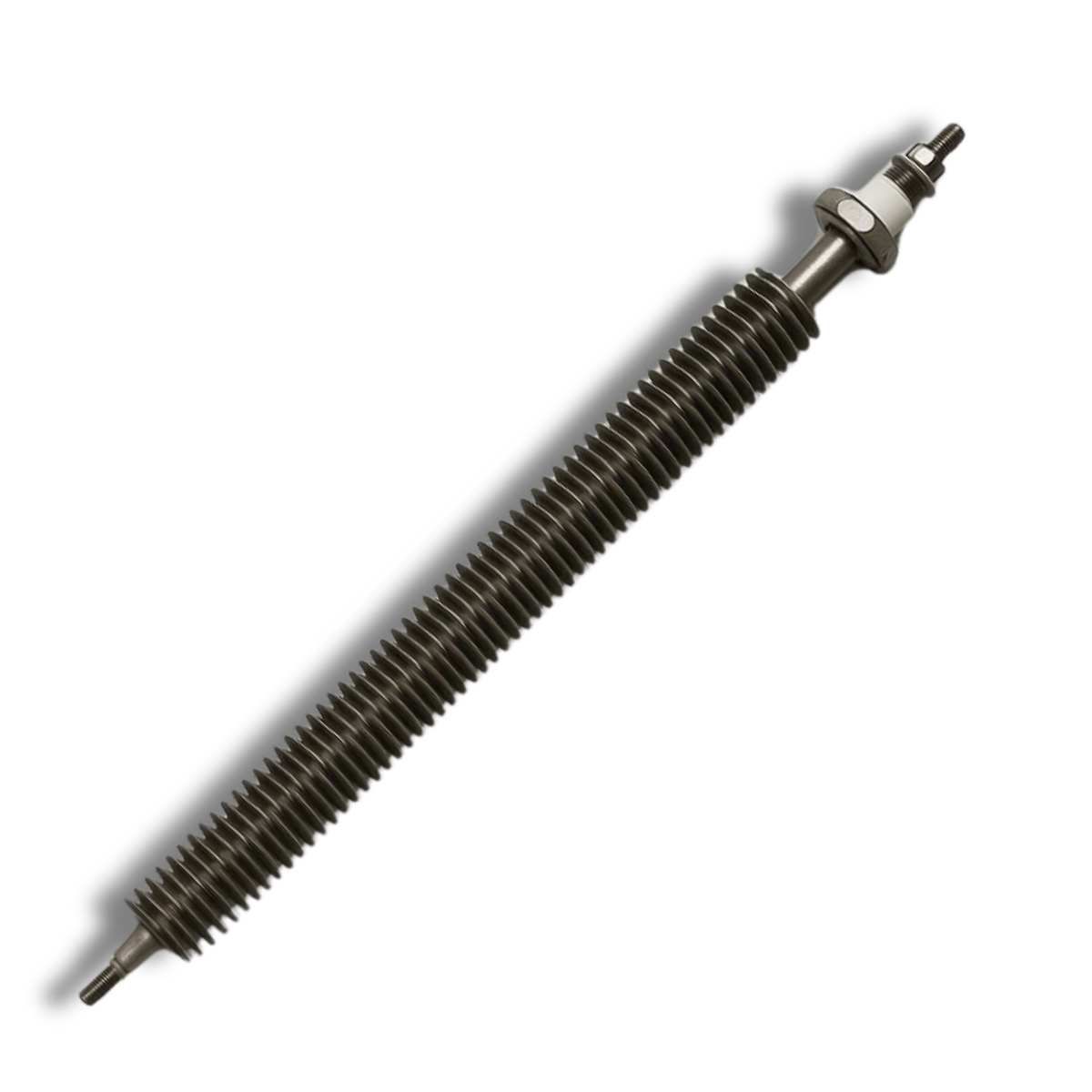
A finned tubular heater is a tubular element with thin metal fins wound and welded around the sheath. The fins multiply the surface touching the air by three to five times, so the same wattage transfers at a much lower sheath temperature. It is the standard choice for heating air and ducts.
Ask for a Price or Technical Advice
Call us or send a WhatsApp message for a price, full specifications, or a custom build.
Last updated: