Air and Duct Heating
Heating air means fighting the worst heat-transfer medium in industry. Air carries almost nothing away from a sheath, so an element that would be comfortable in water glows red in still air. The answer is more surface and moving air, not more watts.
Ask for a Price or Technical Advice
Call us or send a WhatsApp message for a price, full specifications, or a custom build.
The Job
A duct, dryer or oven has to deliver air at a set temperature, using elements that survive a medium which barely cools them.
Working Conditions
The usual figures for this application. Yours may differ, and the element is sized from your figures, not these.
| Property | Value |
|---|---|
| Medium | Air, in a duct, a dryer, an oven or an open space |
| Usual outlet temperature | 60 to 400 °C |
| Safe watt density, moving air | 3 to 5 W/cm² |
| Safe watt density, still air | 2 to 4 W/cm² |
| Typical air speed in a duct | 3 to 10 m/s |
| Usual sheath materials | Stainless 304 and 321, Incoloy 800 |
| Surface gained by fins | 3 to 5 times a bare tube |
What Suits It
The element types that fit this job, best first.
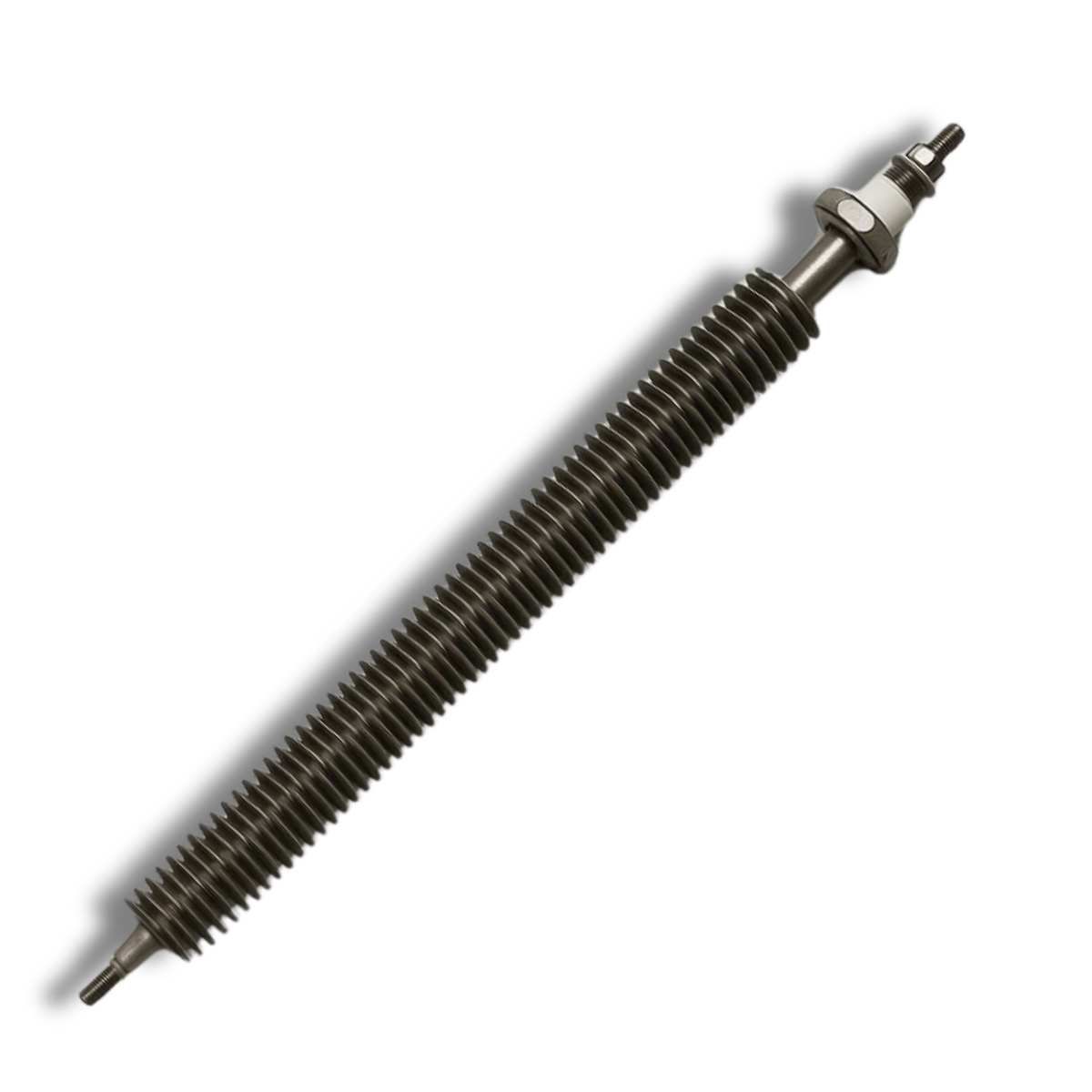
Finned Tubular Heater
A finned tubular heater is a tubular element with thin metal fins wound and welded around the sheath. The fins multiply the surface touching the air by three to five times, so the same wattage transfers at a much lower sheath temperature. It is the standard choice for heating air and ducts.
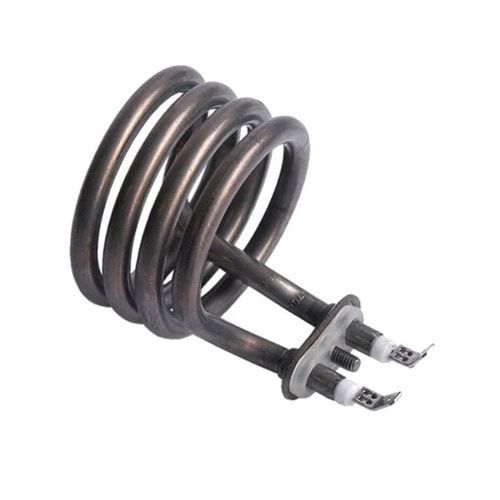
Formed Tubular Heater
A formed tubular heater is a tubular element bent into shape after it is made: a U, a ring, a spiral, or whatever the drawing calls for. Bending lets you fit a long heated length into a small space, or match the element to the shape of the part it heats.
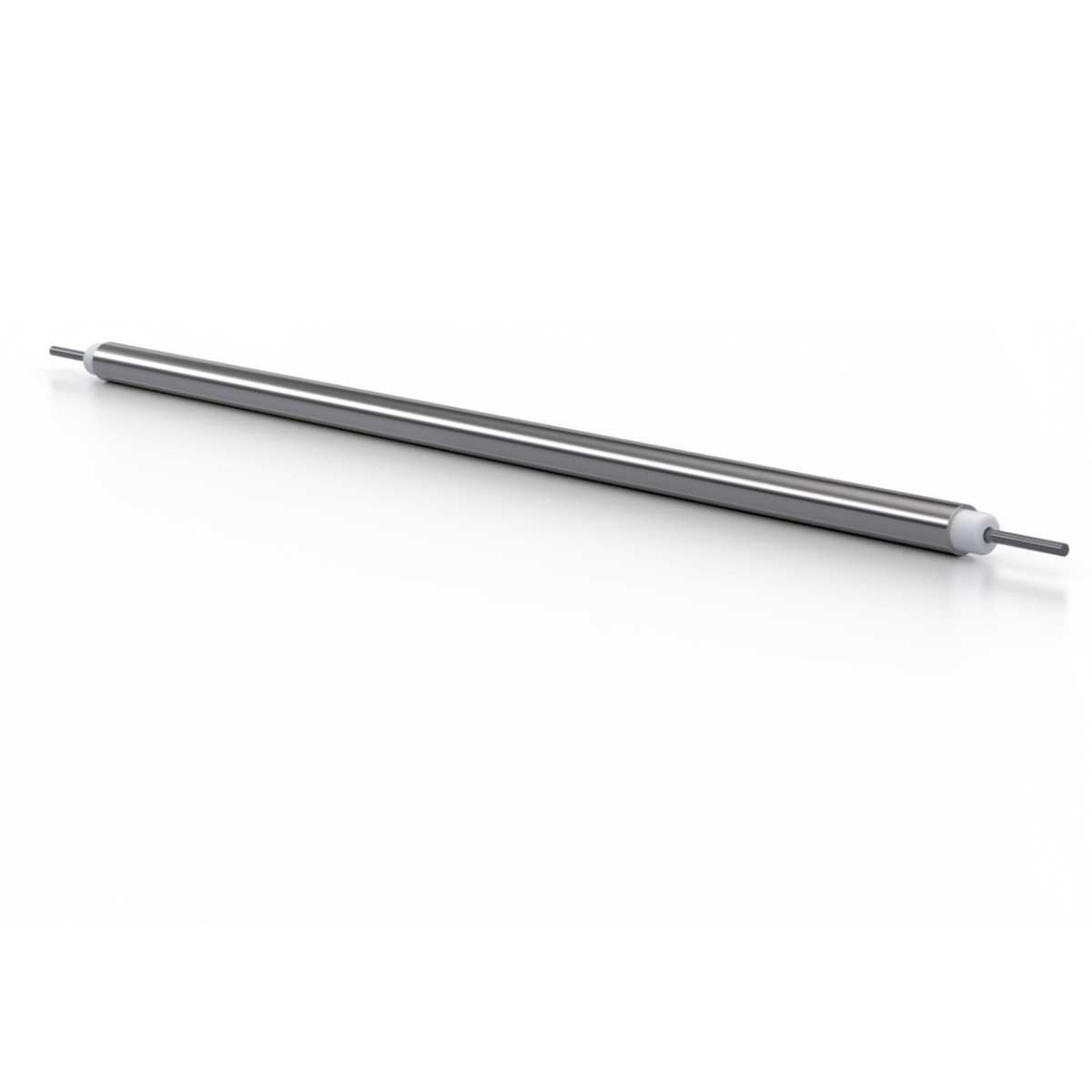
Straight Tubular Heater
A straight tubular heater is the simplest form of tubular element: one straight rod with no bends and a terminal at each end. It is made for places that already have a straight bore, pipe or channel, where the element can sit in without changing direction.
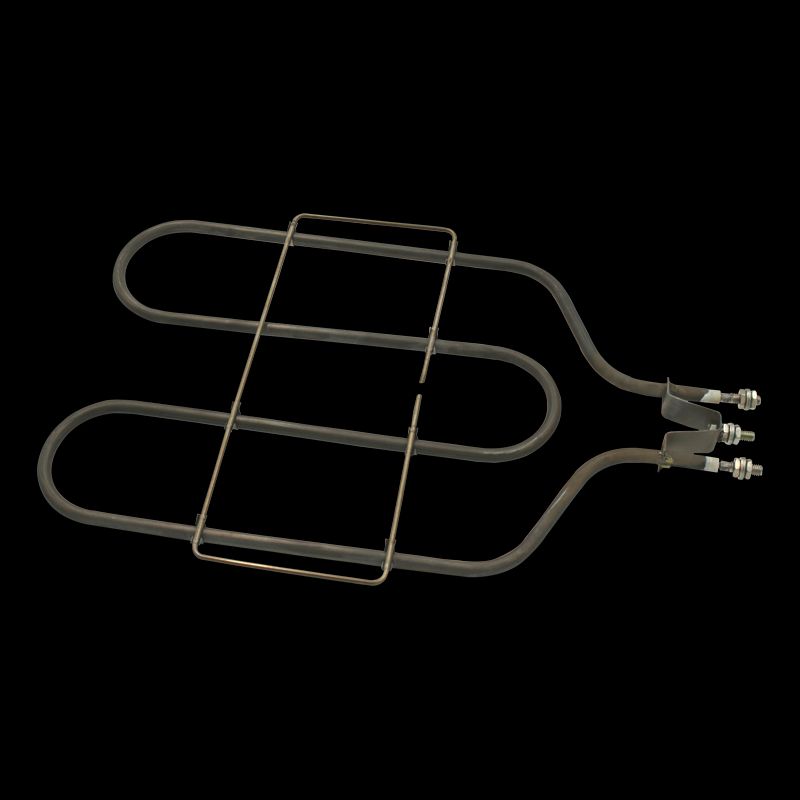
Tubular Heater
A tubular heater is a metal tube with a resistance wire running down the middle, the gap packed tight with magnesium oxide powder. It is the most widely used industrial heating element, working in water, oil, air and against metal surfaces up to a sheath temperature of around 750 °C.
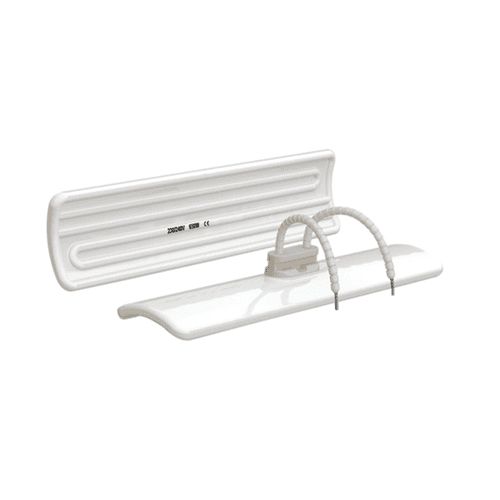
Ceramic Infrared Heater
A ceramic infrared heater is a resistance coil embedded in a glazed ceramic body that radiates long-wave infrared from a face running at 300 to 750 °C. It is slow, steady and robust, and it is the radiant element used where plastic has to be heated evenly without being scorched.
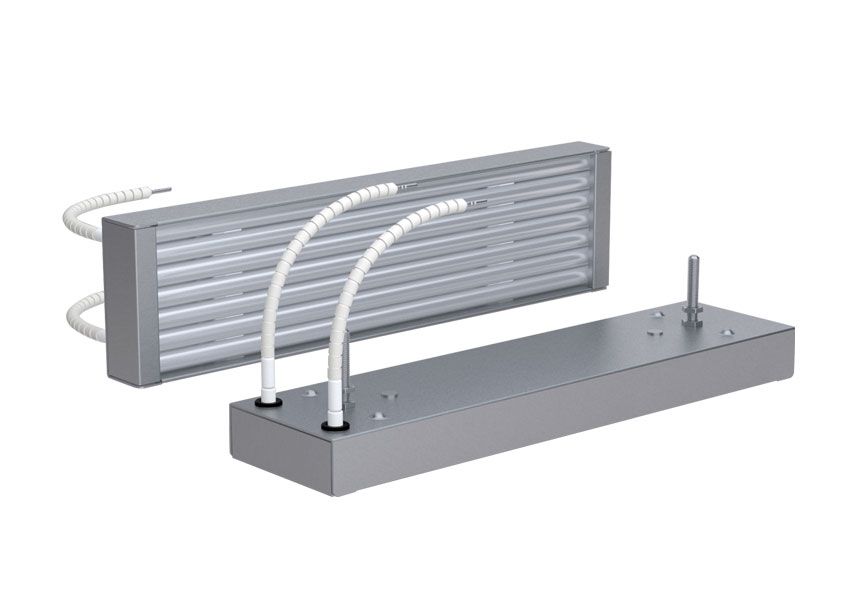
Quartz Heater
A quartz heater is a coiled resistance wire inside a clear quartz tube. The tube reaches 900 to 1200 °C and radiates medium-wave infrared, which most plastics, coatings and water absorb well. It reaches working output in a second or two and is the general-purpose radiant element for drying and forming.
How to Get It Right
Air is the hard case
Water takes about eight to twelve watts off every square centimetre of sheath without complaint. Air takes two to five. Everything else about designing an air heater follows from that one fact.
It means you cannot solve an air-heating problem by buying a bigger element in the same size. You solve it with surface: more heated length, more elements, or fins. It also means the difference between still air and moving air is not a detail. The same element that is fine in a duct with air moving over it at five metres a second will glow in the same duct with the fan off.
Fins are surface, and surface is the design
A finned tubular element is an ordinary tubular element with a metal strip wound along it. The strip does nothing electrically; it simply gives the heat three to five times as much area to leave from. That is why a finned bank looks small for its wattage compared with a bare-tube bank.
The catch is that fins only work if air can get between them. In a clean duct they are ideal. In air carrying dust, flour, textile lint or oil mist they fill up, the surface quietly disappears, and the element that was correctly specified overheats. Where the air is dirty, use bare tubes and more of them.
The airflow interlock is the safety design
Any element bank in a duct needs a way of knowing that the air is actually moving. A differential pressure switch across the fan, or a flow sensor in the duct, wired so the heaters cannot be on when the air is not. Fan belts break, motors trip and filters block — and every one of those turns a correctly sized heater into a badly overloaded one in seconds.
An independent over-temperature cut-out downstream is the second line. Fit both.
Control from the air, downstream
Put the control sensor downstream of the elements, in the air being delivered, far enough away that it is reading mixed air rather than the streak coming off one element. A sensor too close to the bank reads a hot spot, switches off early, and the process never gets the temperature the panel says it is getting.
Give the bank room to breathe
Elements packed tightly in a duct sit in each other’s hot air, and each one runs hotter than its rating assumes. Space them so the air passes between them, and keep the terminal ends outside the hot duct wall — silicone lead insulation is rated well below the air temperature in most process ducts, and a cooked lead is a short circuit waiting to happen.
What Usually Goes Wrong
The mistakes that shorten an element's life on this kind of job.
- Sizing on wattage and forgetting surface. In air the surface area is the design, not an afterthought.
- No airflow interlock. If the fan stops and the elements do not, they glow and fail within minutes.
- Fitting fins where the air is dusty or greasy. The fins clog, the surface disappears and the element overheats.
- Placing the sensor at the element instead of downstream in the air it is supposed to control.
- Letting the terminal box sit inside the hot duct, where the lead insulation cooks.
- Packing elements so close together that each one sits in the next one's hot air.
Common Questions
Why are air heaters finned?
Because air takes heat away badly. Fins multiply the surface touching the air by three to five times, which lets the same wattage come off a much cooler sheath. Without them the element runs hot enough to shorten its own life.
What watt density is safe in air?
Roughly 3 to 5 watts per square centimetre where the air moves and 2 to 4 where it is still. These are figures for the surface, including fins where there are fins.
How much power do I need for a duct?
Work it out from the airflow and the temperature rise you want, then add for the heat the duct loses. Roughly, one kilowatt lifts about 50 cubic metres of air per hour by 60 °C. The power calculator does this properly.
What is an airflow interlock and do I need one?
It is a switch — a differential pressure switch or a flow sensor — that cuts the heaters if the fan stops. Yes, you need one. Elements sized for moving air burn out in still air, and a dryer full of stopped hot air is also a fire risk.
Can I use a finned element in dusty or greasy air?
Not usually. The fins fill up and stop working long before anyone notices. Use a bare tubular element with more heated length instead, and accept a bigger heater bank.
What is the difference between heating air and heating a product with radiant heat?
A duct heater warms the air and lets the air warm the product. A radiant element — quartz, halogen or ceramic infrared — sends heat straight to the surface, which is faster and better for drying coatings and plastics.
Ask for a Price or Technical Advice
Call us or send a WhatsApp message for a price, full specifications, or a custom build.
Last updated: