Ceramic Band Heater
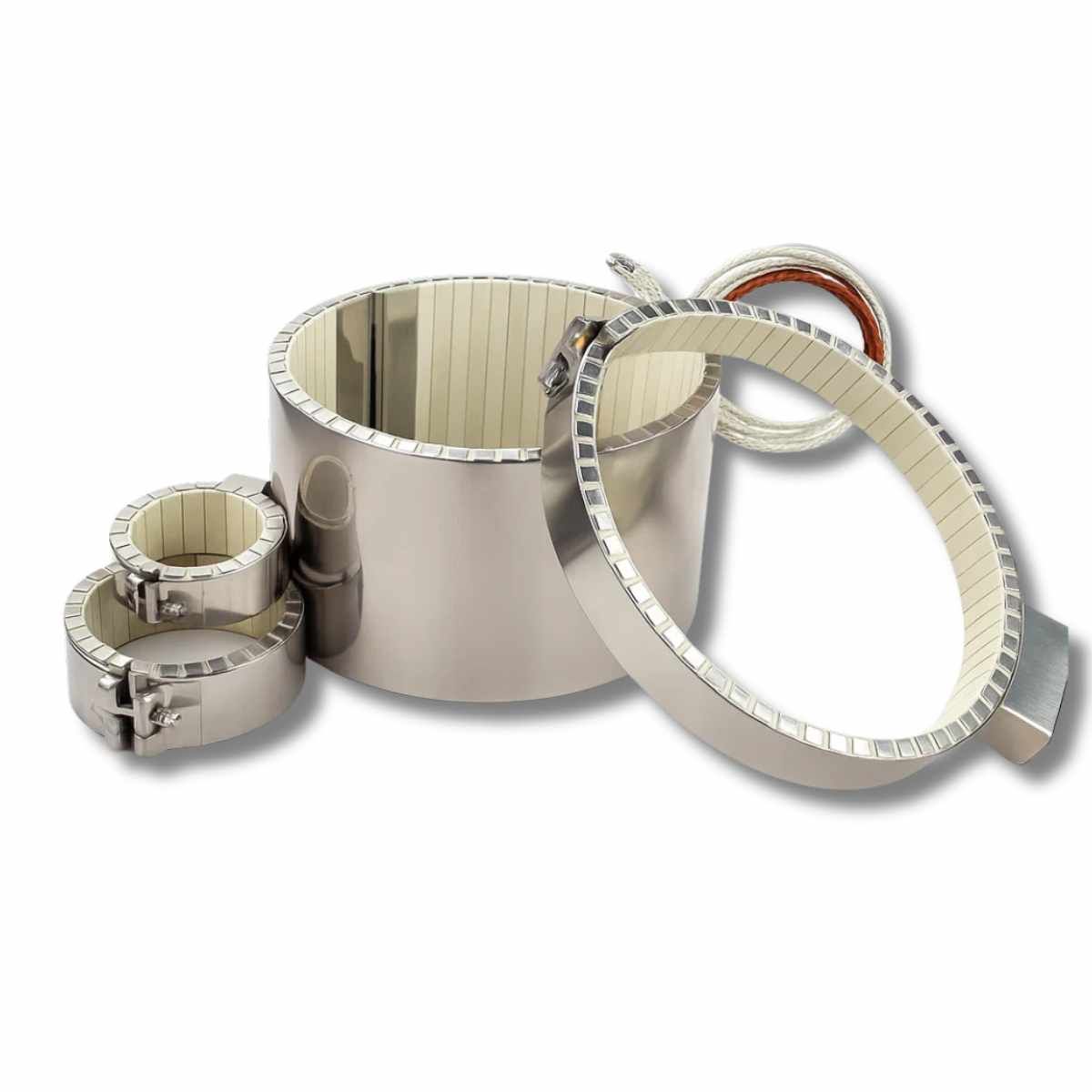
A ceramic band heater carries its resistance wire threaded through interlocking ceramic bricks, with a ceramic fibre blanket and a stainless frame behind them. We supply it for working temperatures up to 500 °C, it keeps heating even where contact with the barrel is imperfect, and its built-in insulation means less of its heat is lost to the workshop.
- Max temperature
- up to 500 °C
- Thickness
- 25 to 35 mm
- Watt density
- 3 to 8 W/cm²
- Insulation
- Built-in ceramic fibre
- Heat transfer
- Contact and radiation
- Custom builds
- Any diameter, width and cut-out
Ask for a Price or Technical Advice
Call us or send a WhatsApp message for a price, full specifications, or a custom build.
Technical Specifications
The figures below are the usual ranges for this type of element. Builds outside them are possible.
| Property | Value |
|---|---|
| Construction | Nickel-chrome wire threaded through interlocking ceramic bricks, backed by ceramic fibre in a stainless frame |
| Insulation | Ceramic bricks plus a fibre blanket behind them |
| Frame material | Stainless 304 or 321 |
| Max working temperature | 500 °C |
| Total thickness | 25 to 35 mm |
| Inner diameter range | 100 to 1500 mm |
| Width range | 50 to 1000 mm |
| Safe watt density | 3 to 8 W/cm² |
| Clamping | Hinged halves with barrel nuts, or a full band with a wedge lock |
| Working voltage | 24, 220 or 380 V |
| Termination | Post terminals under a cover, or braided leads from the frame |
| Power tolerance | +5 to -10 % |
Sizes and Specifications We Supply
| Property | What we supply |
|---|---|
| Inner diameter | 100 to 1,500 mm |
| Width | 50 to 1,000 mm |
| Maximum power per element | 6,000 W |
| Voltage | 24, 220, 380 V |
| Sheath material | Stainless steel |
| Maximum working temperature | 500 °C |
| Built-in thermocouple | On request |
| Delivery | 3 working days |
| Minimum order | 1 piece |
Where It Is Used
- Plastic injection moulding
- Packaging machinery
- Extruder and blow-moulding barrels
- Pipe and cylinder heating above 300 °C
Choosing, Fitting and Looking After It
It heats across a gap, which is why worn barrels get ceramic
The wire inside a ceramic band heater sits in bricks that run hot, and a real share of the heat leaves them as radiation. That single fact changes what the heater tolerates. Where a mica band would overheat behind a millimetre of air, a ceramic band keeps sending heat across it.
This is why a barrel that has gone oval, or one with a scored ridge left by three generations of heaters, is usually moved onto ceramic bands rather than re-machined. It is not a reason to stop caring about contact — good contact is still faster and more even — but it buys a badly worn machine a working life.
The insulation is half of what you are buying
Take a bare band heater on an extruder and hold a hand near it. That heat is going into the workshop, not into the plastic. A ceramic heater carries its fibre blanket inside the frame, and on a machine that runs all shift the difference shows up in three places: less energy drawn, a zone that holds steadier because it is less affected by draughts, and a surface an operator can stand next to.
Thickness is a fitting problem — check before ordering
Twenty-five to thirty-five millimetres is a lot to add around a barrel. Tie bars, guards, the feed throat, hopper brackets and the next heater along all become obstructions that a three-millimetre mica band never met. Measure the free radius around the barrel at every zone before ordering, not after the heaters arrive.
Slow to heat, slow to cool, and that cuts both ways
The mass that makes it steady also makes it lag. It takes minutes to come up and minutes to come down, so the controller has to be tuned for it — settings carried over from mica heaters will overshoot badly. And when the line stops, the barrel keeps taking heat for a while after the power is cut, which matters when the material in it degrades.
Handle it like the ceramic it is
The bricks are brittle and the assembly is heavy. Dropping one corner on a bench cracks bricks that look fine until the heater is powered up. Take the weight with both hands when fitting, never lever a stuck heater off with a screwdriver, and if a heater has bonded to the barrel with burnt plastic, soften it rather than forcing it.
Wiring and terminal covers
The terminal area on a ceramic heater sits right on top of a very hot frame, so the leads and their insulation live a hard life. Keep the terminal cover in place, use braided high-temperature lead wire, and support the leads so their weight is never hanging on the terminal post. A loose post arcs, and an arc at that temperature destroys the terminal block quickly.
Price
Price
From 1,200,000 Toman
Prices checked — confirm the figure before ordering, as it moves with the exchange rate and with the specification.
What Sets the Price
- Diameter and length
- Power and voltage needed
- Sheath material (stainless steel, brass and so on)
- Termination type and lead or thread length
- Whether a thermocouple is built in
- Order quantity
How It Compares
Ceramic against mica, on the points that actually decide it.
| Feature | Ceramic | Mica |
|---|---|---|
| Max working temperature | 500 °C | 300 °C |
| Heat lost outwards | Low, insulated | High, bare band |
| Response to the controller | Slower | Fast |
| Worn or oval barrel | Still works | Fails at the gap |
| Weight and bulk | Heavy, 25 to 35 mm | Light, about 3 mm |
Common Questions
Why does it still work when the barrel is worn?
Because a good part of its heat crosses as radiation, not only by contact. The ceramic bricks reach a high temperature and radiate into the small gap. A mica heater has nothing but contact, so an air gap under it becomes a hot spot instead.
Is it really more efficient?
Yes, on a machine that runs continuously. A bare band heater loses a large share of its heat outward into the room. The fibre blanket built into a ceramic heater sends most of that back at the barrel, so the controller cycles less and the zone holds steadier.
Why is it so much thicker?
The thickness is the insulation. Ceramic bricks and a fibre blanket cannot be made thin and still do their job. Check the clearance around the barrel before ordering — on some machines a 30 mm heater will not pass the tie bars or the guards.
Does it take longer to heat up?
Yes, several minutes rather than seconds, because there is far more mass to warm. That suits a machine held at one setpoint all day. It is less suited to a process that changes temperature between short jobs.
How is it fitted on a barrel that cannot be slid off?
In two hinged halves that close around the barrel and pull together with barrel nuts. That is the usual build above about 150 mm diameter, and it also lets one half be replaced without disturbing the other.
Can the ceramic bricks be replaced on their own?
In practice, no. The wire runs through every brick in the run, so a broken brick means the element is exposed and the heater is finished. Handle them as ceramic — do not drop one, do not lever it off, and support the weight when fitting.
Related Products
Band Heater
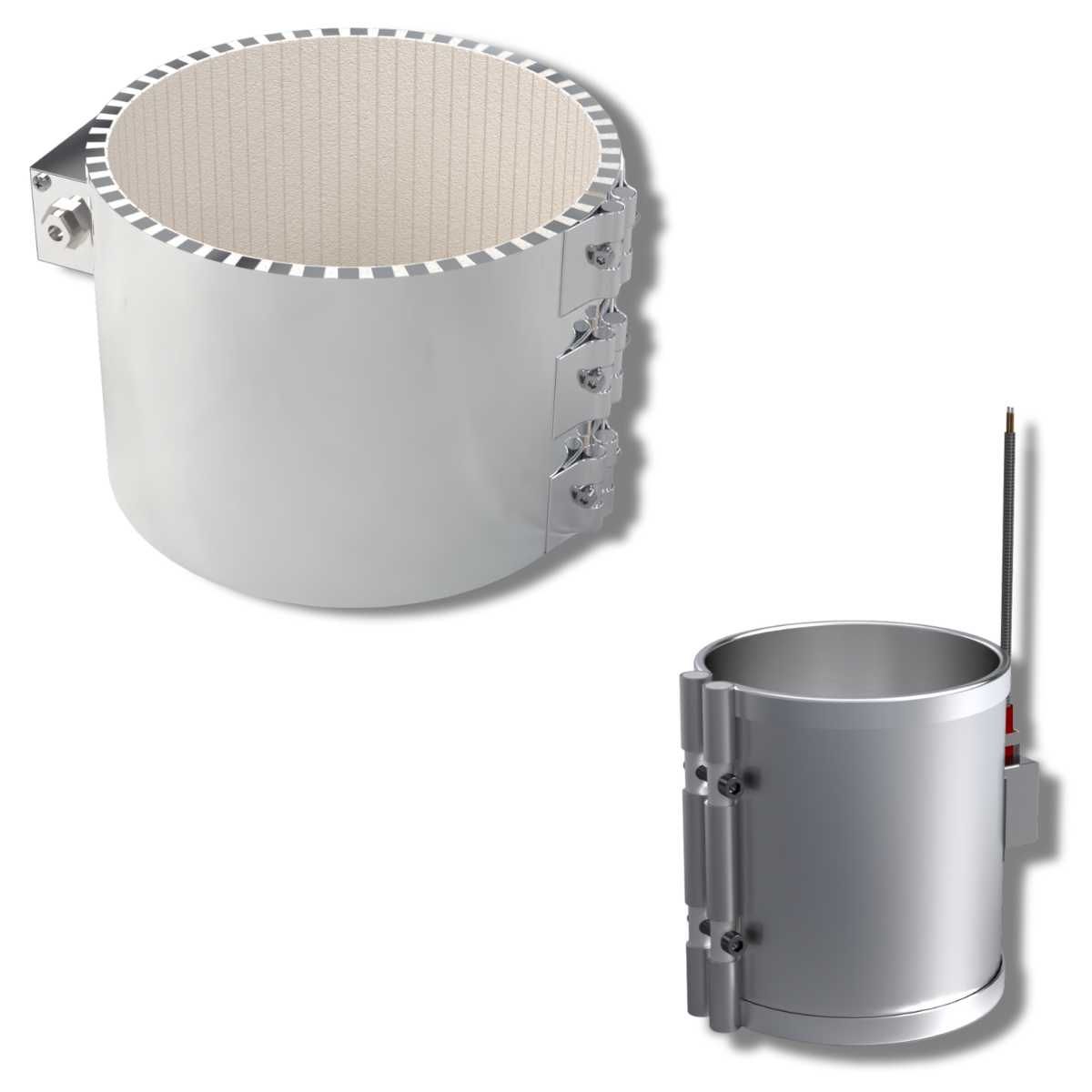
A band heater is a ring-shaped element that clamps around a cylinder and heats it through its wall. Resistance wire sits on mica or inside a ceramic body, wrapped in a stainless steel band that is pulled tight by a clamp. It is the element that heats injection barrels, extruder zones, nozzles and pipes.
Mica Band Heater
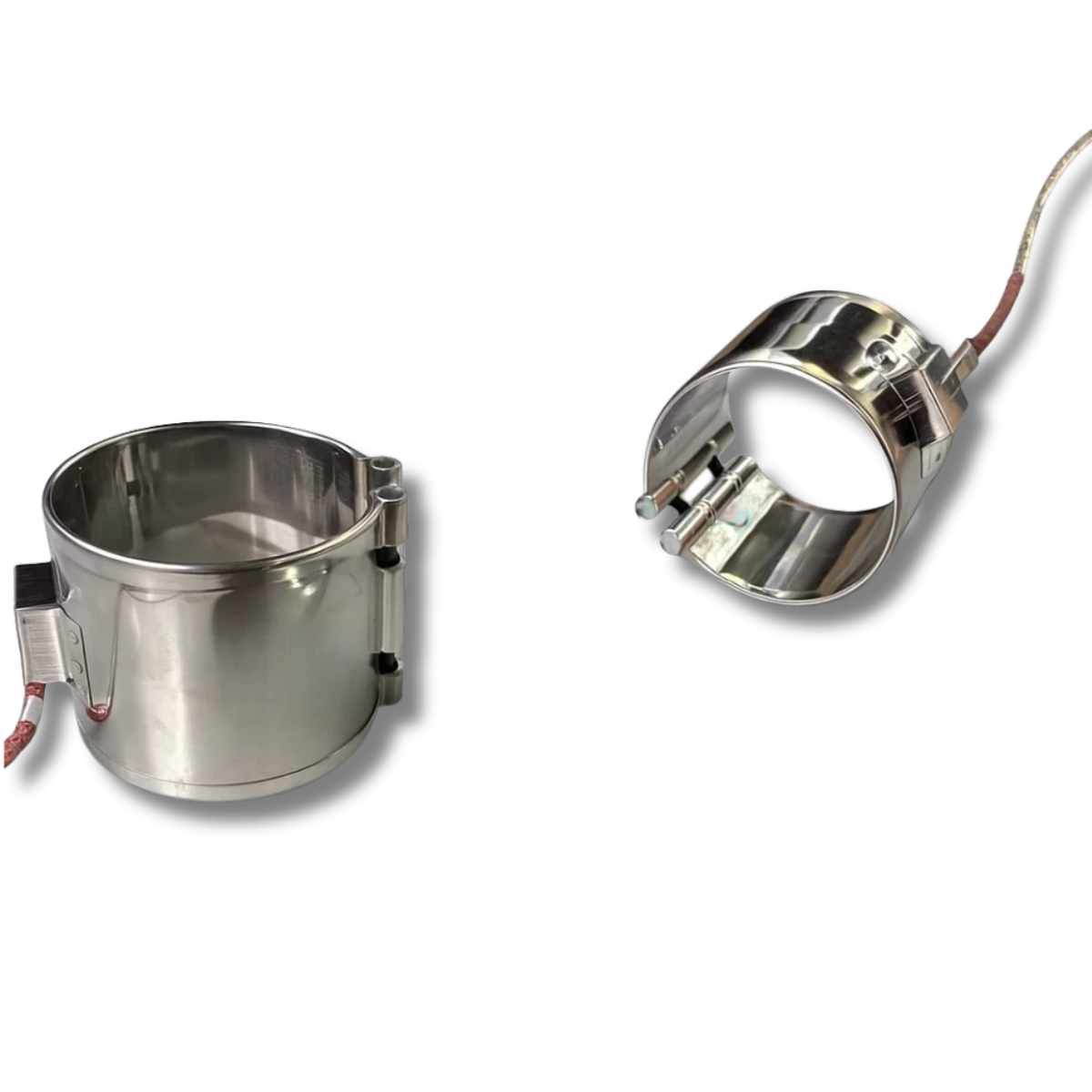
A mica band heater is the thin, fast type of band heater. Flat nickel-chrome ribbon is wound over a mica sheet, covered with more mica and closed inside a stainless steel band about three millimetres thick. It heats an injection barrel quickly and cheaply, and we supply it for working temperatures up to 300 °C.
Nozzle Heater
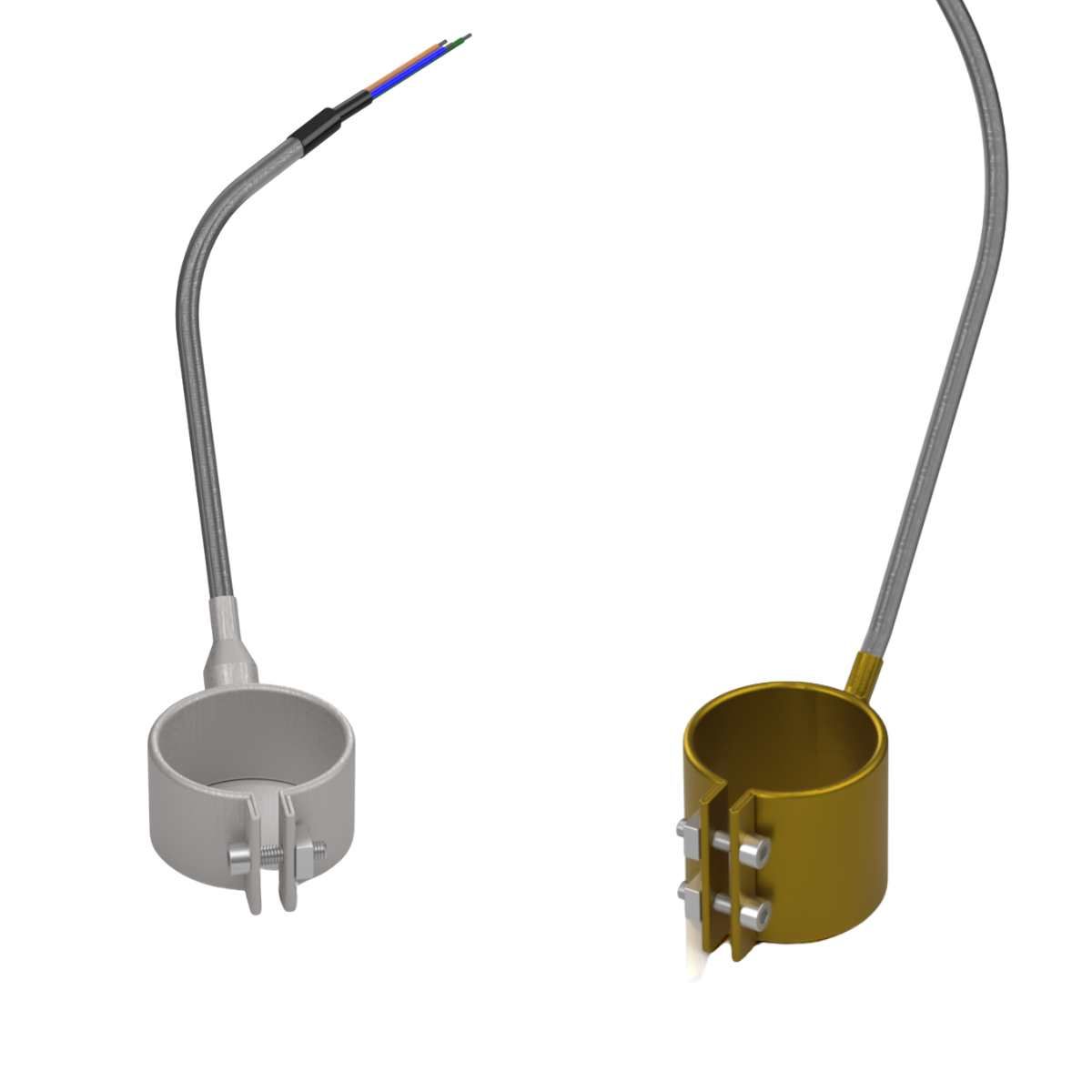
A nozzle heater is a small, narrow band heater made for the tip of an injection machine or a hot runner nozzle. It wraps a diameter of only 15 to 60 mm, often carries its own thermocouple, and holds the melt at temperature through the last few centimetres before it enters the mould.
Ask for a Price or Technical Advice
Call us or send a WhatsApp message for a price, full specifications, or a custom build.
Last updated: