Silicone Rubber Heater
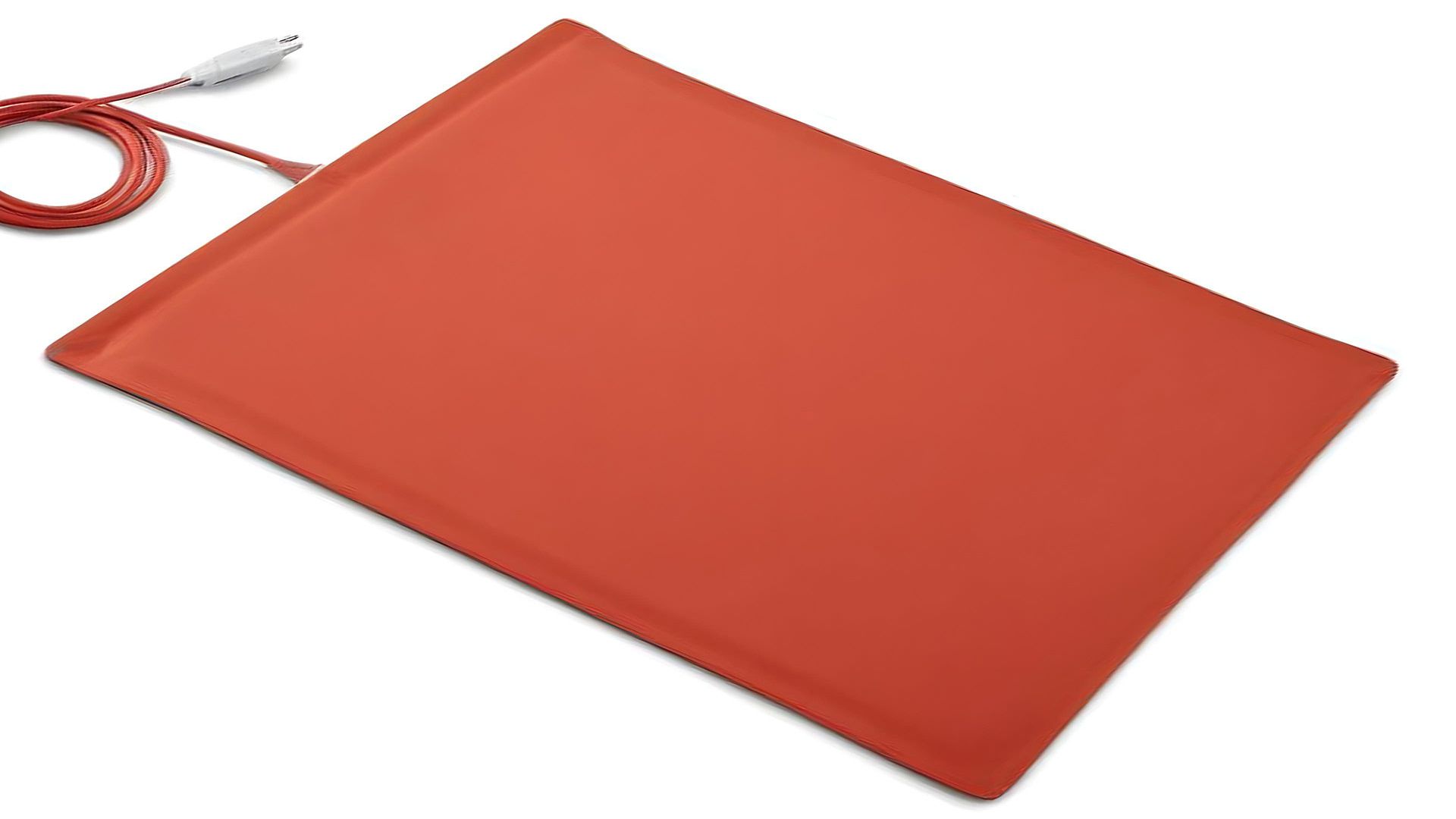
A silicone rubber heater is a thin sheet, one and a half to three millimetres thick, with an etched foil or wound wire circuit sealed between fibreglass reinforced silicone. It bends around curves, follows an irregular shape, and can be made in almost any outline, up to about 230 °C.
- Max working temperature
- up to 230 °C
- Thickness
- 1.5 to 3 mm
- Watt density on metal
- 2 to 5 W/cm²
- Circuit
- Etched foil or wound wire
- Voltage
- 12 to 380 V
- Custom builds
- Any outline, holes and cut-outs
Ask for a Price or Technical Advice
Call us or send a WhatsApp message for a price, full specifications, or a custom build.
Technical Specifications
The figures below are the usual ranges for this type of element. Builds outside them are possible.
| Property | Value |
|---|---|
| Construction | Etched foil or wound wire circuit sealed between fibreglass-reinforced silicone rubber sheets |
| Max working temperature | 200 to 230 °C |
| Thickness | 1.5 to 3 mm |
| Safe watt density bonded to metal | 2 to 5 W/cm² |
| Safe watt density in free air | 0.5 to 1 W/cm² |
| Minimum bend radius | About 10 times the thickness mm |
| Working voltage | 12, 24, 110, 220 or 380 V |
| Fixing | Pressure-sensitive adhesive backing, straps, or vulcanised in place |
| Built-in control | Optional thermostat, thermal cut-out or thermocouple |
| Shape | Made to outline, with holes and cut-outs where needed |
| Termination | Silicone lead wires from an edge or a corner, to your length |
| Power tolerance | +5 to -10 % |
Where It Is Used
- Laboratory equipment
- Tank and drum heating
- Food and pharmaceutical industry
- Freeze and condensation protection
- Heated platens, beds and small plates
- Pipe, valve and instrument heating
Choosing, Fitting and Looking After It
Almost any outline, but the outline is decided at build time
The reason to choose a silicone heater over anything else is usually shape. It can be made round, rectangular, L-shaped, with holes for fixings, with a notch for a boss, with a tail that reaches around a corner. The circuit is laid out inside that outline, which is why the shape has to be right before it is made. A finished heater cannot be trimmed, drilled or cut down — every cut goes through the circuit.
Send a drawing, or a paper template cut to fit the real part. A template beats a sketch, because it has already been tested against the object.
Etched foil where evenness matters
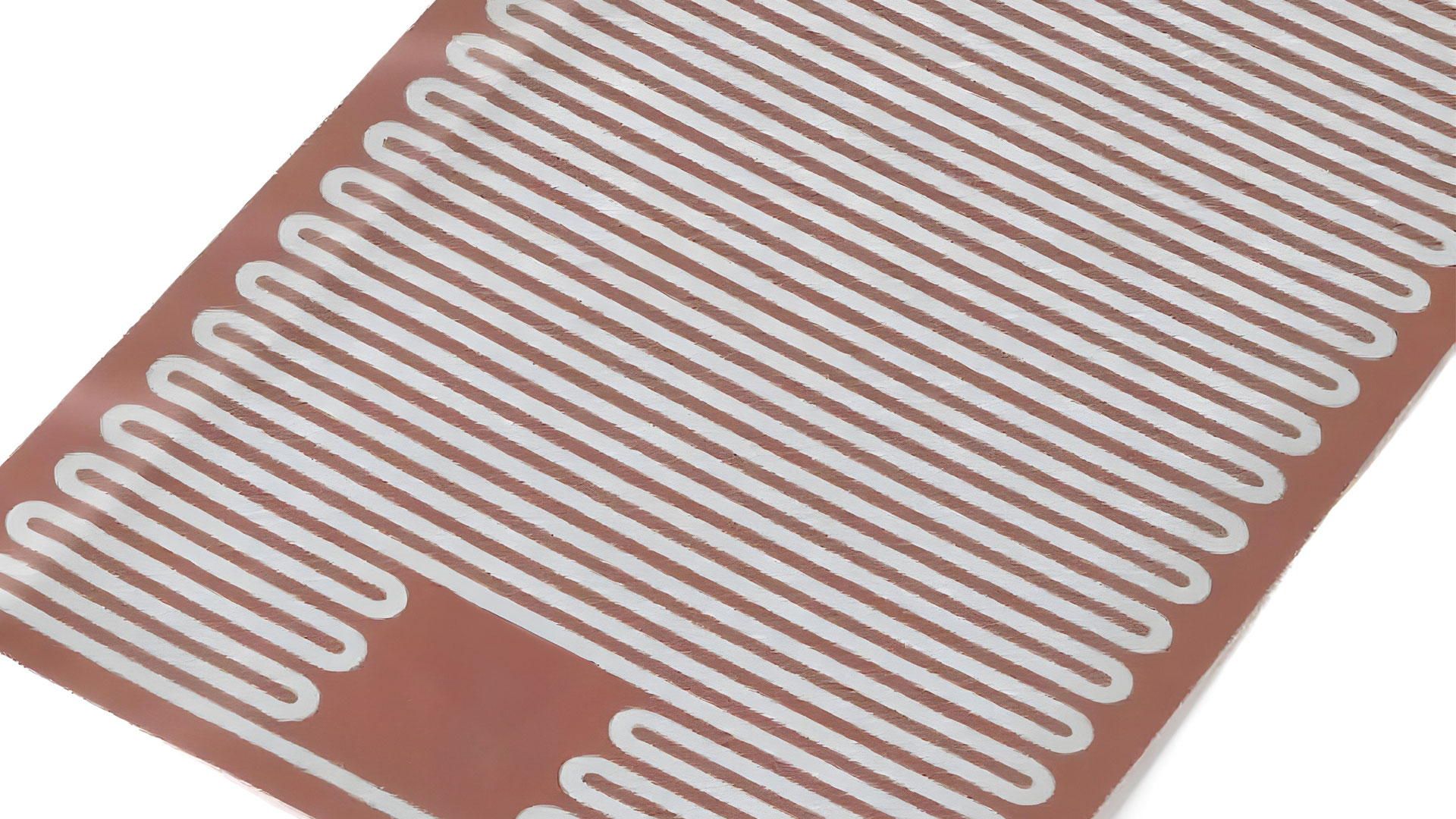
Wound wire lays the heat along a track, so the surface is a fraction warmer over the wire and cooler between the runs. On a thick metal plate that difference disappears; on a thin plate, on plastic, or on anything sensitive, it shows. Etched foil spreads the circuit into a fine pattern across the whole area and gives a much more uniform face, and it can be made thinner. It costs more, particularly in small numbers, so it is worth asking for only when the job needs it.
Bonding is the job, and there is no second attempt
Adhesive-backed heaters go on once. Clean the surface with a solvent that leaves nothing behind, warm both the heater and the part slightly, peel the liner back progressively rather than all at once, and work from the centre outwards with firm pressure. Every trapped bubble is a spot with no path for its heat.
Where the surface is not ideal — painted, rough, curved tightly, or running near the top of the range — plan for mechanical backup from the start: straps, a clamped cover plate, or vulcanising the heater in place.
Low voltage where hands go
A silicone heater is often the element people can actually touch: a bench, a bed, a small vessel, a laboratory rig. Building it for 12, 24 or 110 V removes the mains from the accessible part entirely. This has to be decided before it is made, because the voltage sets the circuit, and it is not something that can be changed afterwards with a transformer alone.
Solvents and creases are the two silent killers
Silicone stands heat well and chemicals badly. Many workshop solvents attack it, and the damage often shows first at the lead seal rather than in the sheet. Keep cleaning to a damp cloth and mild detergent.
The other one is folding. Rolled, a spare heater lasts indefinitely. Folded, the crease damages the circuit where nothing can be seen, and the fault appears as a hot line the first time it is powered.
Protection is part of the specification, not an accessory
Because it is thin, a silicone heater has nothing to buffer it. Remove the load — a tank drains, a plate is lifted off — and the sheet reaches its own limit within a minute or two. A thermostat controls the process. A separate thermal cut-out, wired in series with the supply, is what stands between a fault and a fire. Specify it with the heater, so it arrives as part of the same assembly.
Price
Price
The price for this product depends on the specification you order.
What Sets the Price
- Diameter and length
- Power and voltage needed
- Sheath material (stainless steel, brass and so on)
- Termination type and lead or thread length
- Whether a thermocouple is built in
- Order quantity
How It Compares
The two ways the circuit inside is made.
| Feature | Etched foil | Wound wire |
|---|---|---|
| Heat spread | Very even | Slightly striped |
| Thinnest build | Yes | No |
| Complex outlines | Handles them well | Harder |
| Cost at low quantity | Higher | Lower |
Common Questions
What is the difference between etched foil and wound wire?
Etched foil is a thin metal sheet cut into a fine pattern, so the heat is spread almost evenly across the area. Wound wire is a resistance wire laid in a track, which is simpler and cheaper but puts slightly more heat along the wire's path.
Can it be made in a shape with holes in it?
Yes — that is the main reason to choose one. Round, L-shaped, with cut-outs for bosses and fixings, with a slot for a sensor: the outline is part of the order. What cannot be done is cutting the shape after it is made.
Will the adhesive backing hold?
On a clean, smooth metal surface at moderate temperature, yes, for years. On rough, painted or plastic surfaces, or near the top of the temperature range, back it up with straps or a clamped cover. Adhesive that releases leaves a bubble, and the heater burns through at the bubble.
What voltage can it be made for?
From 12 V up to 380 V. Low voltage is common where people can touch the heater or where it runs from a battery or a control transformer. Voltage has to be stated with the order because it changes the circuit itself.
How do I clean it?
With a damp cloth and mild detergent. Keep solvents away from it — many attack silicone, and the damage is not visible until the sheet has gone soft or the seal at the lead has opened.
Does it have to have a thermostat?
It has to have overtemperature protection, which is not quite the same thing. A thermostat controls; a thermal cut-out protects. On a heater with this little mass, and made of a material that burns, the cut-out is the part that must not be left out.
Related Products
Flexible Heater
A flexible heater is a thin, bendable element that wraps around a curved surface or lies flat against an awkward one. A resistance circuit is sealed between sheets of silicone rubber, so the whole heater is a few millimetres thick and can be strapped or bonded onto drums, tanks, pipes and plates up to about 230 °C.
Drum and Tank Heater
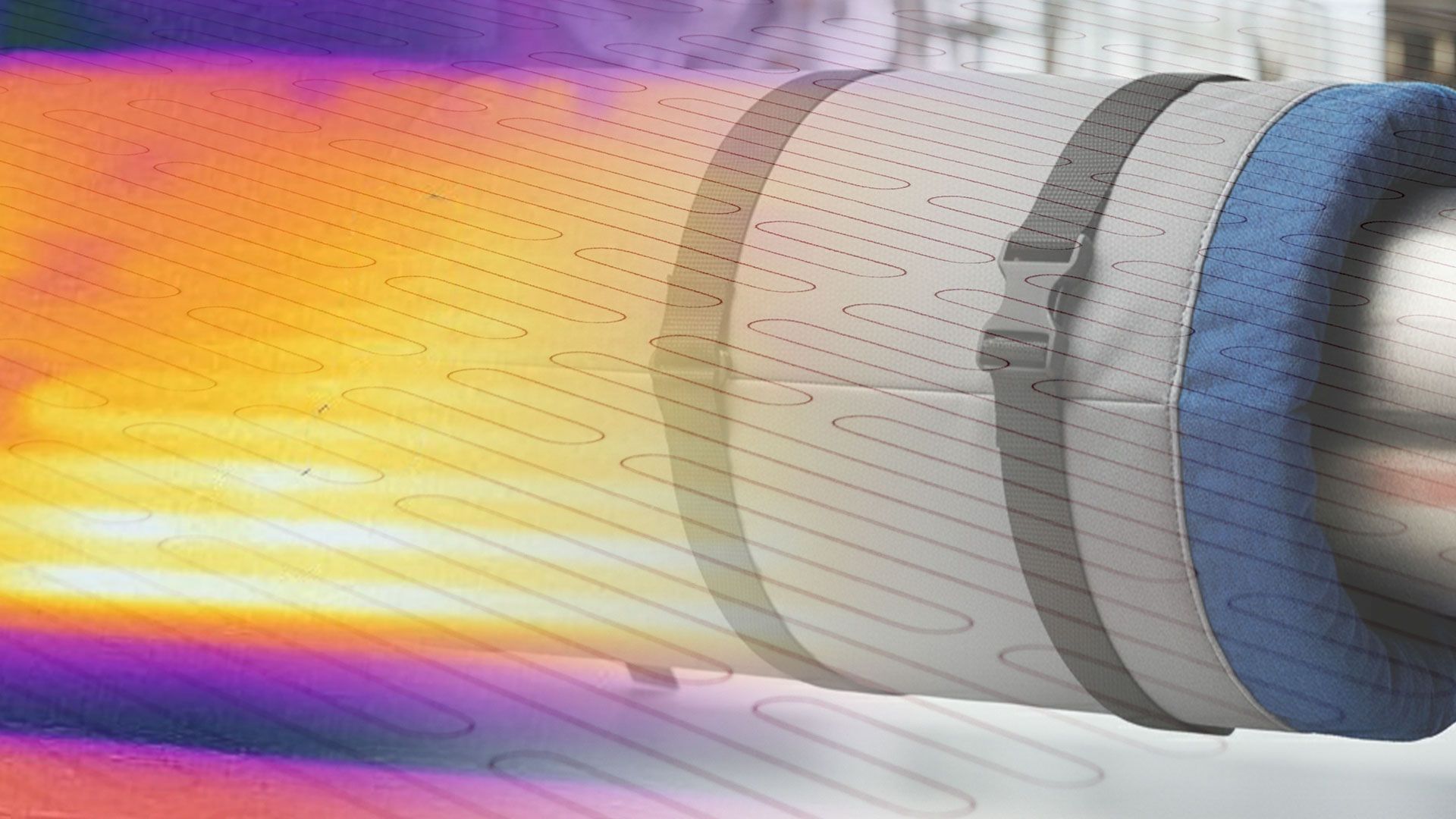
A drum and tank heater is a flexible jacket that straps around the outside of a drum, a barrel or a small tank and warms the contents through the wall. Nothing goes into the liquid, so it suits material that must not be contaminated and vessels that have no opening to fit an element into.
Ask for a Price or Technical Advice
Call us or send a WhatsApp message for a price, full specifications, or a custom build.
Last updated: