Halogen Heater
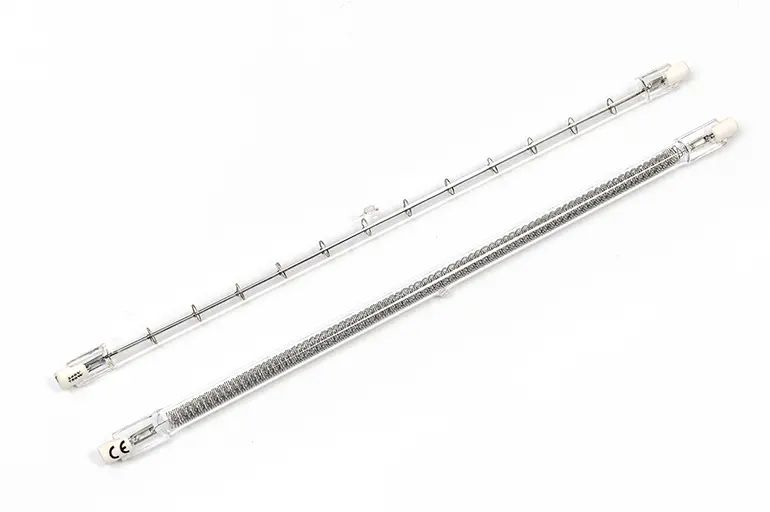
A halogen heater is a tungsten filament in a halogen-filled quartz lamp, running at up to 2200 °C. It emits short-wave infrared, reaches full output in under a second, and goes cold almost as fast. It is chosen where heat has to be intense, local, and switched on and off with the process.
- Wavelength
- Short wave infrared
- Filament temperature
- up to 2200 °C
- Response time
- under 1 s
- Best on
- Metals and dark surfaces
- Voltage
- 220 / 380 V
- Custom builds
- To lamp length, power and reflector
Ask for a Price or Technical Advice
Call us or send a WhatsApp message for a price, full specifications, or a custom build.
Technical Specifications
The figures below are the usual ranges for this type of element. Builds outside them are possible.
| Property | Value |
|---|---|
| Construction | Coiled tungsten filament in a halogen-filled quartz envelope, supported on tantalum spacers |
| Filament temperature | 2000 to 2200 °C |
| Wavelength | Short wave, around 1.2 micrometres |
| Response time | under 1 second, both on and off |
| Minimum output for the halogen cycle | About 20 % |
| Reflector | Gold coated on the lamp, or polished aluminium in the housing |
| Working voltage | 220 single phase or 380 three phase V |
| Control | Thyristor with a soft-start, never a mechanical contactor |
| Mounting position | Usually horizontal, and stated by the lamp |
| Cooling | Air over the end seals, essential |
| Power tolerance | +5 to -10 % |
Where It Is Used
- Plastic thermoforming and sheet heating
- Packaging machinery
- Paint, powder and ink drying
- Preheating metal before welding, bonding or coating
- Fast local heating on an indexing line
Choosing, Fitting and Looking After It
Speed is the reason to choose it, and speed changes the process
A halogen heater goes from nothing to full output faster than a machine can index, and it stops just as fast. On a line that starts and stops, that removes the whole problem of scorching during a pause — the heat simply is not there while the line is stationary. It also means the heater can be switched per part rather than left running, which usually saves more energy than any efficiency difference between element types.
To get that, the control has to keep up. A fast element behind a slow sensor and a contactor is just a slow heater that wears out its contactor.
Short wave suits metal, not clear plastic
Short-wave infrared is absorbed strongly by metals and dark surfaces, and it penetrates a little deeper into materials than medium wave does. On steel, aluminium and dark coatings that is exactly right. On clear or light plastic it often is not: some of the energy passes straight through the sheet, so the surface never reaches forming temperature while the inside gets hotter than it should. If the work is plastic, weigh quartz first.
The seals, not the filament, decide the life
The filament runs at 2200 °C and copes. The pinch seals at each end of the lamp must stay far below that, and the only thing keeping them there is air moving across them. This is why halogen assemblies come with ventilated housings and why sealing one into a closed box is a design error rather than a shortcut. If the lamps in a machine are failing at the ends, look at the airflow before looking at the lamps.
Respect the mounting position and the minimum output
Two limits come with halogen and neither is negotiable. The lamp has a stated mounting position, usually horizontal, because the filament is supported for that orientation; fitted vertically it sags and shorts against its own supports. And the halogen cycle needs a minimum envelope temperature, so holding the lamp below roughly twenty per cent power for long periods blackens the glass and permanently reduces its output.
Where a process genuinely needs to idle at very low power, quartz is the right element, not a dimmed halogen.
Soft start, every time
A cold tungsten filament has a fraction of its hot resistance. Switched straight across the mains it draws a large inrush current, and repeated inrush is one of the main reasons lamps fail early. A thyristor with a soft-start ramp removes it, protects the supply, and gives the process a controllable output at the same time.
Handle lamps as lamps
They arrive in packaging for a reason. A knock that would not mark a tubular element can break a filament support inside a halogen lamp, and the fault does not show until the lamp is powered. Fit with clean gloves — fingerprints do the same damage here as on a quartz tube — keep spares in their boxes, and never refit a lamp that has been dropped.
Price
Price
The price for this product depends on the specification you order.
What Sets the Price
- Diameter and length
- Power and voltage needed
- Sheath material (stainless steel, brass and so on)
- Termination type and lead or thread length
- Whether a thermocouple is built in
- Order quantity
How It Compares
Halogen against quartz, which is the choice that comes up.
| Feature | Halogen | Quartz |
|---|---|---|
| Response | Under a second | 1 to 3 seconds |
| Wavelength | Short | Medium |
| Best on | Metal, dark surfaces | Plastic, water, coatings |
| Dimming | Not below about 20% | Down to zero |
| Cooling needed | Yes, at the seals | Less critical |
Common Questions
Why can a halogen lamp not be dimmed to very low power?
The halogen cycle inside the lamp only works above a certain envelope temperature. Run it too low for too long and tungsten deposits on the glass instead of returning to the filament, the lamp darkens, and its output falls permanently. Around twenty per cent is the usual floor.
Why does it need cooling if it is the thing making the heat?
The end seals are the weak point. The filament can run at 2200 °C but the seal at each end must stay far cooler, and that only happens with air moving over it. A halogen heater sealed into an unventilated box fails at the seals long before the filament wears out.
Does the mounting position matter?
Yes, and it is not a preference. Most halogen lamps have a stated mounting position, usually horizontal within a few degrees. Fitted outside it, the filament sags onto its supports and the lamp life drops sharply.
Why short wave rather than medium?
Because short wave is absorbed strongly by metals and dark surfaces, and because it penetrates a little further into some materials. On a steel part that has to go from cold to hot in seconds, that combination is what makes the process possible.
Can it heat clear plastic?
Often badly. Short wave passes through some clear plastics rather than being absorbed at the surface, so the sheet heats unevenly through its thickness or barely at all. For most forming work on plastic, quartz or ceramic is the better answer.
What controls should it have?
A thyristor with a soft start. The cold filament has a very low resistance, so switching it straight onto the mains draws a large inrush that shortens lamp life and stresses the supply. Soft start removes that, and the thyristor also allows the power to be varied.
Related Products
Radiant Heater
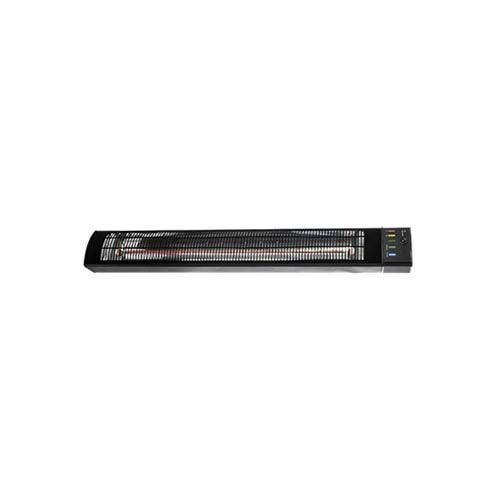
A radiant heater warms an object by infrared light rather than by touching it or by heating the air between them. A quartz tube, a halogen lamp or a ceramic face glows, and the surface facing it absorbs that energy directly. It is used where something has to be heated quickly, across a gap, without contact.
Quartz Heater
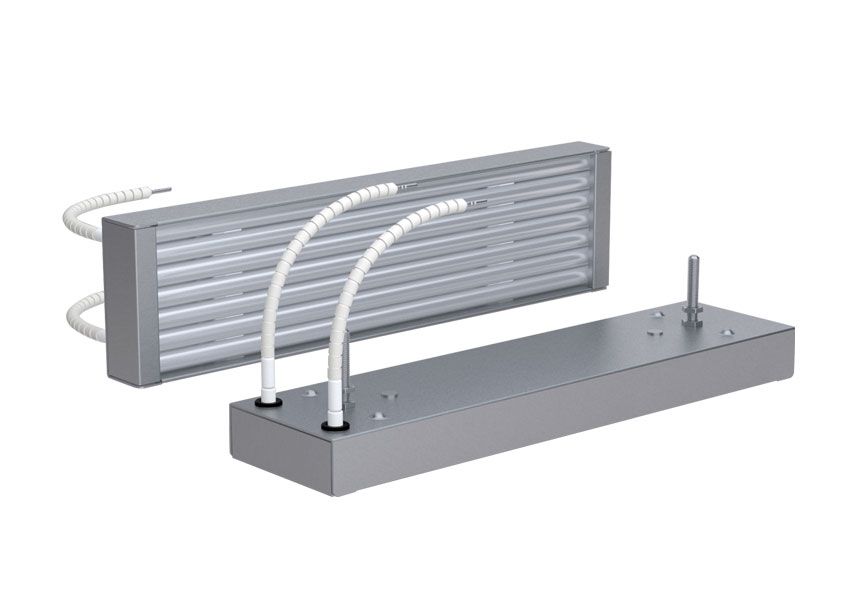
A quartz heater is a coiled resistance wire inside a clear quartz tube. The tube reaches 900 to 1200 °C and radiates medium-wave infrared, which most plastics, coatings and water absorb well. It reaches working output in a second or two and is the general-purpose radiant element for drying and forming.
Ceramic Infrared Heater
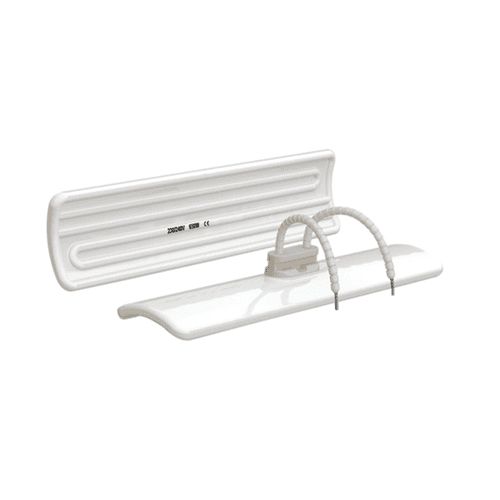
A ceramic infrared heater is a resistance coil embedded in a glazed ceramic body that radiates long-wave infrared from a face running at 300 to 750 °C. It is slow, steady and robust, and it is the radiant element used where plastic has to be heated evenly without being scorched.
Ask for a Price or Technical Advice
Call us or send a WhatsApp message for a price, full specifications, or a custom build.
Last updated: